
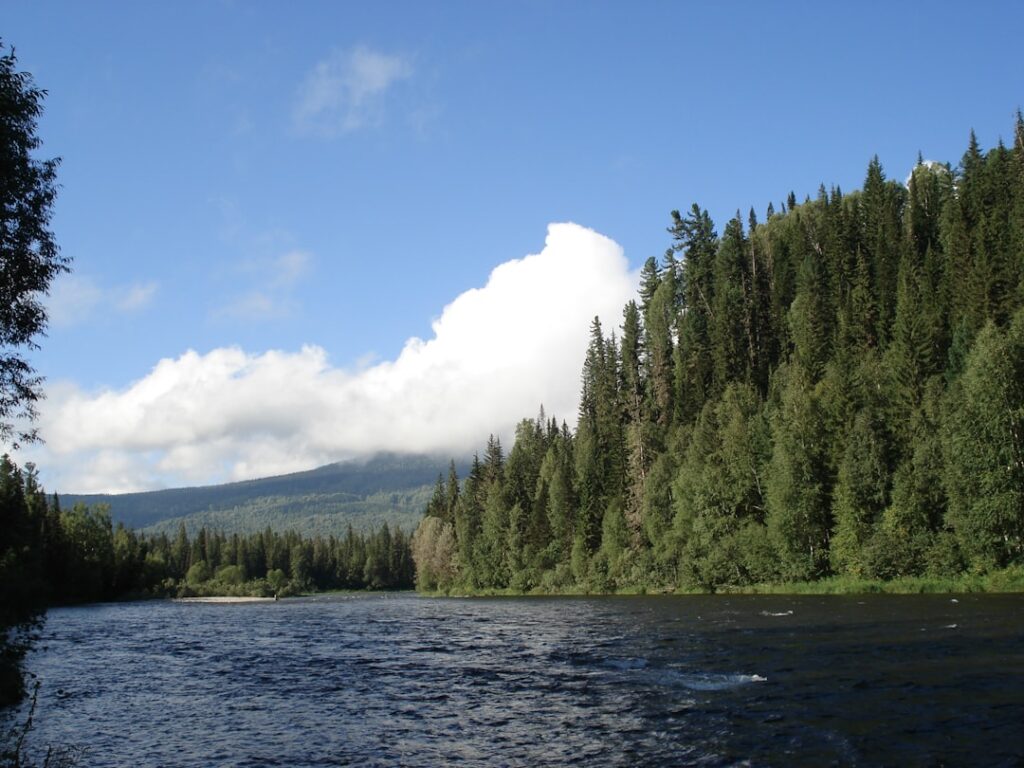
Siberian Taiga, Russia’s Hidden Wilderness, Wildlife & Winter Magic (2026)
At 3 AM in July, the Siberian Taiga reveals a world of perpetual twilight, where the sun merely dips below a horizon of endless spruce. The air, crisp and scented of pine resin and damp earth, carries the distant howl of a wolf—a sound unchanged for millennia. This is the planet’s largest forest, a 5,800-mile-long green belt covering 11% of Earth’s landmass, yet fewer than 10,000 international travelers venture into its true heart annually. Here, you don’t just visit a place; you step into a functioning, breathing ecosystem that dictates the rhythm of your days.
Why Siberian Taiga, Russia Stands Out

Snow covered trees and mountains during daytime, Siberian Taiga, Russia
- Historic Architecture: The 17th-century wooden Fort of Yakutsk, built by Cossack explorers on permafrost, stands as a testament to human resilience in one of Earth’s most extreme climates.
- Cultural Scene: The Ysyakh Summer Festival in June, a Sakha (Yakut) celebration of the sun with traditional horse-sacrifice rituals, throat singing, and endless circles of the *okhuokhai* dance.
- Local Specialties: *Stroganina* – delicate shavings of raw, frozen Arctic fish or reindeer meat, a culinary tradition born of necessity that is surprisingly delicate and fresh.
Pro Tip: Your best bet for manageable weather and maximum wildlife activity is late June to early August. For the surreal, silent beauty of deep winter, aim for February—pack for -40°C/-40°F. Avoid the “rasputitsa” (road-less mud seasons) of April-May and October, when travel becomes nearly impossible.
Map of Siberian Taiga, Russia
Use these interactive maps to explore Siberian Taiga, Russia and plan your route. The Taiga is not a single town but a vast region; key gateways include Irkutsk (for Lake Baikal), Krasnoyarsk, and Yakutsk.
📍 View Siberian Taiga, Russia on OpenStreetMap
🗺️ Open Siberian Taiga, Russia in Google Maps
Planning Your Trip: Practical Essentials
Getting There and Around
- By Air: Major gateways are Tolmachevo Airport (OVB) in Novosibirsk or Irkutsk International Airport (IKT). Aeroflot and S7 Airlines are the main carriers. From there, you’ll need local flights on airlines like Yakutia Airlines to hubs like Yakutsk or Mirny. Book flights at Skyscanner for best deals.
- By Train: The legendary Trans-Siberian Railway runs along the southern fringe. Key stops are Krasnoyarsk and Irkutsk. From there, travel north into the deep Taiga requires specialized transport. Reserve tickets at Trainline or the national railway website.
- By Car: Independent driving is for experts only. The Lena Highway from Yakutsk to Mirny is a famed, grueling dirt track. Rent a rugged 4×4 with a local driver-guide. Compare car rentals at RentalCars.com for city pick-ups, but book specialized off-road tours locally.
- Local Transport: Within remote settlements, there is minimal public transport. Your movement will be via pre-arranged tour vehicles, boats in summer, or *vezdekhods* (all-terrain vehicles) in winter. For inter-city travel in the south, use the Russian Railways app for schedules.
Best Time to Visit
Season dictates not just your comfort, but what is physically possible. Summer unlocks rivers and hiking; winter freezes them into highways for vehicles and opens a world of crystalline beauty.
| Season | Weather | Highlights |
|---|---|---|
| Summer (Jun–Aug) | 10°C to 25°C (50°F to 77°F). Mild, long days (up to 19 hrs of light), but buggy. Rain is common. | Hiking, river boat trips, fishing, midnight sun, festivals. Peak season for tours. |
| Winter (Dec–Feb) | -25°C to -50°C (-13°F to -58°F). Extremely cold, dry, and dark (only 4-5 hrs of twilight). | Northern Lights, ice fishing, dog-sledding, snowmobiling on frozen rivers. Minimal tourists, surreal landscapes. |
| Shoulder (Sep–Oct/May) | -5°C to 10°C (23°F to 50°F). Unpredictable, often muddy or icy. | Lower prices, dramatic autumn colors (Sept) or spring thaw. Many lodges and tours are closed; travel is challenging. |
Budgeting for Siberian Taiga, Russia

A bunch of blue flowers that are in the grass, Siberian Taiga, Russia
| Category | Budget | Mid-range | Luxury |
|---|---|---|---|
| Accommodation | Hostel/Guesthouse: 1,500-2,500 RUB/night | Local Hotel/Tourist Lodge: 4,000-8,000 RUB/night | All-Inclusive Wilderness Lodge: 15,000+ RUB/night |
| Meals | Market food/Cafeteria: 800-1,200 RUB/day | Local Restaurants: 1,500-2,500 RUB/day | Lodge Dining/Fine Dining in Cities: 4,000+ RUB/day |
| Transport | Local Buses (in towns): 50 RUB/ride | Pre-booked Tour Transport: 3,000-5,000 RUB/day | Private 4×4 with Driver/Guide: 8,000+ RUB/day |
| Activities | Self-guided hikes, free museums | Guided day hikes, museum entries: 1,500-3,000 RUB/day | Multi-day guided expeditions (fishing, trekking): 10,000+ RUB/day |
| Daily Total | 3,000-5,000 RUB | 10,000-18,000 RUB | 30,000+ RUB |
Top Attractions and Must-See Sights
| Attraction | Description | Hours | Entry Fee |
|---|---|---|---|
| Lake Baikal (Olkhon Island) | The “Galapagos of Russia,” the world’s deepest lake, fringed by Taiga and home to unique freshwater seals. | Accessible year-round | Free; tours from 3,000 RUB |
| Lena Pillars Nature Park | A UNESCO site featuring dramatic 100-meter-high rock pillars along the Lena River, best seen by summer boat. | Park always open; boat tours 9 AM-6 PM in summer | Park free; boat tour ~7,000 RUB |
| Mammoth Museum, Yakutsk | Home to the best-preserved mammoth specimens on earth, extracted from the permafrost. | 10 AM-5 PM, Wed-Sun | 500 RUB |
| Stolby Nature Reserve, Krasnoyarsk | Otherworldly volcanic rock pillars rising from the dense Taiga, a paradise for rock climbers and hikers. | 24/7, main gate 8 AM-10 PM | Free |
3-Day Itinerary: Siberian Taiga, Russia’s Highlights & Hidden Gems
Day 1: Gateway to the Wild – Yakutsk
- Morning (7-9 AM): Start at the **Kingdom of Permafrost** (a cave dug into a nearby cliff), where you’ll don a provided coat to explore ice sculptures and see a preserved mammoth calf. Cost: 800 RUB.
- Afternoon (12-3 PM): Visit the **Mammoth Museum** (500 RUB) to understand the region’s paleontological significance. For lunch, head to **Tyotka Motya** for hearty Yakut cuisine—try the *yal* (a rich horse meat soup) for 450 RUB.
- Evening (6-8 PM): Stroll along the **Lena River Embankment**. In winter, it’s a frozen highway; in summer, a bustling port. Dinner at **Chochur Muran**, an open-air ethnographic complex, for reindeer dishes in traditional log cabins.
Day 2: The River’s Majesty – Lena Pillars
- Morning (6 AM): An early start for a **boat tour to the Lena Pillars** (book through **Vostok Intour**). The 4-hour journey upstream reveals ever-more dramatic scenery. Tour cost: ~7,000 RUB including lunch.
- Afternoon (1-4 PM): Disembark at the pillars for a guided hike along the cliff tops. The view over the endless Taiga is humbling. A simple picnic lunch of local fish and bread is provided on the boat.
- Evening (6 PM): Return to Yakutsk. For a relaxed evening, savor *stroganina* (frozen fish shavings) and a local Yakut beer at the pub **Pivnaya Krepost**.
Day 3: Culture & Departure
- Morning (9 AM): Visit the **Yakutsk State Museum of History and Culture** (300 RUB) to delve into the traditions of the Sakha people and Cossack explorers. Look for the intricate traditional silver jewelry.
- Afternoon (12-2 PM): Last lunch at **Maanchary**, known for its modern take on Yakut food. Order the *indigirka* (frozen whitefish salad) for 550 RUB.
- Evening (4 PM): Depending on your flight, a final stop at the **Memorial to the Pioneers of the Yakut Land** for a panoramic view of the city where the Taiga begins. Then transfer to Yakutsk Airport (PYJ).
Cultural Insights & Etiquette
- Language: Russian is essential. In remote areas, English is virtually nonexistent. Learn Cyrillic basics and key phrases: “Spasibo” (Thank you), “Zdravstvuyte” (Hello), “Gde tualet?” (Where is the toilet?).
- Customs: When invited into a local home, always remove your shoes. It’s polite to bring a small gift like chocolates or good quality alcohol. Toasting is a serious ritual; maintain eye contact during a *na zdorovie* (cheers).
- Tipping: Not traditionally expected, but becoming more common in tourist-facing roles. Round up the bill in taxis, leave 5-10% in restaurants if service was good.
- Dress Code: Practicality over fashion. In winter, this means serious thermal layers (merino wool, down). In summer, waterproof hiking boots and insect-repellent clothing are mandatory.
- Business Hours: Shops typically 9 AM-7 PM, closed for lunch (1-2 PM). Museums often closed Monday or Tuesday. Major holidays (New Year, Orthodox Christmas on Jan 7) can shut everything down.
Where to Eat: Siberian Taiga, Russia’s Best Bites
Taiga cuisine is a lesson in survival turned into art. It’s protein-heavy, utilizing what the forest and rivers provide: game, fish, and berries. Meals are hearty, designed to fuel a body against the cold.
Must-Try Local Specialties
- Stroganina: The quintessential dish. Thinly shaved frozen raw fish (usually *nelma* or *omul*) or reindeer meat, served with a side of salt and pepper. Best tried at a local’s home or at **Chochur Muran** in Yakutsk.
- Pokhlebka: A thick, hearty stew often made with venison, root vegetables, and barley. You’ll find it in any simple canteen or *stolovaya*; **Yakutskaya Sloboda** restaurant does an excellent version.
- Yakutian Fermented Mare’s Milk (Kumys): A slightly alcoholic, sour drink cherished for its purported health benefits. An acquired taste, often sampled during the Ysyakh festival.
Restaurant Recommendations by Budget
| Type | Restaurant | Specialty | Price Range |
|---|---|---|---|
| Budget | Stolovaya No. 1 (Yakutsk) | Classic Russian & Yakut canteen food | 300-600 RUB |
| Mid-range | Tyotka Motya (Yakutsk) | Creative Yakut cuisine in a cozy setting | 800-1,500 RUB |
| Fine dining | Restaurant “Usadba” (Irkutsk) | Gourmet Siberian dishes with Baikal views | 2,500+ RUB |
Where to Stay
Accommodation ranges from Soviet-era hotels in cities to remote eco-lodges deep in the forest. Booking in advance is critical, especially for specialized lodges with limited space. Compare prices and book at Booking.com for hotels or Airbnb for apartments in cities like Irkutsk or Krasnoyarsk.
Best Neighborhoods for Accommodation
- Central Yakutsk: Close to museums, restaurants, and the Lena embankment. Convenient for short stays, but you’re on the edge of the wilderness, not in it. Suits first-time visitors.
- Olkhon Island (Lake Baikal): The village of Khuzhir offers guesthouses and homestays. You’re immersed in Taiga and lake scenery, ideal for hiking and tranquility seekers.
- Wilderness Lodges (e.g., near Mirny or along the Lena): Isolated, all-inclusive camps like **Lena Pillars Lodge**. The focus is on guided activities (fishing, hiking, wildlife watching). Suits adventurous travelers wanting deep immersion.

A snow covered road in the middle of a forest, Siberian Taiga, Russia
FAQs: Your Siberian Taiga, Russia Questions Answered
1. Is Siberian Taiga, Russia safe at night?
In cities like Yakutsk, standard urban precautions apply. The real safety considerations are environmental: extreme cold in winter, wild animals (bears are present), and getting lost in trackless forest. Never venture into the wilderness without an experienced local guide. Crime against tourists is very low.
2. What currency is used and are credit cards accepted?
The Russian Ruble (RUB) is the currency. In major cities, credit cards (Visa/Mastercard) are widely accepted. However, once you leave urban centers, cash is king. Withdraw ample rubles before heading into remote areas, as ATMs are scarce.
3. How do I get from the airport to the city center?
From Yakutsk Airport (PYJ), the city
Related Guides
Explore more destinations similar to Siberian Taiga:
- Sopó, Colombia: Ultimate Countryside Charm, Colonial History & Authentic Almojábanas (2026)
- Uíge, Angola’s Ultimate Coffee, Colonial Echoes & Rainforest Trails (2026)
- Koh Bulon Leh, Thailand: Best Untouched Beaches, Sea Gypsy Culture & Bioluminescent Waters (2025)
- Lhoknga, Indonesia (Aceh’s hidden beaches): Ultimate Surf, Seclusion & Tsunami Resilience (2025)

