
Bougainville, Papua New Guinea: Essential Untamed Nature, Resilient Culture & World-Class Diving (2026)
Ask locals about Bougainville, and they’ll tell you about the moment the sun sets behind the Crown Prince Range, turning the sky into a canvas of violet and gold, while the scent of frangipani and woodsmoke fills the air. Most guidebooks miss this completely, focusing instead on its complex history. But here, the profound peace of a volcanic island and the resilient warmth of its people create a travel experience that feels both raw and deeply restorative.
Why Bougainville, Papua New Guinea Stands Out

Green trees on island surrounded by water during daytime, Bougainville, Papua New Guinea
- Historic Architecture: The haunting, vine-covered ruins of the Panguna Mine Conveyor (built 1972), a stark monument to the island’s turbulent past and the catalyst for its quest for independence.
- Cultural Scene: The powerful, rhythmic performances of the *Buka Bamboo Band*, where musicians create symphonies using only bamboo instruments, a tradition born from ingenuity.
- Local Specialties: A hearty plate of *kaukau* (sweet potato) and *mumu*, a feast of pork and vegetables slow-cooked in an underground oven with hot stones, embodying community spirit.
Pro Tip: The absolute best time to visit is during the dry season, from May to October. For the ultimate experience, aim for late August to catch the cooler, less humid days and clearer waters for diving, all before the occasional afternoon rains of November begin.
Map of Bougainville, Papua New Guinea
Use these interactive maps to explore Bougainville, Papua New Guinea and plan your route:
📍 View Bougainville, Papua New Guinea on OpenStreetMap
🗺️ Open Bougainville, Papua New Guinea in Google Maps
Planning Your Trip: Practical Essentials
Getting There and Around
- By Air: All international travelers must fly into Port Moresby (POM) first. From there, Air Niugini and PNG Air operate flights to Buka Airport (BUA) on Buka Island or Aropa Airport (ARP) near Kieta on the main island. Book flights at Skyscanner for best deals.
- By Train: There are no train services on Bougainville. Inter-island travel is done by boat or small aircraft.
- By Car: Renting a 4WD vehicle is essential for exploring the mainland, but arrangements must be made locally through your guesthouse or tour operator as international chains are absent. Roads can be rough. Compare car rentals at RentalCars.com for options in Port Moresby if starting there.
- Local Transport: “Public motor vehicles” (PMVs—shared minivans/trucks) are the primary transport. Boat taxis connect Buka Town to the mainland across the Buka Passage. For touring, hiring a local driver/guide is highly recommended for both navigation and cultural insight.
Best Time to Visit
Bougainville has a tropical climate with a distinct wet and dry season. The dry season offers the most comfortable conditions for exploration and diving, while the wet season brings lush landscapes but challenging travel.
| Season | Weather | Highlights |
|---|---|---|
| Dry Season (May–Oct) | 24°C – 30°C (75°F – 86°F), lower humidity, less rain. | Ideal for trekking, diving, and cultural festivals; peak visibility underwater. |
| Wet Season (Nov–Apr) | 25°C – 32°C (77°F – 90°F), high humidity, daily heavy rainfall. | Lush, vibrant greenery; fewer visitors; some roads may be impassable. |
| Shoulder (Apr/Oct-Nov) | Transitional weather, occasional showers. | Good balance of decent weather and potential for lower accommodation rates as seasons change. |
Budgeting for Bougainville, Papua New Guinea

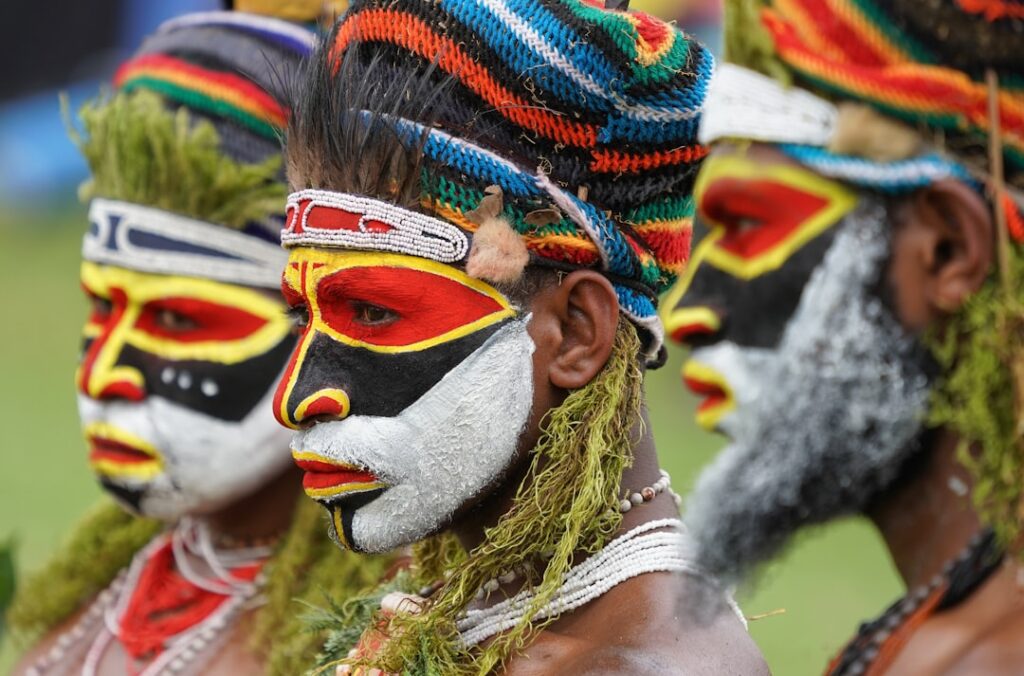
Three men in traditional tribal costumes with face paint., Bougainville, Papua New Guinea
| Category | Budget | Mid-range | Luxury |
|---|---|---|---|
| Accommodation | PGK 150-250/night (basic guesthouse) | PGK 300-500/night (lodge/eco-resort) | PGK 600+/night (full-service dive resort) |
| Meals | PGK 15-30 (market food, simple eateries) | PGK 40-80 (lodge restaurant meal) | PGK 100+ (resort dining) |
| Transport | PGK 5-20 (PMV rides) | PGK 150-300/day (private 4WD + driver) | PGK 400+/day (private boat/air charter) |
| Activities | Free (village walks, beaches) | PGK 100-200 (guided day trek, cultural show) | PGK 500+ (multi-day dive packages) |
| Daily Total | PGK 200-350 | PGK 600-1,100 | PGK 1,600+ |
Note: PGK = Papua New Guinean Kina. 1 USD ≈ 3.8 PGK. Cash is KING; carry ample small bills.
Top Attractions and Must-See Sights
| Attraction | Description | Hours | Entry Fee |
|---|---|---|---|
| Bougainville Dive Sites | Pristine coral walls and WWII wrecks like the Toa Maru in crystal-clear waters, a top global dive destination. | Dive trips 8am-4pm | From PGK 400/2-tank dive |
| Mount Balbi | Trek to the steaming crater of Bougainville’s highest volcano (2,715m) for otherworldly views and sulfuric lakes. | Start at dawn, 2-day trek recommended | PGK 50-100 village fee + guide cost |
| Siwai Village Cultural Experience | Authentic immersion with the Siwai people, featuring traditional shell money exchange, singing, and storytelling. | By arrangement | PGK 150-300 (includes gift) |
| Wakunai & the Crown Prince Range | Drive through stunning highland valleys, visit terraced gardens, and swim in cool, clear mountain rivers. | Daylight hours | Free (guide/driver cost applies) |
3-Day Itinerary: Bougainville’s Highlights & Hidden Gems
Day 1: Arrival & Buka Passage Immersion
- Morning (7-9 AM): After arriving at Buka Airport, take a thrilling 10-minute boat taxi (PGK 5) across the turquoise Buka Passage to mainland Arawa. The breeze is your welcome.
- Afternoon (12-3 PM): Settle into your lodge, then visit Arawa’s main market for a lunch of fresh tropical fruit and fried fish. Look for the betel nut sellers—a central part of local social life.
- Evening (6-8 PM): Enjoy a sunset drink overlooking the passage, followed by dinner at your lodge, likely featuring fresh reef fish and kaukau.
Day 2: History, Culture & Coast
- Morning (7 AM): With a guide, visit the Panguna mine area (PGK 200 for guide + vehicle). It’s a sobering but essential look at the island’s heart and history. Respect local sentiments; photography may be restricted.
- Afternoon (1 PM): Head to the east coast near Kieta. Lunch on coconut crab if available, then snorkel directly from the black sand beaches at Torokina, where colorful corals begin just meters offshore.
- Evening (6 PM): Attend a locally arranged Buka Bamboo Band performance (PGK 100-150). The energetic, percussive music is unforgettable.
Day 3: Island Escape & Diving
- Morning (8 AM): Charter a small boat (PGK 300-400 for group) to a nearby outer island like Pok Pok or Dyaul. The highlight is snorkeling in untouched lagoons teeming with life.
- Afternoon (12 PM): Enjoy a beachside *mumu* feast prepared by your boat crew. Spend the afternoon relaxing on deserted white-sand beaches.
- Evening (6 PM): Return to the mainland for a final dinner. Seek out a *haus kai* (local eatery) for a simple, delicious meal of chicken and rice, reflecting with newfound friends on your journey.
Cultural Insights & Etiquette
- Language: Tok Pisin is the lingua franca. English is spoken in official/tourist settings. Key phrases: “*Tenkyu*” (Thank you), “*Gude*” (Hello), “*Mi laik baim…*” (I would like to buy…).
- Customs: Always ask permission before taking photos of people or villages. Practice patience—concepts of time are often fluid (“*Bihain taim*” means “later”). Respect the deep connection to land (*graun*).
- Tipping: Not a formal custom, but a small gift or extra payment for exceptional service (like a guided trek) is greatly appreciated.
- Dress Code: Modesty is key. Cover shoulders and knees, especially in villages. Swimwear is for the beach/resort only. A *laplap* (sarong) is versatile and respectful.
- Business Hours: Shops: 8am-4pm weekdays, some Saturday mornings. Government: 7:45am-4pm. Many things close early Friday afternoon. Always confirm arrangements.
Where to Eat: Bougainville’s Best Bites
Dining in Bougainville is less about restaurants and more about experiencing local produce and traditional cooking. Most meals will be at your lodge or from simple *haus kai*. The focus is on fresh fish, root vegetables (kaukau, taro, yam), tropical fruits, and the beloved *mumu* feast.
Must-Try Local Specialties
- Mumu: The quintessential celebration dish. Pork, chicken, and vegetables wrapped in banana leaves and cooked for hours with hot stones in a pit. Best experienced at a village invitation or a lodge special event.
- Coconut Crab (*Biru*): A rare and prized delicacy, a large land crab with sweet, rich meat infused with coconut flavor. If offered, it’s a special honor.
- Fresh Reef Fish: Simply grilled or steamed in coconut milk with local greens. Snapper, trevally, and parrotfish are common. Your best bet is at a coastal lodge or the Arawa market.
Restaurant Recommendations by Budget
| Type | Restaurant | Specialty | Price Range |
|---|---|---|---|
| Budget | Arawa Main Market Stalls | Fresh fruit, fried fish & saksak (sago pudding) | PGK 5-20 |
| Mid-range | Lodge Dining Rooms (e.g., Arawa/Kieta area) | Set-menu dinners with grilled local catch and vegetables | PGK 40-80 |
| Fine dining | Premium Dive Resort Restaurants (e.g., on outlying islands) | International fare with local twists, seafood platters | PGK 100+ |
Where to Stay
Accommodation ranges from basic guesthouses to comfortable eco-lodges and full-service dive resorts. Booking ahead is essential, often via direct email or phone. Compare prices and book at Booking.com for some options, or Airbnb for apartments, though listings are very limited.
Best Neighborhoods for Accommodation
- Arawa/Kieta Area: The former capital and main commercial center. Offers the widest range of lodges, easiest access to services, markets, and boat charters. Ideal for first-time visitors and cultural explorers.
- Buka Town: The current capital on Buka Island. More administrative, with government offices and the main hospital. Good for short stays or business, with easy airport access.
- Outlying Island Resorts: Located on smaller islands like Pok Pok. Focus is on diving, snorkeling, and total seclusion. Perfect for dedicated divers and those seeking a remote tropical escape.

A person riding a bike down the middle of a road, Bougainville, Papua New Guinea
FAQs: Your Bougainville Questions Answered
1. Is Bougainville safe at night?
Safety has improved dramatically since the peace agreement in 2001. In towns like Arawa, it’s generally safe to move around your lodge area at night, but avoid walking alone in unlit places. In villages, there is virtually no crime against visitors. Always follow the advice of your local guide or lodge manager, who understand the current local context best.
2. What currency is used and are credit cards accepted?
The Papua New Guinean Kina (PGK) is used. Credit cards are rarely accepted outside of major dive resorts. ATMs are scarce (one or two in Buka/Arawa) and unreliable. Your essential strategy is to bring enough cash in Australian Dollars (AUD) or USD to exchange or pay with directly, in small denominations. Traveler’s checks are not useful.
3. How do I get from the airport to the city center?
From Buka Airport (BUA), it’s a 5-minute drive to Buka Town (PMV or taxi, ~PGK 10-20). To reach Arawa on the mainland, you’ll then take a 10-minute boat taxi across the Buka Passage (PGK 5), followed by a PMV/taxi (PGK 20-30). From Aropa Airport (ARP) near Kieta, it’s a 30-45 minute drive to Arawa (pre-arranged lodge transfer or PMV, ~PGK 50-100). Book airport transfers at GetYourGuide for convenience for initial Port Moresby arrival, but for Bougainville itself, arrange directly with your accommodation.
4. Do I need to speak the local language?
No, but it helps immensely. English is spoken by those in the tourism industry, officials, and many educated locals. However, learning a few phrases in Tok Pisin will break the ice and earn you warm smiles. Locals recommend starting with greetings and thank yous—it shows respect for their culture.
5. What’s the appropriate dress code?
Conservative and modest. For daily wear: lightweight, loose-fitting clothing covering shoulders and knees. Pack a *laplap* (sarong) for quick cover-ups. Sturdy, waterproof footwear is essential for treks. For villages
Explore More Destinations
- Jozani, Tanzania on a Budget: an Ancient Forest for $35/Day (2026)
- Nsumbu, Zambia on a Budget: Wild Africa for $40/Day (2026)
- Semporna, Malaysia on a Budget: Paradise for $35/Day (2026)
- Khuzestan, Iran on a Budget: Ancient Empires for $30/Day (2026)
- Ngerulmud, Palau on a Budget: Island Majesty for $45/Day (2026)
Ready to Visit Bougainville?
Start planning your trip today. Compare hotels, find the best tours, and get insider tips.
Your adventure in Bougainville starts here →
{“@context”: “https://schema.org”, “@type”: “FAQPage”, “mainEntity”: [{“@type”: “Question”, “name”: “What is the best time to visit Bougainville?”, “acceptedAnswer”: {“@type”: “Answer”, “text”: “The best time to visit Bougainville depends on your preferences. Generally, the dry season offers the most pleasant weather for sightseeing and outdoor activities. Check local climate patterns for specific months.”}}, {“@type”: “Question”, “name”: “How many days do I need in Bougainville?”, “acceptedAnswer”: {“@type”: “Answer”, “text”: “Most travelers spend 3-5 days in Bougainville to see the main attractions. A week allows for a more relaxed pace and day trips to nearby areas.”}}, {“@type”: “Question”, “name”: “Is Bougainville expensive to visit?”, “acceptedAnswer”: {“@type”: “Answer”, “text”: “Bougainville can be visited on various budgets. Accommodation ranges from hostels to luxury hotels. Street food and local restaurants offer affordable dining options.”}}]}
Related Guides
Explore more destinations similar to Bougainville:
- Syria’s Dead Cities, Syria: Essential Ancient Echoes, Olive Groves & Byzantine Mysteries (2026)
- Maras, Peru’s Hidden Salt Pans, Inca Terraces & Colonial Charm (2026)
- Karelia, Russia’s Ultimate Lakes, Lumber & Northern Lights (2026)
- Tripoli, Lebanon’s Best Mamluk Marvels, Sweet Sensations & Seaside Charm (2025)

