
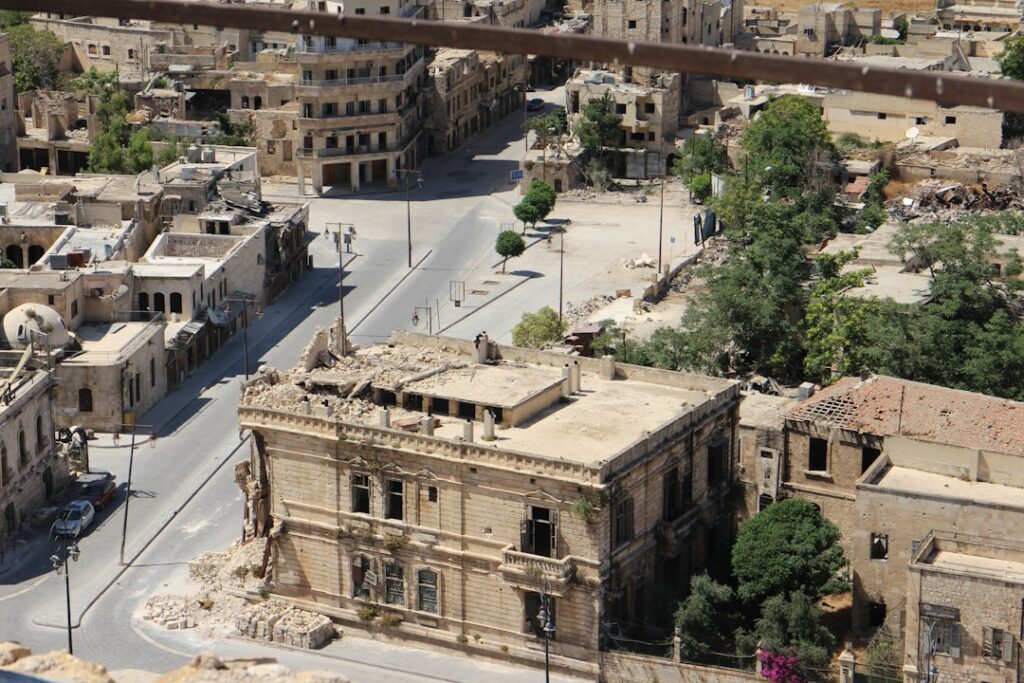
Syria’s Dead Cities, Syria: Essential Ancient Echoes, Olive Groves & Byzantine Mysteries (2026)
While crowds flock to the Roman ruins of Jerash or Baalbek, Syria’s Dead Cities offer a profoundly different, and arguably more haunting, historical encounter. Scattered across the limestone hills between Aleppo and Idlib, over 700 abandoned settlements from the 1st to 8th centuries AD sit in silent testimony to a forgotten world. Here, you won’t find reconstructed temples for tour buses, but entire ghost towns of basilicas, villas, and olive presses, their stone skeletons standing eerily intact amidst wildflowers and working farms. This is history without barriers, where you can wander alone through the echoing nave of a 5th-century church, the only sound being the wind through the arches.
Why Syria’s Dead Cities, Syria Stands Out

A man walking down a dirt road between two buildings, Syria’s Dead Cities, Syria
- Historic Architecture: The 5th-century Basilica of Saint Simeon Stylites, built around the pillar where the ascetic saint lived for 37 years, was one of Christianity’s most important pilgrimage sites and a marvel of early Byzantine engineering.
- Cultural Scene: Experiencing the timeless rhythm of life in nearby villages like Dana, where modern communities live amongst and often repurpose the ancient stones, creating a living archaeological landscape.
- Local Specialties: Thick, smoky Aleppian kebabs and cherry kebab (Kebab Karaz), best enjoyed in Aleppo after a day of exploration, showcasing the region’s rich culinary heritage that dates back to the cities’ trading heyday.
Pro Tip: The absolute best time to visit is during the shoulder seasons of April-May or September-October. The days are mild (20-25°C), the hills are green or golden, and the low-angle sunlight in the late afternoon casts long, dramatic shadows that make the ruins incredibly photogenic. Aim to be at key sites like Serjilla or Al Bara around 4 PM.
Map of Syria’s Dead Cities, Syria
Use these interactive maps to explore Syria’s Dead Cities, Syria and plan your route:
📍 View Syria’s Dead Cities, Syria on OpenStreetMap
🗺️ Open Syria’s Dead Cities, Syria in Google Maps
Planning Your Trip: Practical Essentials
Getting There and Around
- By Air: The primary international gateway is Aleppo International Airport (ALP). As flight schedules are currently limited and changeable, you must check with airlines like Cham Wings or SyrianAir for the latest routes, often from Middle Eastern hubs. From Aleppo, you’ll need a private driver. Book flights at Skyscanner for best deals.
- By Train: Domestic rail travel in Syria is extremely limited and not a practical option for reaching the Dead Cities region. Overland travel from neighboring countries is complex and requires extensive pre-arranged documentation and guides.
- By Car: Hiring a car with a knowledgeable local driver-guide is not just recommended, it’s essential. Roads are generally good, but navigation between the scattered sites and understanding local checkpoints requires expertise. Expect to pay $80-$150 per day for a car, driver, and guide, depending on group size. Compare car rentals at RentalCars.com for options in Aleppo.
- Local Transport: There is no public transport linking the Dead Cities. Your arranged vehicle and guide will be your sole transport. Within Aleppo, taxis are inexpensive and the best way to get around.
Best Time to Visit
Timing your visit is crucial for comfort and experience. The region has a typical Mediterranean climate with hot, dry summers and cool, wet winters. The landscape transforms dramatically with the seasons, from lush green springs to parched golden summers.
| Season | Weather | Highlights |
|---|---|---|
| Summer (Jun–Aug) | Hot and dry, 30-38°C (86-100°F). Intense sun, no shade at ruins. | Clear skies, long days. Very few tourists. Requires early morning starts and hydration. Not ideal for extensive hiking. |
| Winter (Dec–Feb) | Cool and wet, 5-12°C (41-54°F). Rain likely, especially in Jan-Feb. | Dramatic, moody atmosphere. Ruins can be slippery. Some rural roads may be difficult. You’ll likely have sites completely to yourself. |
| Shoulder (Apr–May/Sep–Oct) | Ideal, 15-28°C (59-82°F). Mild days, cool nights. Minimal rain. | Perfect hiking weather. Wildflowers in spring, harvest colors in fall. The absolute best time for photography and comfortable exploration. |
Budgeting for Syria’s Dead Cities, Syria

Ancient ruins stand bathed in warm sunlight., Syria’s Dead Cities, Syria
| Category | Budget | Mid-range | Luxury |
|---|---|---|---|
| Accommodation | $20-40/night (basic local hotel in Aleppo) | $60-100/night (comfortable 3-star hotel in Aleppo) | $150+/night (best available 4-star in Aleppo) |
| Meals | $5-10 (street food, local kebab shops) | $15-25 (restaurant meals with multiple courses) | $40+ (fine dining at top Aleppo restaurants) |
| Transport | N/A (guide/driver is a fixed cost) | $80-120/day (shared cost for car & guide) | $150+/day (private luxury vehicle & expert guide) |
| Activities | Free (most Dead Cities have no formal entry fee) | $10-20 (potential site donations, museum fees in Aleppo) | $50+ (specialized archaeological tours, private access) |
| Daily Total | $110-170/day* | $180-270/day* | $350+/day* |
*Per person, based on two people sharing transport/accommodation. The driver/guide cost is the largest variable.
Top Attractions and Must-See Sights
| Attraction | Description | Hours | Entry Fee |
|---|---|---|---|
| Basilica of Saint Simeon Stylites (Qalaat Semaan) | The monumental 5th-century cruciform church built around St. Simeon’s pillar, a masterpiece of early Byzantine architecture. | Sunrise to Sunset | ~500 SYP (approx. $1) |
| Serjilla | The most atmospheric and well-preserved “dead city,” featuring a tavern, baths, olive presses, and villas frozen in time. | Sunrise to Sunset | Free (Donation appreciated) |
| Al Bara | A vast, sprawling city known for its unique pyramid-topped tombs and ruins engulfed by olive and fig trees. | Sunrise to Sunset | Free |
| Dana | A partially inhabited village where ancient ruins blend seamlessly with modern homes, offering a unique living history lesson. | Daylight Hours | Free |
3-Day Itinerary: Syria’s Dead Cities, Syria’s Highlights & Hidden Gems
Day 1: The Byzantine Heartland
- Morning (7:30 AM): Depart Aleppo early for the 90-minute drive north. Your first stop is the Basilica of Saint Simeon Stylites. Spend 2 hours exploring the four basilicas radiating from the central octagon. Climb the nearby hill for a panoramic view of the complex against the plains.
- Afternoon (12:30 PM): Drive 30 minutes to the village of Dana. Have a simple lunch of local bread, cheese, and olives packed by your guide. Then, wander the labyrinthine paths where Byzantine doorways lead to modern courtyards. Visit the well-preserved Church of Julianos with its intricate carvings.
- Evening (6:00 PM): Return to Aleppo. For dinner, head to Beit Wakil in the old city for an atmospheric meal in a restored Ottoman house. Try the Fatteh (yogurt, chickpeas, and bread) and Muhammara (walnut and red pepper dip).
Day 2: Ghost Towns of the Limestone Massif
- Morning (8:00 AM): Drive south into the heart of the Dead Cities. Start at Serjilla. Spend the morning here (2-3 hours), exploring the remarkably intact two-story villa, the public baths with their arched windows, and the tavern. It’s easy to imagine daily life in this 5th-century town.
- Afternoon (12:00 PM): Enjoy a picnic lunch amidst the ruins. Then, drive a short distance to Al Bara. Explore its extensive, tree-shaded ruins, seeking out the distinctive pyramid-topped mausoleums. The scale here is immense, speaking to the city’s past wealth from wine and olive oil.
- Evening (5:30 PM): As the sun begins to set, have your driver take you to a vantage point overlooking the massif. The golden light on the pale limestone is unforgettable. Return to Aleppo for dinner at Sissi House, known for its excellent grilled meats and Aleppian specialties like Kebab Karaz.
Day 3: Aleppo’s Legacy & Departure
- Morning (9:00 AM): Dedicate your last morning to Aleppo’s legendary Citadel and the surrounding Old Souq (parts of which are being restored). Explore the citadel’s fortifications and palace ($2 entry). In the souq, witness resilience and renewal, and perhaps buy some famous Aleppo soap or spices.
- Afternoon (1:00 PM): Have a final lunch at a local favorite like Abu Haidar for the best Shawarma in the city. Take a moment to visit the National Museum of Aleppo (if open) to see artifacts from the Dead Cities, providing scholarly context to your explorations.
- Evening (6:00 PM): Enjoy a farewell coffee at a café in the Azizia neighborhood, reflecting on the profound journey through layers of history. For a final dinner, try Khan al Harir for a mix of traditional dishes in a charming setting.
Cultural Insights & Etiquette
- Language: Arabic is the official language. While some in the tourism industry in Aleppo speak English, learning a few phrases is deeply appreciated. “Marhaba” (Hello), “Shukran” (Thank you), and “Ma’ al salama” (Goodbye) go a long way.
- Customs: Hospitality is sacred. You will likely be invited for tea. Always accept—it’s a sign of respect. When visiting sites near villages, be discreet with photography of people, especially women, and always ask permission first.
- Tipping: Tipping your driver and guide is expected for good service. For a multi-day trip, a tip of 10-15% of the total tour cost, given at the end, is appropriate. In restaurants, a 5-10% tip is customary if service isn’t included.
- Dress Code: Modesty is key, especially outside Aleppo. For both men and women, clothing should cover shoulders and knees. Loose, breathable fabrics are best for the climate and culture.
- Business Hours: Government offices and some shops close for a long lunch break (1-4 PM). Friday is the weekly holiday. Schedules are often flexible, so patience is a virtue.
Where to Eat: Syria’s Dead Cities, Syria’s Best Bites
Syrian cuisine is a highlight of any visit. Aleppo is considered the culinary capital of the region, famous for its nuanced use of spices like sour cherry, pomegranate molasses, and cumin. Meals are social, shared affairs, often beginning with a vast array of mezze.
Must-Try Local Specialties
- Kebab Karaz: Unique to Aleppo, these are meatballs (usually lamb) cooked in a rich, tangy sour cherry and pine nut sauce, served with bread. Find it at traditional grills like Sissi House.
- Muhammara: A vibrant red dip made from walnuts, roasted red peppers, breadcrumbs, and pomegranate molasses. It’s a staple starter at almost every meal.
- Fatteh: A comforting dish of yogurt, chickpeas, toasted bread, and sometimes meat, topped with pine nuts and butter. Beit Wakil serves an excellent version.
Restaurant Recommendations by Budget
| Type | Restaurant | Specialty | Price Range |
|---|---|---|---|
| Budget | Abu Haidar (Various locations in Aleppo) | Shawarma and grilled chicken sandwiches | $3-5 per person |
| Mid-range | Sissi House (Aleppo) | Mixed grills, Kebab Karaz, and extensive mezze | $15-25 per person |
| Fine dining | Beit Wakil (Aleppo Old City) | Atmospheric traditional dining in an Ottoman house with classic dishes | $30-50 per person |
Where to Stay
All accommodations for visiting the Dead Cities will be based in Aleppo. The city offers a range from basic hotels to a few more comfortable, renovated options. Location is key—staying centrally helps with evening meals and exploring the city itself. Compare prices and book at Booking.com or Airbnb for apartments.
Best Neighborhoods for Accommodation
- Azizia: A central, bustling commercial district with many hotel options, restaurants, and cafes. Well-connected for taxis. It’s practical but lacks the old-world charm.
- Old City (Bab al-Faraj area): Close to the Citadel and the entrance to the souqs. Offers a more atmospheric stay, with some charming smaller hotels and easy access to historic sites. Some areas are still under reconstruction.
- University Area: A quieter, more residential part of the city. You’ll find some modern hotels here. It’s a bit further from the historic core but offers a local vibe.

An old building with balconies and a clock, Syria’s Dead Cities, Syria
FAQs: Your Syria’s Dead Cities, Syria Questions Answered
1. Is Syria’s Dead Cities, Syria safe at night?
Safety conditions in Syria are fluid and must be rigorously checked with your home country’s travel advisories and reputable tour operators on the ground immediately before travel. While the Dead Cities themselves are remote and peaceful, travel always requires an expert local guide who understands the current security landscape, checkpoints, and protocols. In Aleppo, moving around the central areas in the evening with your guide is generally considered safe, but you should always follow their explicit advice.
2. What currency is used and are credit
{“@context”: “https://schema.org”, “@type”: “FAQPage”, “mainEntity”: [{“@type”: “Question”, “name”: “What is the best time to visit Syriau2019s Dead Cities?”, “acceptedAnswer”: {“@type”: “Answer”, “text”: “The best time to visit Syriau2019s Dead Cities depends on your preferences. Generally, the dry season offers the most pleasant weather for sightseeing and outdoor activities.”}}, {“@type”: “Question”, “name”: “How many days do I need in Syriau2019s Dead Cities?”, “acceptedAnswer”: {“@type”: “Answer”, “text”: “Most travelers spend 3-5 days in Syriau2019s Dead Cities to see the main attractions. A week allows for a more relaxed pace and day trips.”}}, {“@type”: “Question”, “name”: “Is Syriau2019s Dead Cities expensive to visit?”, “acceptedAnswer”: {“@type”: “Answer”, “text”: “Syriau2019s Dead Cities can be visited on various budgets. Accommodation ranges from hostels to luxury hotels, and local restaurants offer affordable dining.”}}]}
Related Guides
Explore more destinations similar to Syria’s Dead Cities:
- Tanna’s Yasur Volcano, Vanuatu’s Essential Fire, Kastom & Island Adventure (2026)
- Kibale National Park, Uganda’s Hidden Chimpanzees, Crater Lakes & Canopy Walks (2026)
- Eiffel Tower, France: Essential Iconic Views, Iron Ingenuity & Parisian Romance (2025)
- Ankarafantsika National Park, Madagascar: Best Lemurs, Lakes & Ancient Forests (2026)

