
Fiji’s Lau Islands, Fiji’s Stunning Seclusion, Culture & Untouched Reefs (2026)
Ask locals about the true Fiji, and they’ll often point eastward, beyond the main islands, to a scattered constellation of over 60 islands where traditional life still dictates the rhythm. The Lau Islands, receiving fewer than 500 international tourists annually, are Fiji’s final frontier, a place where access is governed by communal permission and the ocean is the only highway. This isn’t a packaged resort experience; it’s a rare invitation into a world that has deliberately stayed apart.
Why Fiji’s Lau Islands, Fiji Stands Out

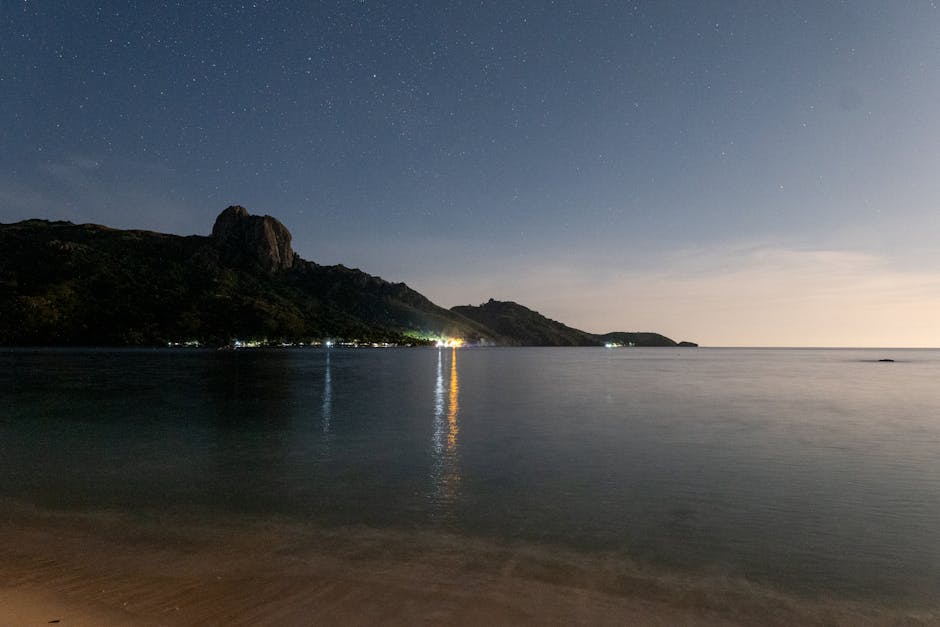
Serene sunrise over a tranquil Fijian beach with a boat, Fiji’s Lau Islands, Fiji
- Historic Architecture: The 140-year-old Moala Island Church, built from coral lime and timber in the 1880s, stands as a testament to early missionary influence and remarkable local craftsmanship.
- Cultural Scene: Witness the ancient, hypnotic *meke* dances on Lakeba Island, where stories of gods and ancestors are passed down through precise, unchanging movements and polyphonic chanting.
- Local Specialties: You must try *kakana dina* (real food), like freshly caught *walu* (Spanish mackerel) baked in coconut milk (*lolo*) with taro leaves, a dish that defines Lauan hospitality.
Pro Tip: Your visit hinges on the weather and transport. The absolute best window is during the dry, calm season from late May to early October. You must secure permission from the *Turaga ni Koro* (village headman) before visiting any island, a process best facilitated by a reputable, culturally-sensitive tour operator months in advance.
Map of Fiji’s Lau Islands, Fiji
Use these interactive maps to explore Fiji’s Lau Islands, Fiji and plan your route:
📍 View Fiji’s Lau Islands, Fiji on OpenStreetMap
🗺️ Open Fiji’s Lau Islands, Fiji in Google Maps
Planning Your Trip: Practical Essentials
Getting There and Around
- By Air: The only scheduled access is via Fiji Airways’ weekly Twin Otter flight from Suva (Nausori Airport) to Lakeba Island. This 1.5-hour flight is notoriously weight-restricted and books out months ahead. Book flights at Skyscanner for best deals.
- By Sea: The government vessel, the *MV *Cagivou*, departs from Suva Wharf roughly every two weeks on a multi-day circuit of the islands. This is an adventure in itself—book a cabin well in advance through the Shipping Corporation of Fiji.
- By Charter: For small groups, chartering a yacht from Savusavu or a light aircraft is the most flexible (and costly) option, allowing access to remote atolls like Nayau or Vanua Balavu.
- Local Transport: On the islands, you walk. Between islands, you travel via local fishing boats (*camakau*) or small fiberglass boats (*punts*), arranged through your host village—always with a skilled local captain navigating the complex reefs.
Best Time to Visit
The Lau Islands are governed by the South Pacific’s trade winds and cyclone season. Savvy visitors target the dry, southeast trade wind period for calm seas and reliable access.
| Season | Weather | Highlights |
|---|---|---|
| Dry Season (May–Oct) | 22°C–28°C (72°F–82°F), low humidity, steady SE trade winds, minimal rain. | Optimal sailing, diving, and village visit conditions; clear skies; reliable inter-island transport. |
| Wet/Cyclone Season (Nov–Apr) | 25°C–31°C (77°F–88°F), high humidity, heavy rainfall, risk of cyclones (Jan-Mar). | Not recommended; most transport is canceled, seas are dangerously rough, and many villages batten down. |
| Shoulder Months (April, November) | Transitional weather; can be pleasant but with increasing/decreasing rain and wind. | A calculated risk; you may find better availability but must be flexible as weather can change plans abruptly. |
Budgeting for Fiji’s Lau Islands, Fiji

Peaceful tropical island scene with expansive sky in Nadi, Fiji., Fiji’s Lau Islands, Fiji
| Category | Budget | Mid-range | Luxury |
|---|---|---|---|
| Accommodation | F$80-120/night (village homestay with meals) | F$250-400/night (pre-arranged guest bure) | F$600+/night (private yacht charter per person) |
| Meals | Included in homestay | F$40-60 for extra meals/snacks | Private chef on charter |
| Transport | F$50-100 (local boat transfers) | F$200-300 (inter-island charters) | F$5000+ (full yacht/air charter) |
| Activities | Free (village walks, snorkeling) | F$50-100 (guided fishing, kava ceremony gift) | F$200+ (private dive guides, exclusive excursions) |
| Daily Total | F$130-220 (~$60-100 USD) | F$540-860 (~$240-380 USD) | F$1000+ (~$450+ USD) |
Top Attractions and Must-See Sights
| Attraction | Description | Hours | Entry Fee |
|---|---|---|---|
| Qilaqila (Bay of Islands), Vanua Balavu | A breathtaking maze of limestone islets and mushroom-shaped rocks rising from a turquoise lagoon, best explored by kayak or small boat. | Daylight hours | Requires village guide fee (~F$50) |
| Lakeba Island (Tubuai) | The historical and cultural heart of Lau, home to the chiefly village of Tubou, ancient stone mounds, and the Uluibau Fortress site. | Always open; visit villages respectfully during daylight. | Sevusevu (kava gift) presentation required (~F$50) |
| The Southern Lau Atolls (Fulaga, Ogea) | World-class bonefishing flats and some of Fiji’s most pristine, uninhabited coral reefs, a paradise for anglers and snorkelers. | Daylight hours | Access via charter; fishing license required (~F$70/day) |
| Mua-i-Walu (The Eight-Faced Rock), Nayau | A sacred stone on Nayau Island, central to the origin legend of the chiefly household and a powerful spiritual site. | Daylight hours, with permission | Sevusevu and guide essential |
3-Day Itinerary: Fiji’s Lau Islands, Fiji’s Highlights & Hidden Gems
Note: This assumes a base on Lakeba Island, the transport hub, with day trips.
Day 1: Immersion & History on Lakeba
- Morning (7-9 AM): After your *sevusevu* (kava root gift) presentation in Tubou Village, take a guided walk to the Uluibau Fortress site, where you can see ancient defensive trenches and hear legends of Tongan invasions.
- Afternoon (12-3 PM): Enjoy a lunch of *ota* (raw fish in lime and coconut) prepared by your hosts. Then, visit the Lakeba Island Church (1880s) and the small museum showcasing traditional Lauan pottery and *masi* (tapa cloth).
- Evening (6-8 PM): Participate in a *yaqona* (kava) ceremony. Afterwards, share a *lovo* (earth oven) feast of chicken, pork, and root crops, followed by storytelling under the stars.
Day 2: The Majesty of Vanua Balavu
- Morning (Early Departure): Take a pre-arranged 1.5-hour boat transfer (~F$150 return) to Vanua Balavu. Your first stop is the stunning Qilaqila (Bay of Islands) for a morning of kayaking and swimming in its serene channels.
- Afternoon (12-3 PM): Land at Lomaloma Village for a lunch of fresh lobster if available. Visit the historic Catholic mission station and the site where the Tongan warlord Ma’afu once ruled in the 19th century.
- Evening (6 PM): Return to Lakeba. Enjoy a relaxed dinner and ask your hosts about the intricate social links between Lau, Tonga, and Rotuma.
Day 3: Reefs, Crafts & Farewells
- Morning (7-9 AM): Take a short boat trip to a nearby reef passage for a spectacular snorkel among untouched coral gardens teeming with reef sharks, turtles, and tropical fish.
- Afternoon (12-3 PM): Visit a local artisan in a nearby village watching (or trying) the making of *masi* or finely woven mats (*kato*). Purchase directly as a meaningful souvenir. Enjoy a final lunch of *rourou* (taro leaf soup).
- Evening (6-8 PM): Your farewell *meke* (dance) performance. Present a small gift to your host family (school supplies for children or groceries are appreciated) before a final, quiet bowl of kava.
Cultural Insights & Etiquette
- Language: Fijian is spoken; key phrases are “Bula” (hello), “Vinaka” (thank you), and “Tulou” (excuse me when passing). In Lau, many also understand Tongan.
- Customs: The *sevusevu* (presentation of kava root) is non-negotiable for entry into a village. Dress modestly, always remove hats and sunglasses when approaching a village, and never touch anyone’s head.
- Tipping: Not customary. Instead, give a collective gift to the village at the end of your stay or contribute to a school/church fund. Present it to the chief or headman.
- Dress Code: **Crucial.** In villages, women must wear sulus (sarongs) covering the knees, and shoulders should be covered. Men should wear sulus or long shorts and a shirt. Swimwear is for designated areas only.
- Business Hours: Life follows the sun and the church bell. Sunday is strictly for worship and rest—no work, loud activities, or travel. Plan to stay put and observe the day of rest.
Where to Eat: Fiji’s Lau Islands, Fiji’s Best Bites
Forget restaurants. Dining in Lau is about *kakana dina* (real food) shared from the earth and sea. You’ll eat what the village catches and harvests, prepared in traditional earth ovens (*lovo*), steamed in coconut milk (*palusami*), or grilled over open fires. Meals are communal events, often following a kava session.
Must-Try Local Specialties
- Kokoda: Fiji’s ceviche: fresh reef fish marinated in lime and mixed with coconut cream, onion, and chili. The version here, often made with *walu*, is exceptionally fresh.
- Palusami: Young taro leaves packed with onions and corned beef or fish, soaked in coconut milk, wrapped in banana leaves, and baked until creamy and rich.
- Duruka: Fiji’s “asparagus,” the unopened flower of a cane-like plant. It’s boiled or cooked in coconut milk and has a unique, delicate flavor. A seasonal treat (Apr-May).
Dining Experience Recommendations
| Type | Experience | Specialty | Price Range |
|---|---|---|---|
| Village Homestay | Meals with your host family in Tubou, Lakeba | Daily *lovo* feasts and fresh seafood | Included in stay (F$80-120/night) |
| Community Feast | Post-*meke* celebration meal, various islands | Whole roasted pig, cassava, *rourou* | Often included as part of cultural visit |
| Private Charter | Chef-prepared meals on yacht, Southern Lau | Sashimi-grade tuna, lobster, international fusion | Included in premium charter cost |
Where to Stay
Accommodation is basic, authentic, and community-based. There are no resorts. Options range from simple village homestays to a few pre-arranged guesthouses. Your stay directly benefits the community. Bookings are almost never online and must be arranged through a trusted tour operator or by direct phone contact with the village headman.
Best Islands for Accommodation
- Lakeba Island: The main hub. Offers several homestays and guest bure. Best for first-time visitors as it has the most infrastructure (a small shop, nurse station) and is the transport center. Ideal for cultural immersion.
- Vanua Balavu: Has a couple of dedicated guesthouses catering to visiting yachties and divers. Offers more independence than a homestay while still providing cultural access. Perfect for those focused on the Bay of Islands.
- Southern Atolls (Fulaga/Ogea): Primarily accessed via liveaboard yacht charters. Accommodation is on the boat. This is for serious anglers and divers seeking absolute remoteness and world-class flats fishing.

Tranquil evening beach scene with boats and palm trees on Yasawa Islands, Fiji., Fiji’s Lau Islands, Fiji
FAQs: Your Fiji’s Lau Islands, Fiji Questions Answered
1. Is Fiji’s Lau Islands, Fiji safe at night?
Yes, the villages are incredibly safe. Crime against visitors is virtually unheard of. The primary considerations are environmental: use a flashlight at night on uneven paths, be mindful of the ocean’s edge, and always respect local customs to ensure social harmony.
2. What currency is used and are credit cards accepted?
The Fijian Dollar (FJD) is the currency. **Bring ample cash in small denominations.** There are no ATMs and credit cards are useless in Lau. You’ll need cash for transport, guide fees, *sevusevu* gifts, and souvenir purchases. Plan for everything and bring extra.
3. How do I get from the airport to the village?
On Lakeba, you will be met at the airstrip by your host family or village representative. Transfer to the village is by their vehicle or truck. This is part of your arranged stay. For other islands, your boat transfer will be waiting. For complex itineraries, consider booking through a specialist who handles logistics. Book broader Fiji tours at GetYourGuide for convenience.
4. Do I need to speak the local language?
No, but it helps immensely. English is taught in schools, so most younger people and your hosts will speak some. Learning a few basic Fijian phrases (Bula, Vinaka, Tulou) shows deep respect and will be met with warm smiles. A phrasebook is a great idea.
5. What’s the appropriate dress code?
This is the most critical non-negotiable. In villages: women—sulu tied to the knees, covered shoulders
Explore More Destinations
- Jozani, Tanzania on a Budget: an Ancient Forest for $35/Day (2026)
- Nsumbu, Zambia on a Budget: Wild Africa for $40/Day (2026)
- Semporna, Malaysia on a Budget: Paradise for $35/Day (2026)
- Khuzestan, Iran on a Budget: Ancient Empires for $30/Day (2026)
- Ngerulmud, Palau on a Budget: Island Majesty for $45/Day (2026)
Ready to Visit Fiji’s Lau Islands?
Start planning your trip today. Compare hotels, find the best tours, and get insider tips.
Your adventure in Fiji’s Lau Islands starts here →
Related Guides
Explore more destinations similar to Fiji’s Lau Islands:
- Chapada dos Veadeiros, Brazil’s Ultimate Waterfalls, Canyons & Crystal Energy (2025)
- Tanna Island, Vanuatu: Essential Volcanoes, Kastom Culture & Untouched Paradise (2025)
- Maria La Gorda, Cuba’s Hidden Diving, Dolphins & Deserted Beaches (2025)
- Dhank, Oman’s Hidden Forts, Fossils & Mountain Serenity (2026)
{“@context”: “https://schema.org”, “@type”: “FAQPage”, “mainEntity”: [{“@type”: “Question”, “name”: “What is the best time to visit Fijiu2019s Lau Islands?”, “acceptedAnswer”: {“@type”: “Answer”, “text”: “The best time to visit Fijiu2019s Lau Islands depends on your preferences. Generally, the dry season offers the most pleasant weather for sightseeing and outdoor activities.”}}, {“@type”: “Question”, “name”: “How many days do I need in Fijiu2019s Lau Islands?”, “acceptedAnswer”: {“@type”: “Answer”, “text”: “Most travelers spend 3-5 days in Fijiu2019s Lau Islands to see the main attractions. A week allows for a more relaxed pace and day trips.”}}, {“@type”: “Question”, “name”: “Is Fijiu2019s Lau Islands expensive to visit?”, “acceptedAnswer”: {“@type”: “Answer”, “text”: “Fijiu2019s Lau Islands can be visited on various budgets. Accommodation ranges from hostels to luxury hotels, and local restaurants offer affordable dining.”}}]}

