
Serengeti Migration, Tanzania: Amazing Predators, Plains & The Greatest Show on Earth (2026)
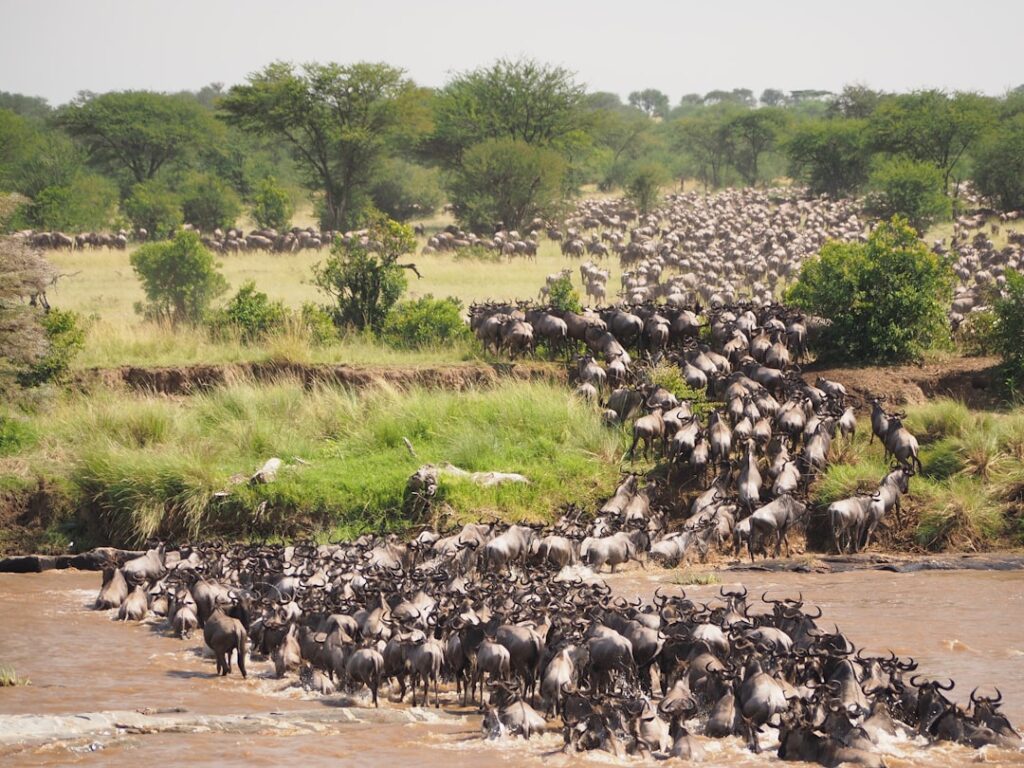
Just before dawn in the Serengeti, the air vibrates with a low, distant rumble that’s felt more than heard. It’s the sound of over 1.5 million wildebeest, 200,000 zebra, and half a million gazelle on the move—a single, living organism stretching 40 kilometers across the plains. This isn’t just a safari; it’s witnessing the planet’s last great terrestrial mammal migration, a 1,200-kilometer annual cycle of life and death that has shaped this ecosystem for millennia. Your journey tracks the heartbeat of Africa itself.
Why Serengeti Migration, Tanzania Stands Out

Three zebras drinking water on river, Serengeti Migration, Tanzania
- Historic Architecture: The Olduvai Gorge, known as the “Cradle of Mankind,” where the Leakeys discovered 1.8-million-year-old hominid fossils, offering a profound perspective on human history.
- Cultural Scene: The Maasai people, whose semi-nomadic pastoralist lifestyle has coexisted with the wildlife for centuries; visiting an authentic manyatta (homestead) is a cultural immersion.
- Local Specialties: Nyama Choma, perfectly grilled goat or beef, best enjoyed under the stars at a campfire after a long day on safari.
Pro Tip: To witness the dramatic river crossings of the Mara River—where crocodiles lie in wait—plan your visit for the northern Serengeti (the Mara Region) between late July and October. Your best bet is to base yourself at a camp in the Kogatende area for several days, as crossing times are unpredictable.
Map of Serengeti Migration, Tanzania
Use these interactive maps to explore Serengeti Migration, Tanzania and plan your route:
📍 View Serengeti Migration, Tanzania on OpenStreetMap
🗺️ Open Serengeti Migration, Tanzania in Google Maps
Planning Your Trip: Practical Essentials
Getting There and Around
- By Air: Most travelers fly into Kilimanjaro International Airport (JRO) or Julius Nyerere International Airport (DAR) in Dar es Salaam. From there, you’ll take a small charter flight to one of the Serengeti’s several airstrips (Seronera, Kogatende, Grumeti). Book flights at Skyscanner for best deals on international routes, and use local operators like Coastal Aviation or Auric Air for charters.
- By Train: No direct train service to the Serengeti. The national railway connects Dar es Salaam to inland cities, but the final journey is always by road or air.
- By Car: A rugged 4×4 with a professional driver-guide is non-negotiable for navigating the park’s tracks. Self-driving is possible but only for the very experienced, given the complex terrain and park rules. Multi-day road safaris often depart from Arusha. Compare car rentals at RentalCars.com for pre- or post-safari travel.
- Local Transport: Within the Serengeti, transport is exclusively via your booked safari vehicle. There is no public transport inside the national park.
Best Time to Visit
The “best” time is dictated by the migration’s location. The cycle is perpetual, so there’s always a spectacle, but the nature of the action changes dramatically with the seasons and rains.
| Season | Weather | Highlights |
|---|---|---|
| Dry Season (Jun–Oct) | Warm, sunny days (25-28°C), cool nights, very little rain. Dusty plains. | Peak wildlife viewing in the north around the Mara River (dramatic crossings). Animals congregate at water sources. High season with more visitors. |
| Calving Season (Jan–Mar) | Warmer (28-30°C), sporadic afternoon showers, lush green landscapes. | The herds are in the Southern Serengeti and Ndutu area. Witness thousands of wildebeest calves born daily, attracting high predator activity. Fewer crowds than in the north. |
| Shoulder (Apr–May/Nov) | Green season; heavier rains, especially in April/May. Roads can be challenging. | Lowest tourist numbers and lower prices. Spectacular photography with dramatic skies, newborn animals, and migratory birds. Some lodges may close in May. |
Budgeting for Serengeti Migration, Tanzania

Bulls and zebras grazing on grass plains, Serengeti Migration, Tanzania
| Category | Budget | Mid-range | Luxury |
|---|---|---|---|
| Accommodation | $50-150/night (camping or basic public campsites) | $300-600/night (comfortable tented camps/lodges) | $800-$2,000+/night (high-end safari lodges & boutique camps) |
| Meals | $20-30/day (self-catering at campsites) | Included at most camps/lodges | Gourmet meals & premium drinks included |
| Transport | $200-350/day (shared group safari vehicle) | $400-600/day (private vehicle & driver-guide) | Included in fly-in safari packages |
| Activities | Park fees ($71/person/day), game drives included in tour | Hot air balloon safari ($550-$600/person), guided walks | Private guided walks, bespoke vehicle safaris, community visits |
| Daily Total | $350-$550/day | $700-$1,200/day | $1,500-$3,000+/day |
*Note: Most mid-range and luxury options are all-inclusive (accommodation, meals, drinks, game drives, park fees). Budget is per person, based on double occupancy.
Top Attractions and Must-See Sights
| Attraction | Description | Hours | Entry Fee |
|---|---|---|---|
| Seronera Valley | The park’s central “big cat capital,” with resident prides of lion and leopards year-round, independent of the migration. | Dawn to Dusk (Park Hours) | Included in $71/day park fee |
| Mara River Crossings | The migration’s most dramatic theater, where herds brave crocodile-infested waters in a chaotic, thrilling survival spectacle. | Daylight hours, Jul-Oct | Included in park fee |
| Ndutu Plains (NCA) | Vast calving grounds in the Ngorongoro Conservation Area, offering intimate predator-prey interactions from Jan-Mar. | Dawn to Dusk | $71/day NCA fee |
| Hot Air Balloon Safari | A silent sunrise flight over the plains, offering a breathtaking aerial perspective on the herds, followed by a champagne bush breakfast. | Pre-dawn launch | $550-$600 per person |
3-Day Itinerary: Serengeti Migration, Tanzania’s Highlights & Hidden Gems
This itinerary assumes a July-October visit, focusing on the Northern Serengeti.
Day 1: Arrival & The Central Serengeti Theatre
- Morning: Catch an early charter flight from Arusha to Seronera Airstrip. By 7:30 AM, you’re in your safari vehicle, heading straight for the Seronera River Valley. Your guide will track recent leopard sightings in the iconic sausage trees.
- Afternoon: Enjoy a packed lunch at a scenic kopje (rock outcrop) before an afternoon drive to Retina Hippo Pool. Watch dozens of hippos grumble and bask, then head to your tented camp in the central region, like Serengeti Serena Safari Lodge.
- Evening: Sundowner drinks overlooking the plains, followed by a dinner of Nyama Choma and swapping stories with fellow travelers under a blanket of stars.
Day 2: Journey North to the River of Life & Death
- Morning: After a 5:30 AM wake-up call, embark on a full-day transfer north towards the Mara River (approx. 4-5 hour drive with game viewing). Stop en route at the Bologonja Springs, a hidden oasis frequented by elephants and antelope.
- Afternoon: Arrive at your northern camp, such as Sayari Camp in Kogatende. Have a late lunch and then immediately head out to scout the riverbanks. Your guide will communicate with other drivers to locate a potential crossing site.
- Evening: Patience is key. You may wait hours by the river, but the potential reward—a thunderous, dusty crossing—is worth it. Return to camp for a well-earned dinner.
Day 3: Predators & Perspectives
- Morning: Opt for a pre-dawn hot air balloon safari ($550-$600) over the Lamai Wedge, floating silently over grazing herds, followed by a luxurious champagne breakfast in the bush. Alternatively, take an early game drive to look for lions feasting on a recent kill.
- Afternoon: Visit a local Maasai manyatta (homestead) for a cultural tour ($20-$30 per person). Learn about their traditions, crafts, and remarkable coexistence with wildlife. Enjoy a final picnic lunch in the bush.
- Evening: One last late-afternoon game drive, focusing on the beautiful rolling hills of the northern Serengeti. Enjoy a farewell dinner at your camp, listening to the nocturnal sounds of the African night.
Cultural Insights & Etiquette
- Language: Swahili is the national language. Key phrases: “Jambo” (Hello), “Asante sana” (Thank you very much), “Habari?” (How are you?). English is widely spoken by guides and lodge staff.
- Customs: Always greet people politely before launching into questions or requests. When visiting a Maasai village, it is respectful to accept their greeting and listen to the elder’s introduction. Ask permission before taking photos of people.
- Tipping: Tipping is customary. A general guideline: $10-$15 per day for your driver-guide, $8-$10 per day for your camp manager, and $5-$7 per day for general staff, per guest. Tips are usually given at the end of your stay in cash (USD).
- Dress Code: Neutral-colored clothing (khaki, green, beige) is best for game drives. Evenings can be cool, so layers are essential. Dress is casual but respectful at lodges.
- Business Hours: Safari days run on daylight. Lodges and camps operate 24/7 for guests. Park gates open around 6 AM and close at 6 PM; all vehicles must be out by dusk.
Where to Eat: Serengeti Migration, Tanzania’s Best Bites
Dining in the Serengeti is an experience defined by location. Meals are almost exclusively provided by your lodge or camp, ranging from lavish bush breakfasts and picnic lunches to multi-course dinners. The focus is on fresh, often locally sourced ingredients, with international dishes adapted for the camp kitchen.
Must-Try Local Specialties
- Nyama Choma: The quintessential East African barbecue. Goat or beef is marinated and grilled over open coals. Best enjoyed at your camp’s nightly fire pit.
- Ugali: A staple maize porridge, often served as an accompaniment to stews. Use your right hand to scoop it and try it with a meat or vegetable sauce.
- Bush Breakfast/Lunch: Not a dish, but a must-do experience. Your guide will set up a full breakfast or lunch table in a scenic spot in the middle of the plains—complete with tablecloths and chilled drinks.
Restaurant Recommendations by Budget
| Type | Restaurant | Specialty | Price Range |
|---|---|---|---|
| Budget | Your Campfire | Grilled sausages, baked potatoes, and stories under the stars. | Included |
| Mid-range | Dining Tent at Serengeti Wilderness Camp | Hearty, well-prepared buffet meals with a mix of local and international cuisine. | Included |
| Fine dining | The Wine Cellar at Singita Faru Faru Lodge | Gourmet African-fusion tasting menus paired with an exceptional South African wine selection. | Included (Premium wines extra) |
Where to Stay
Your choice of accommodation defines your Serengeti experience, from mobile camps that follow the migration to permanent lodges with sweeping views. Location is paramount—choose based on where the herds are during your travel dates. Compare prices and book at Booking.com for some lodges, but specialized safari tour operators often provide the best packages.
Best Neighborhoods for Accommodation
- Central Serengeti (Seronera): Ideal for first-time visitors; offers year-round game viewing with resident wildlife and good access to all park areas. Suits those wanting reliable animal sightings regardless of migration location. Can be busier with day-visitor vehicles.
- Northern Serengeti (Kogatende/Lamai): The place to be from July to October for the river crossings. Remote, exclusive, and dramatic. Suits travelers seeking the migration’s peak drama and willing to pay a premium for location and privacy.
- Southern Serengeti/Ndutu Plains: The heart of the action from January to March for the calving season. Offers intimate, ground-level wildlife encounters. Often located in the Ngorongoro Conservation Area, with slightly different rules. Suits photographers and those interested in predator behavior.

Zebra on brown grass field during daytime, Serengeti Migration, Tanzania
FAQs: Your Serengeti Migration, Tanzania Questions Answered
1. Is Serengeti Migration, Tanzania safe at night?
Inside the national park, you are in wild animal territory. It is extremely unsafe to walk around at night outside of your secured lodge or camp perimeter. All movement after dark must be escorted by camp staff. Follow their instructions explicitly. Crime is virtually non-existent in the remote park, but the wildlife danger is very real.
2. What currency is used and are credit cards accepted?
The Tanzanian Shilling (TZS) is the local currency, but US Dollars (USD) are widely accepted for park fees, tips, and at most lodges. Ensure your USD bills are series 2006 or newer and in good condition (no tears, marks). Major lodges accept credit cards (Visa/Mastercard), but always carry sufficient cash for tips, souvenirs in curio shops, and any incidentals. ATMs are only found in major towns like Arusha, not in the park.
3. How do I get from the airport to the city center?
This refers to your international arrival. From Kilimanjaro Airport (JRO), your pre-arranged safari company will typically provide a transfer to your hotel in Arusha (a 45-60 minute drive). Taxis are available but agree on a price first (approx. $50-$60 to Arusha). For ultimate convenience, you can book a private airport transfer at
Explore More Destinations
- Jozani, Tanzania on a Budget: an Ancient Forest for $35/Day (2026)
- Nsumbu, Zambia on a Budget: Wild Africa for $40/Day (2026)
- Semporna, Malaysia on a Budget: Paradise for $35/Day (2026)
- Khuzestan, Iran on a Budget: Ancient Empires for $30/Day (2026)
- Ngerulmud, Palau on a Budget: Island Majesty for $45/Day (2026)
Ready to Visit Serengeti Migration?
Start planning your trip today. Compare hotels, find the best tours, and get insider tips.
Your adventure in Serengeti Migration starts here →
Related Guides
Explore more destinations similar to Serengeti Migration:
- Tassili n’Ajjer, Algeria’s Hidden Rock Art, Desert Trekking & Starry Nights (2025)
- Burj Khalifa, UAE’s Best Sky-High Views, Architectural Marvels & Urban Oasis (2026)
- Gambela, Ethiopia’s Stunning Wildlife, Waterways & Cultural Crossroads (2025)
- Ferguson Island, Papua New Guinea: Essential Diving, Duk-Duks & Untouched Rainforests (2026)
{“@context”: “https://schema.org”, “@type”: “FAQPage”, “mainEntity”: [{“@type”: “Question”, “name”: “What is the best time to visit Serengeti Migration?”, “acceptedAnswer”: {“@type”: “Answer”, “text”: “The best time to visit Serengeti Migration depends on your preferences. Generally, the dry season offers the most pleasant weather for sightseeing and outdoor activities.”}}, {“@type”: “Question”, “name”: “How many days do I need in Serengeti Migration?”, “acceptedAnswer”: {“@type”: “Answer”, “text”: “Most travelers spend 3-5 days in Serengeti Migration to see the main attractions. A week allows for a more relaxed pace and day trips.”}}, {“@type”: “Question”, “name”: “Is Serengeti Migration expensive to visit?”, “acceptedAnswer”: {“@type”: “Answer”, “text”: “Serengeti Migration can be visited on various budgets. Accommodation ranges from hostels to luxury hotels, and local restaurants offer affordable dining.”}}]}

