
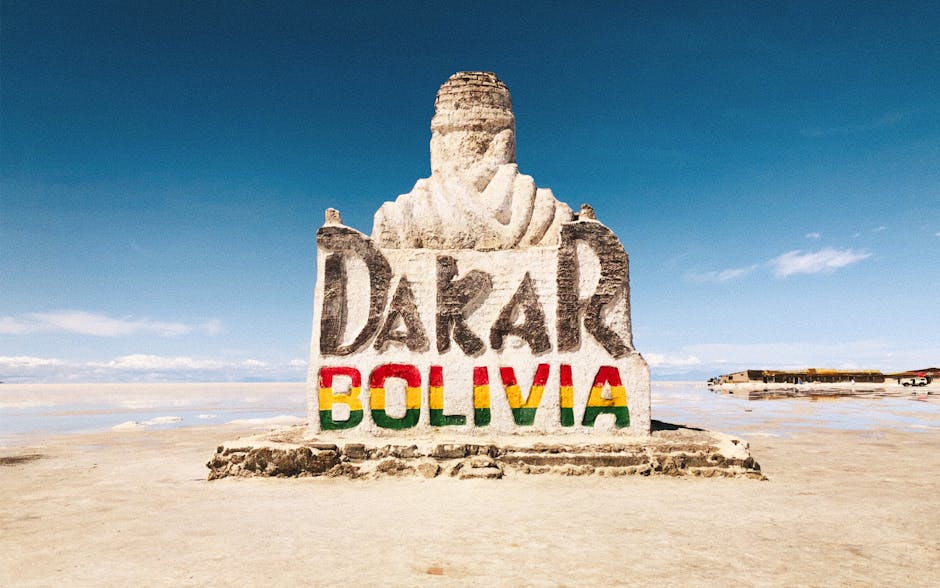
Salar de Coipasa, Bolivia’s Hidden Solitude, Surrealism & Salt-Flat Secrets (2026)
While over 300,000 visitors a year brave the crowds at the famous Salar de Uyuni, fewer than 5,000 make the journey to its ethereal northern cousin, Salar de Coipasa. Here, on Bolivia’s remote Altiplano, you’ll find a 2,218-square-kilometer mirror of the sky, often with not another soul in sight. This is the true, untamed heart of Bolivia’s salt flat country, where the silence is so profound you can hear the salt crystals crack under the sun.
Why Salar de Coipasa, Bolivia Stands Out
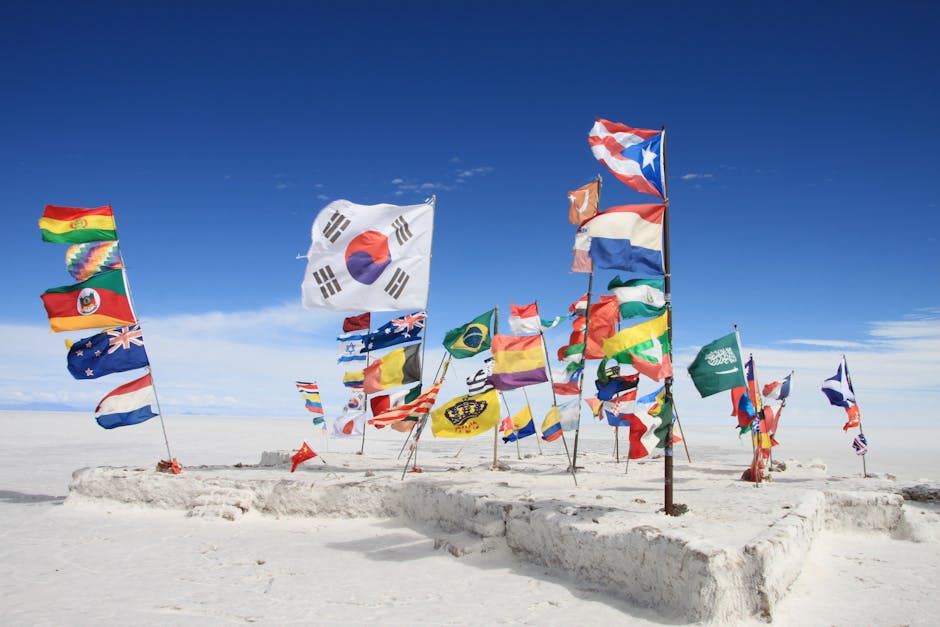
National flags waving on the Uyuni Salt Flats in Bolivia, Salar de Coipasa, Bolivia
- Historic Architecture: The 17th-century Church of Coipasa, built from adobe and salt blocks, stands as a solitary, sun-bleached sentinel on the island of Coipasa, a testament to colonial-era resilience in a harsh landscape.
- Cultural Scene: The annual Fiesta de la Virgen de la Candelaria in early February transforms the quiet village with vibrant Aymara dances, traditional music, and offerings to Pachamama (Mother Earth) for a bountiful harvest.
- Local Specialties: You must try *charque de llama*, sun-dried llama meat that’s a staple protein of the Altiplano, often served with chuño (freeze-dried potatoes) and a fiery llajwa sauce.
Pro Tip: Your best bet is to visit during the dry season (May to October) for driving access, but aim for the weeks just after the rainy season (late March to April) if you want to see the legendary mirror effect with a fraction of Uyuni’s crowds. Always arrive at key viewpoints for sunrise (around 6:30 AM) or sunset (around 6:00 PM) for the most dramatic light.
Map of Salar de Coipasa, Bolivia
Use these interactive maps to explore Salar de Coipasa, Bolivia and plan your route:
📍 View Salar de Coipasa, Bolivia on OpenStreetMap
🗺️ Open Salar de Coipasa, Bolivia in Google Maps
Planning Your Trip: Practical Essentials
Getting There and Around
- By Air: The nearest major airport is in Oruro (ORU), but most travelers fly into El Alto International Airport (LPB) in La Paz. From there, it’s a 5-6 hour drive. Book flights at Skyscanner for best deals.
- By Train: There is no direct train service to Coipasa. The nearest rail service runs to Uyuni. From Uyuni, you’ll need a 4×4 transfer (approx. 4-5 hours). Reserve tickets at Trainline or the national railway website.
- By Car: A 4×4 vehicle with an experienced driver is non-negotiable. The main route is from Oruro via Huachacalla. Roads are unpaved and conditions are extreme. Never drive on the salt flat without a local guide. Compare car rentals at RentalCars.com.
- Local Transport: There is no public transport on the salt flat itself. Travel is exclusively via pre-arranged tours or private 4×4 hire with a driver/guide from gateway towns like Oruro or Uyuni.
Best Time to Visit
The experience of Coipasa is dramatically different based on the season. The dry season offers accessibility and vast, cracked hexagonal patterns, while the wet season creates the famous mirror effect but makes some areas impassable.
| Season | Weather | Highlights |
|---|---|---|
| Dry Season (May–Oct) | Sunny days (15°C/59°F), freezing nights (-10°C/14°F), no rain. | Access to the entire salt flat, seeing geometric salt patterns, ideal for photography of textures, very few tourists. |
| Wet Season (Dec–Mar) | Afternoon rains, milder temps (5-18°C/41-64°F), high humidity. | The legendary mirror effect for sky reflections, stunning sunrise/sunset colors, but limited access; some tours may not run. |
| Shoulder (Apr & Nov) | Transitional, unpredictable weather. | A chance to see both water and salt, minimal crowds, lower prices as tour operators transition between seasons. |
Budgeting for Salar de Coipasa, Bolivia

Photography of a striking tower in the vast Salar de Uyuni salt flat in Bolivia, Salar de Coipasa, Bolivia
| Category | Budget | Mid-range | Luxury |
|---|---|---|---|
| Accommodation | $15-25/night (basic hostel in Oruro) | $80-120/night (tourist-grade hotel in La Paz/Oruro) | $200+/night (boutique hotel in La Paz, all-inclusive tour) |
| Meals | $5-10/day (market food, simple comedores) | $15-25/day (local restaurants, set menus) | $40+/day (fine dining in La Paz prior to tour) |
| Transport | $50/day (shared tour/seat in 4×4) | $100-150/day (private driver for a small group) | $300+/day (exclusive private tour with guide) |
| Activities | Free (village exploration, walking the salt) | $20-50 (guided village tour, small museum fees) | $100+ (specialized photography tours) |
| Daily Total | $70-85/day | $200-300/day | $600+/day |
Top Attractions and Must-See Sights
| Attraction | Description | Hours | Entry Fee |
|---|---|---|---|
| The Salt Flat Itself | A vast, blinding-white expanse where the horizon disappears, perfect for perspective-bending photography and profound solitude. | Daylight hours | Free (Tour cost covers access) |
| Isla Coipasa (Coipasa Island) | A rocky outcrop in the salt flat’s center, home to a traditional Aymara community and the historic Church of Coipasa. | Daylight hours | Small community fee (~$3-5) |
| Salar de Coipasa Viewpoints | Locals recommend the viewpoints on the edges near the villages of Coipasa or Sabaya for panoramic views of the flat with the volcanoes in the distance. | Always accessible | Free |
| Volcán Tata Sabaya | The near-perfect conical stratovolcano (5,380m) that dominates the southern skyline, offering a dramatic backdrop for photos. | Viewable from distance | Free (Climbing requires a guide & permit) |
3-Day Itinerary: Salar de Coipasa, Bolivia’s Highlights & Hidden Gems
Day 1: Gateway & Acclimatization in Oruro
- Morning (7-9 AM): Arrive in Oruro (3,706m). Have a light breakfast of api (a warm purple corn drink) and pastel (fried cheese pastry) at a market stall to start acclimatizing. Visit the Museo Antropológico Eduardo López Rivas (opens 9 AM, ~$2 entry) to understand the region’s pre-Columbian cultures.
- Afternoon (12-3 PM): Explore the famous Santuario del Socavón, the church dedicated to the Virgen del Socavón, patron saint of miners. For lunch, head to Restaurant Pagador for a hearty *plato paceño* (beef, corn, potato, and cheese).
- Evening (6-8 PM): Meet your tour operator for a briefing. Enjoy a dinner of *saice* (a minced meat stew) at a local *penña* like Peña Huari, where you might catch live folk music.
Day 2: Journey to the Infinite White
- Morning (5 AM Departure): Early start for the 4-hour drive to Salar de Coipasa. Stop in the village of Huachacalla. Your first view of the salt flat at sunrise (around 7:30 AM) is unforgettable—a sea of white stretching to distant volcanoes.
- Afternoon (12-3 PM): Drive onto the salt flat itself. Visit Isla Coipasa, meet community members, and see the historic church. Enjoy a packed lunch on the salt with a view of Volcán Tata Sabaya.
- Evening (6-8 PM): Check into basic, family-run accommodations in the village of Coipasa. Have a simple, authentic dinner prepared by your hosts, often quinoa soup and charque. Step outside to witness a night sky ablaze with stars, unobscured by any light pollution.
Day 3: Exploration & Return
- Morning (7-9 AM): After a breakfast of bread and coca tea, head back onto the salt for the iconic perspective photos. With no other tourists, you have all the time and space you need. Visit a small, active salt extraction site to see the traditional harvesting methods.
- Afternoon (12-3 PM): Begin the return journey to Oruro. Stop for a late lunch at a roadside restaurant in Toledo, trying *thimpu* (a lamb and vegetable stew).
- Evening (6-8 PM): Arrive back in Oruro. For a final meal, savor grilled trout from Lake Poopó at El Fogón before your onward travel the next day.
Cultural Insights & Etiquette
- Language: Spanish and Aymara are spoken. Learn a few phrases: “Jallalla” (Hello/Cheers in Aymara), “¿Wayna/Imilla?” (How are you, to a man/woman?), “Yuspagara” (Thank you).
- Customs: Always ask permission before taking photos of people. It’s respectful to make a small offering (like coca leaves) to Pachamama when entering a significant natural site.
- Tipping: For drivers/guides, a tip of 50-100 Bolivianos (~$7-15) per day is appreciated for good service. In small village restaurants, rounding up the bill is sufficient.
- Dress Code: Dress modestly, especially in villages. The sun is intense—wear a hat, sunglasses, and high-SPF sunscreen. Nights are freezing; pack a down jacket, thermal layers, and a warm hat.
- Business Hours: Shops in villages keep irregular hours. Government offices typically open 9 AM-4 PM. Many places close for a long lunch (12-2 PM).
Where to Eat: Salar de Coipasa, Bolivia’s Best Bites
Dining here is about sustenance and tradition. In the villages around Coipasa, you’ll eat what the land provides: llama, quinoa, potatoes, and corn. Meals are hearty, simple, and designed for the high-altitude climate. Most visitors eat meals provided by their tour or at family homes.
Must-Try Local Specialties
- Charque de Llama: Sun-dried, salted llama meat, chewy and rich in flavor. It’s often rehydrated in stews or served pan-fried. The best place to try it is in a family home on Isla Coipasa.
- Quinoa Soup: A creamy, warming soup made with locally grown quinoa, vegetables, and sometimes cheese. A staple for breakfast or lunch to combat the cold.
- Chuño Phuti: A unique dish made from chuño (freeze-dried potatoes) cooked with cheese, onions, and eggs, creating a savory, textured pancake.
Restaurant Recommendations by Budget
| Type | Restaurant | Specialty | Price Range |
|---|---|---|---|
| Budget | Market Stalls, Oruro Central Market | Api & Pastel, Salteñas (meat-filled pastries) | $1-3 per item |
| Mid-range | Restaurant Pagador, Oruro | Traditional Bolivian Altiplano cuisine like Plato Paceño | $5-10 per main |
| Fine dining | Gustu, La Paz (prior to your trip) | Modern Bolivian tasting menu showcasing indigenous ingredients | $100+ per person |
Where to Stay
There are no hotels on the salt flat. Accommodation is in basic, family-run *alojamientos* in villages like Coipasa or Sabaya, often with shared bathrooms and no heating. Most travelers use Oruro or La Paz as a base before and after their tour. Compare prices and book at Booking.com or Airbnb for apartments.
Best Neighborhoods for Accommodation
- Oruro City Center: Close to bus terminals, museums, and restaurants. Convenient for tour departures. Can be noisy. Best for budget and mid-range travelers on a short stopover.
- La Paz (Zona Sur): The upscale southern zone (like Calacoto) has boutique hotels and fine dining. It’s a 5-hour drive from Coipasa, so it suits those on a longer, more luxurious tour starting from the capital.
- Village Homestays (Coipasa/Sabaya): The most authentic experience. Expect basic conditions (no Wi-Fi, cold water, shared facilities) but incredible hospitality and direct cultural exchange. For adventurous spirits only.

Explore the vast salt flats of Salar de Uyuni in Bolivia, Salar de Coipasa, Bolivia
FAQs: Your Salar de Coipasa, Bolivia Questions Answered
1. Is Salar de Coipasa, Bolivia safe at night?
The salt flat and surrounding villages are generally very safe in terms of crime. The primary safety concerns are environmental: extreme cold, altitude sickness, and the risk of getting lost. Never wander on the salt flat alone, especially at night or in poor visibility. In villages, standard precautions apply, but violent crime is rare.
2. What currency is used and are credit cards accepted?
The Bolivian Boliviano (BOB) is the currency. You must carry ample cash (small bills) as credit cards are not accepted anywhere in the Coipasa region—not for tours, meals, or village fees. ATMs are only available in Oruro or La Paz. Plan to withdraw all the cash you’ll need before leaving these cities.
3. How do I get from the airport to the city center?
From El Alto Airport (LPB) in La Paz, your best bet is to take an official airport taxi (approx. 100 BOB / $15 to the center) or pre-book a private transfer. From Oruro Airport, taxis are readily available for the short ride into town (approx. 30 B
Related Guides
Explore more destinations similar to Salar de Coipasa:
- Bay of Fundy, Canada’s Ultimate Tides, Trails & Maritime Magic (2025)
- Ahvaz, Iran’s Best Bridges, Ancient Rivers & Fiery Flavors (2026)
- Penedo, Brazil’s Best Colonial Charm, Riverfront Serenity & Finnish Flair (2026)
- Maui’s Hana, USA’s Ultimate Waterfalls, Coastlines & Authentic Aloha (2026)
{“@context”: “https://schema.org”, “@type”: “FAQPage”, “mainEntity”: [{“@type”: “Question”, “name”: “What is the best time to visit Salar de Coipasa?”, “acceptedAnswer”: {“@type”: “Answer”, “text”: “The best time to visit Salar de Coipasa depends on your preferences. Generally, the dry season offers the most pleasant weather for sightseeing and outdoor activities.”}}, {“@type”: “Question”, “name”: “How many days do I need in Salar de Coipasa?”, “acceptedAnswer”: {“@type”: “Answer”, “text”: “Most travelers spend 3-5 days in Salar de Coipasa to see the main attractions. A week allows for a more relaxed pace and day trips.”}}, {“@type”: “Question”, “name”: “Is Salar de Coipasa expensive to visit?”, “acceptedAnswer”: {“@type”: “Answer”, “text”: “Salar de Coipasa can be visited on various budgets. Accommodation ranges from hostels to luxury hotels, and local restaurants offer affordable dining.”}}]}

