

Cáceres, Spain’s Amazing Stone Palaces, Stork Nests & Timeless Atmosphere (2026)
While crowds flock to the well-trodden streets of Seville and Granada, Cáceres delivers an astonishingly intact medieval and Renaissance cityscape without the queues and inflated prices. Here, you can wander a UNESCO World Heritage site where over 30 fortified family towers and palaces, built by conquistadors with New World gold, stand silent. The only soundtrack is the clatter of storks’ beaks atop ancient spires, a colony of over 100 pairs that have made this open-air museum their home.
Why Cáceres, Spain Stands Out

Brown cow on green grass field during daytime, Cáceres, Spain
- Historic Architecture: The 15th-century Bujaco Tower, a former Arab alcázar, offers panoramic views over a sea of terracotta rooftops and palatial stone facades.
- Cultural Scene: The WOMAD music festival each May transforms the ancient plazas into global stages, a vibrant contrast to the city’s timeless stones.
- Local Specialties: Torta del Casar, a creamy, pungent sheep’s milk cheese so runny you eat it with a spoon, is a decadent must-try.
Pro Tip: Visit in the shoulder months of April-May or September-October. You’ll avoid the intense summer heat of inland Extremadura, enjoy manageable crowds, and have a good chance of seeing the stork chicks in spring or the majestic flocks preparing for migration in early fall.
Map of Cáceres, Spain
Use these interactive maps to explore Cáceres, Spain and plan your route:
📍 View Cáceres, Spain on OpenStreetMap
🗺️ Open Cáceres, Spain in Google Maps
Planning Your Trip: Practical Essentials
Getting There and Around
- By Air: The nearest airports are Badajoz (TQF), about 90 minutes away, and Madrid-Barajas (MAD), a 3-hour drive. From Badajoz, you’ll need a bus or rental car. Book flights at Skyscanner for best deals.
- By Train: Cáceres is on the Madrid-Lisbon line. The high-speed AVE from Madrid takes about 3 hours. Regional trains connect from cities like Mérida. Reserve tickets at Trainline or the national railway website.
- By Car: Driving is ideal for exploring Extremadura. The A-66 motorway connects Salamanca to Seville via Cáceres. Parking is available in modern town lots; you cannot drive into the Monumental City. Compare car rentals at RentalCars.com.
- Local Transport: The city is best explored on foot. The historic center is compact, and the modern commercial area is a short walk away. Local buses are useful only for reaching outer districts or the bus station.
Best Time to Visit
Cáceres experiences a continental climate with sharp seasonal contrasts. The sweet spot is undoubtedly the shoulder seasons, when the weather is pleasant for walking and the light is perfect for photography.
| Season | Weather | Highlights |
|---|---|---|
| Summer (Jun–Aug) | Hot and dry, 28°C–35°C (82°F–95°F). | Long evenings, outdoor terraces. Can be too hot for midday exploration; crowds are moderate. |
| Winter (Dec–Feb) | Cool and crisp, 5°C–15°C (41°F–59°F). Occasional frost. | Atmospheric, misty mornings in the old town. Few tourists, lower prices. Some attractions may have shorter hours. |
| Shoulder (Apr–May/Sep–Oct) | Mild and pleasant, 15°C–25°C (59°F–77°F). Ideal walking weather. | Perfect for sightseeing. Spring brings wildflowers and stork activity; fall has golden light and harvest festivals like the Chestnut Festival in November. |
Budgeting for Cáceres, Spain

Old buildings surround a fountain in a sunny plaza., Cáceres, Spain
| Category | Budget | Mid-range | Luxury |
|---|---|---|---|
| Accommodation | Hostel/Pension: €35–€50 | 3–4* Hotel/Chic Apartment: €80–€130 | Parador/5* Boutique: €150–€250+ |
| Meals | Menú del Día/Market Tapas: €12–€20 | A la carte at good restaurants: €25–€40 | Gourmet tasting menu: €60–€100+ |
| Transport | Walking/Public Bus: €0–€2 | Taxi rides/Rental Car: €15–€40/day | Private Driver/Tours: €100+/day |
| Activities | Free walking, plaza sitting: €0 | Museum entries/Tower climbs: €5–€15 | Private guided history tour: €80–€150 |
| Daily Total | €50–€75 | €120–€200 | €300+ |
Top Attractions and Must-See Sights
| Attraction | Description | Hours | Entry Fee |
|---|---|---|---|
| Plaza Mayor & Arco de la Estrella | The bustling main square and the iconic star-arched gateway, the main entrance to the walled city. | 24/7 (Arch access always open) | Free |
| Concatedral de Santa María | A 15th-century Gothic-Renaissance cathedral with a stunning carved altarpiece and a tower you can climb for epic views. | Mon-Sat 10:00-14:00 & 17:00-20:00, Sun for mass | €1 (Church), €2.50 (Tower) |
| Palacio de los Golfines de Abajo | The most emblematic palace, blending Gothic, Plateresque, and Renaissance styles, once hosted Spanish monarchs. | Guided tours only, typically at 11:00, 12:30, 17:00, 18:30 | €7 |
| Museo de Cáceres (Casa de las Veletas) | Housed in a 16th-century mansion with a preserved 12th-century Arab aljibe (cistern) in its basement. | Tue-Sat 9:00-15:00 & 16:00-19:30, Sun 10:15-14:30 | €1.20 (Free for EU citizens) |
3-Day Itinerary: Cáceres, Spain’s Highlights & Hidden Gems
Day 1: Monumental City Immersion
- Morning (9:00 AM): Start at the Tourist Office in Plaza Mayor for a map. Enter the old city through the Arco de la Estrella and let yourself get lost in the labyrinth of cobbled lanes. Your first stop should be the Concatedral de Santa María (€1) to see its altarpiece and climb the tower (€2.50) for orientation.
- Afternoon (1:30 PM): Lunch at Restaurante Atrio (mid-range sister bistro to the famous 2-Michelin-star venue). Try their creative takes on Extremaduran classics. Afterwards, visit the Palacio de los Golfines de Abajo (€7, book the 17:00 tour) to understand the conquistador families’ power.
- Evening (8:30 PM): As the day-trippers leave, the old city becomes magical. Wander the illuminated Plaza de San Mateo. For dinner, head to El Corral de las Cigüeñas for superb migas and local lamb in a rustic setting.
Day 2: History, Views & Modern Pulse
- Morning (10:00 AM): Visit the Bujaco Tower (€2.50) on Plaza Mayor for the best panoramic photos. Then, explore the underground marvel at the Museo de Cáceres – the Arab aljibe is a cool, serene escape.
- Afternoon (1:00 PM): Walk to the modern part of town for lunch at Tapería La Cacharrería, a lively spot for pinchos and raciones. Afterwards, browse the shops along Calle Pintores.
- Evening (7:00 PM): Join the locals for the paseo (evening stroll) in the Parque del Príncipe. Later, enjoy a drink and free tapas with your caña (small beer) at Bar La Minerva, a classic cacereño tavern.
Day 3: Jewish Quarter & Roman Ruins
- Morning (10:00 AM): Explore the Judería Vieja (Old Jewish Quarter), a quieter network of whitewashed streets east of the cathedral. Find the small interpretive center. Then, take a 10-minute walk (or €6 taxi) to the Roman ruins of Castra Cecilia, remnants of the city’s ancient past.
- Afternoon (1:30 PM): Have a final feast at Restaurante Torre de Sande, dining in a beautiful courtyard within a palace tower. Order the presa ibérica (Iberian pork steak).
- Evening (6:00 PM): For a unique souvenir, visit Quesería Doña Francisca to buy a Torta del Casar (they can package it for travel). Enjoy a final sunset from the walls near the Arco del Cristo.
Cultural Insights & Etiquette
- Language: Spanish is the language. Locals appreciate a “Buenos días/tardes” and a “Gracias.” Key phrase: “Una ración de [dish name], por favor” (One portion of…, please).
- Customs: Lunch is late (2-4 PM) and dinner is very late (9-11 PM). The evening paseo (stroll) is a cherished social ritual. Always greet shopkeepers when entering small stores.
- Tipping: Not obligatory but appreciated. In restaurants, rounding up the bill or leaving 5-10% for excellent service is customary. For drinks at a bar, small change is fine.
- Dress Code: Casual but neat attire is fine. Cover shoulders and knees when entering active churches. Wear sturdy, flat shoes for the cobblestones.
- Business Hours: Shops open 10:00-14:00 and 17:00-20:00, often closed Sunday afternoons and all day Monday. Many restaurants close Sunday evenings and all day Monday.
Where to Eat: Cáceres, Spain’s Best Bites
Extremaduran cuisine is hearty, rustic, and based on superb local produce: Iberian pork, paprika, game, sheep’s cheese, and cherries. Dining here is an event, not a rush.
Must-Try Local Specialties
- Torta del Casar: The iconic runny cheese. Eat it spread on crusty bread. Find it at any good restaurant or cheese shop like Quesería Doña Francisca.
- Migas Extremeñas: Fried breadcrumbs with paprika, garlic, and often mixed with chorizo or pork. The ultimate comfort food, best at traditional spots like El Corral de las Cigüeñas.
- Caldereta de Cordero: A rich, slow-cooked lamb stew. For an authentic version, try Restaurante Vía de la Plata.
Restaurant Recommendations by Budget
| Type | Restaurant | Specialty | Price Range |
|---|---|---|---|
| Budget | Bar La Minerva (Calle de la Minerva, 6) | Classic tapas with every drink; try the morcilla (blood sausage). | €2–€5 per tapa |
| Mid-range | El Corral de las Cigüeñas (Calle de los Condes, 3) | Rustic Extremaduran classics in a charming old-town setting. | €25–€40 per person |
| Fine dining | Atrio (Plaza de San Mateo, 1) – the 2-Michelin-star temple | Avant-garde tasting menus paired with a legendary wine cellar. | €200+ per person |
Where to Stay
Your choice defines your experience: a historic *parador* within the walls, a boutique hotel in a palace, or a modern apartment in the commercial district. Compare prices and book at Booking.com or Airbnb for apartments.
Best Neighborhoods for Accommodation
- Ciudad Monumental (Old Town): The ultimate immersive experience. You’ll stay in converted palaces or charming guesthouses. Pros: atmosphere, beauty, steps from sights. Cons: can be quiet at night, limited parking, luggage wheels struggle on cobbles.
- Around Plaza Mayor: The bridge between old and new. You’ll find a mix of hotels and apartments. Pros: lively, great transport links, dining options. Cons: can be noisier, less “fairytale” than deep inside the walls.
- Modern Commercial Center: A 10-15 minute walk from the old town. Offers chain hotels, functional apartments, and easy parking. Pros: lower prices, modern amenities, free parking. Cons: lacks historic charm, requires walking/taxi to main sights.
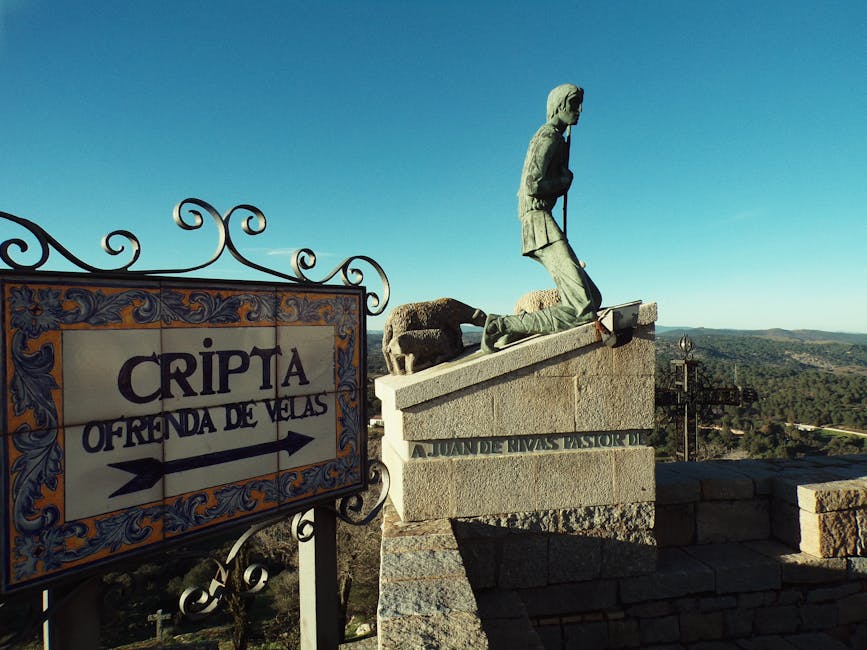
A statue beside a decorative sign with a scenic backdrop under a clear blue sky., Cáceres, Spain
FAQs: Your Cáceres, Spain Questions Answered
1. Is Cáceres, Spain safe at night?
Extremely safe. Violent crime is very rare. The old town is well-lit and patrolled, though its empty, labyrinthine streets can feel eerily quiet late at night. Standard precautions (awareness of belongings) are sufficient. The main squares in the modern town stay lively until late.
2. What currency is used and are credit cards accepted?
Spain uses the Euro (€). Credit cards (Visa, Mastercard) are widely accepted in hotels, restaurants, and shops. However, some smaller tapas bars or market stalls may prefer cash. It’s wise to carry some small bills and coins.
3. How do I get from the airport to the city center?
From Madrid-Barajas (MAD), the most direct option is the high-speed train from Madrid-Puerta de Atocha station (connected to the airport by metro/cercanías). A taxi from Badajoz Airport to Cáceres costs around €100-€120. Pre-booking a transfer is often best. Book airport transfers at GetYourGuide for convenience.
4. Do I need to speak the local language?
No, but it helps
Explore More Destinations
- Jozani, Tanzania on a Budget: an Ancient Forest for $35/Day (2026)
- Nsumbu, Zambia on a Budget: Wild Africa for $40/Day (2026)
- Semporna, Malaysia on a Budget: Paradise for $35/Day (2026)
- Khuzestan, Iran on a Budget: Ancient Empires for $30/Day (2026)
- Ngerulmud, Palau on a Budget: Island Majesty for $45/Day (2026)
Ready to Visit Cáceres?
Start planning your trip today. Compare hotels, find the best tours, and get insider tips.
Your adventure in Cáceres starts here →
Related Guides
Explore more destinations similar to Cáceres:

