
Tana Toraja, Indonesia: Best Ancestral Rituals, Cliffside Tombs & Living Traditions (2026)
Ask locals about Tana Toraja, Indonesia, and they’ll tell you about the *Rambu Solo’*, a funeral ceremony where water buffalo are sacrificed and the deceased is celebrated for days. Most guidebooks miss the profound cultural context, reducing it to spectacle. In reality, this highland region of South Sulawesi offers one of the world’s most intricate, living belief systems, where the dead are considered *to makula*—sick—and remain part of the family for years before their final, elaborate send-off to the afterlife.
Why Tana Toraja, Indonesia Stands Out

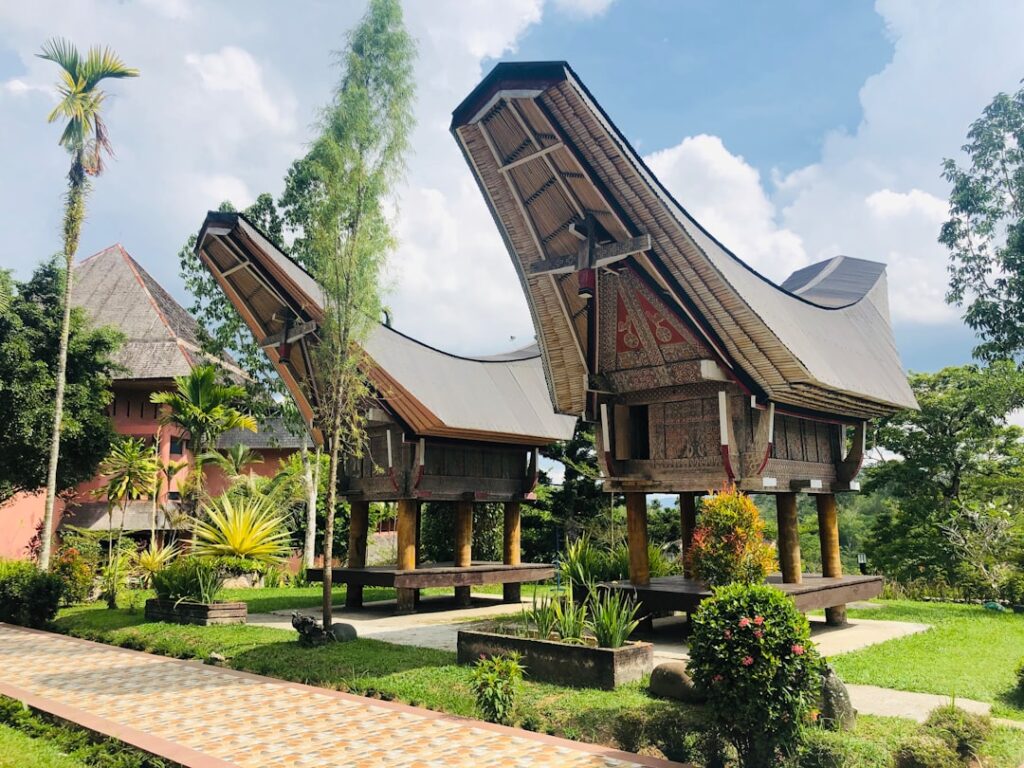
Brown wooden house surrounded by green trees under blue sky during daytime, Tana Toraja, Indonesia
- Historic Architecture: The traditional *Tongkonan* houses, with their massive, upward-curving boat-shaped roofs symbolizing prows pointing north to the ancestral homeland, have been built using interlocking wood techniques for over 700 years.
- Cultural Scene: The *Rambu Solo’* funeral festival, a multi-day event involving intricate rituals, sacrificial offerings, and communal feasting, is a profound and unforgettable window into the Torajan cosmology of life and death.
- Local Specialties: *Pa’piong*, a dish of meat (often pork or fish) and vegetables stuffed inside bamboo tubes with rich spices and roasted over an open fire, delivering a uniquely smoky, aromatic flavor.
Pro Tip: Plan your visit between July and August. This is the peak season for *Rambu Solo’* ceremonies, as the dry weather after the rice harvest allows for elaborate, multi-day outdoor events. While it’s the busiest time for tourism, witnessing these ceremonies is the cultural highlight. Book accommodations in Rantepao at least 3-4 months in advance.
Map of Tana Toraja, Indonesia
Use these interactive maps to explore Tana Toraja, Indonesia and plan your route:
📍 View Tana Toraja, Indonesia on OpenStreetMap
🗺️ Open Tana Toraja, Indonesia in Google Maps
Planning Your Trip: Practical Essentials
Getting There and Around
- By Air: The nearest airport is Sultan Hasanuddin International Airport (UPG) in Makassar. From there, it’s a 8-10 hour drive to Rantepao, the main tourist town in Tana Toraja. Book flights at Skyscanner for best deals.
- By Train: No direct train service to Tana Toraja. The journey is overland from Makassar. You can book a private car with driver (approx. IDR 800,000-1,200,000 one way) or take a public bus from Makassar’s Terminal Mallengkeri.
- By Car: Renting a car with a local driver is highly recommended for navigating the winding mountain roads and remote sites. Self-driving is challenging. Compare car rentals at RentalCars.com for options in Makassar.
- Local Transport: *Bendi* (horse-drawn carts) and *ojek* (motorcycle taxis) are common in towns. For sightseeing, hiring a car and driver for the day (IDR 600,000-800,000) is the most efficient and comfortable option.
Best Time to Visit
The climate is cooler than coastal Indonesia due to the highland elevation. The dry season offers the best conditions for travel and cultural events.
| Season | Weather | Highlights |
|---|---|---|
| Dry Season (Jun–Oct) | Sunny, warm days (22-28°C), cool nights, very little rain. | Peak season for *Rambu Solo’* funerals, ideal for trekking and photography, but also the most crowded. |
| Wet Season (Nov–Mar) | Frequent, heavy rainfall, high humidity, lush green scenery. | Fewer tourists, lower prices, but some roads may become difficult and funeral ceremonies are rare. |
| Shoulder (Apr–May) | Transitional, with sporadic showers and increasing sunshine. | Good balance of decent weather, fewer crowds, and the chance of early funeral ceremonies as the dry season begins. |
Budgeting for Tana Toraja, Indonesia

Explore a vibrant traditional Indonesian village featuring unique rusty-roo…, Tana Toraja, Indonesia
| Category | Budget | Mid-range | Luxury |
|---|---|---|---|
| Accommodation | IDR 150,000-300,000 (homestay/basic losmen) | IDR 500,000-1,200,000 (comfortable hotel) | IDR 1,500,000+ (boutique resort/villa) |
| Meals | IDR 25,000-50,000 (warung/local eatery) | IDR 75,000-150,000 (restaurant) | IDR 200,000+ (fine dining/hotel restaurant) |
| Transport | Public bus/ojek (IDR 50,000/day) | Private car & driver (IDR 600,000/day split) | Private car & dedicated guide |
| Activities | Free village walks, low-cost ceremony donations | Guided tours (IDR 300,000-500,000/day), entry fees | Private cultural immersion tours, special access |
| Daily Total | IDR 300,000-500,000 | IDR 1,200,000-2,000,000 | IDR 3,000,000+ |
Top Attractions and Must-See Sights
| Attraction | Description | Hours | Entry Fee |
|---|---|---|---|
| Londa Burial Cave | A vast limestone cave network serving as an active burial site, with coffins and tau-tau effigies lining the cliffs. | Daylight hours | IDR 50,000 (incl. torch rental) |
| Kete Kesu Village | A UNESCO-listed heritage village featuring ancient tongkonan houses, rice barns, and cliffside burial sites with carved tau-tau. | 8 AM – 5 PM | IDR 20,000 donation |
| Lemo Burial Site | A dramatic cliff face dotted with balconies holding tau-tau (wooden effigies) of the deceased, overlooking rice paddies. | Sunrise to Sunset | IDR 30,000 |
| Batu Tumonga | Highland area with megalithic stones, panoramic views over misty valleys, and more traditional burial sites amidst pine trees. | Daylight hours | IDR 20,000 |
3-Day Itinerary: Tana Toraja, Indonesia’s Highlights & Hidden Gems
Day 1: Ancient Villages & Cliffside Tombs
- Morning (7:30 AM): Start at **Kete Kesu Village**. Arrive early to see the morning light on the iconic tongkonan roofs and explore the burial cliffs before crowds. Your guide will explain the symbolism of the house carvings.
- Afternoon (12:30 PM): Lunch at **Rimiko Restaurant** in Rantepao for their *Pa’piong Babi* (bamboo-roasted pork). Then, visit **Lemo Burial Site** to see the rows of tau-tau effigies. Time your visit for softer afternoon light for photography.
- Evening (6:30 PM): Dinner at **Mart’s Cafe** in Rantepao. Afterwards, if you’re lucky, ask your guide or hotel about any nearby *Ma’badong* (traditional funeral chanting and circle dances) happening in a local village—an incredibly moving experience.
Day 2: Sacred Caves & Highland Vistas
- Morning (8:00 AM): Explore **Londa Burial Cave** (IDR 50,000). Hire a local guide with a gas lamp to navigate the deep chambers filled with bones and coffins. It’s respectful to leave a small donation for the families.
- Afternoon (1:00 PM): Enjoy a simple lunch at a roadside stall. Then, drive up to **Batu Tumonga**. Hike between the megalithic stones and “hanging graves,” and enjoy coffee at a local shack with breathtaking valley views.
- Evening (7:00 PM): Return to Rantepao for dinner at **Sa’panganan Restaurant**, known for its *Pamarrasan* (a rich, black buffalo meat soup).
Day 3: Local Life & Ceremonial Culture
- Morning (7:00 AM): Visit **Pasar Bolu (Bolu Market)** on a market day (usually every 6 days—check locally). This is where water buffalo and pigs are traded for ceremonies. It’s a vibrant, authentic spectacle.
- Afternoon (12:00 PM): Have lunch at a local *warung*. Then, visit a less-touristed village like **Palawa** or **Marante** to see more tongkonan in a quieter setting and observe daily Torajan life.
- Evening (6:00 PM): Your final dinner. Ask your guide to help you find a place serving *Pantollo Pamarrasan* (fish in spicy black sauce). Reflect on the profound cultural journey you’ve experienced.
Cultural Insights & Etiquette
- Language: The local language is Torajan; Bahasa Indonesia is widely understood. Key phrases: **”Tabea”** (Hello/Excuse me), **”Kurre sumanga”** (Thank you), **”Mae”** (No, used politely to decline).
- Customs: Always ask permission before taking photos of people, especially at ceremonies. At funerals, dress somberly (dark colors) and follow your guide’s lead on where to sit and appropriate behavior. It is a sacred event, not a tourist show.
- Tipping: Not mandatory but appreciated. For guides/drivers, 5-10% of the daily rate is generous. Small donations (IDR 10,000-50,000) are appropriate when visiting family-owned burial sites.
- Dress Code: Modest dress is essential, especially at ceremonies. Cover shoulders and knees. Bring a sarong—you may need to wear one when entering certain sacred areas.
- Business Hours: Shops generally open 8 AM – 6 PM. Many close on Sundays. Government offices follow Indonesian national holidays.
Where to Eat: Tana Toraja, Indonesia’s Best Bites
Torajan cuisine is hearty, centered on pork, buffalo, fish, and bamboo. Meals are often cooked with local spices like *pamarrasan* (black spice paste) and *sikaporo* (ginger-like spice). Dining is a communal affair.
Must-Try Local Specialties
- Pa’piong: The signature dish. Meat and veggies roasted in bamboo. Try it at **Rimiko Restaurant** or any local *warung* with fresh bamboo tubes on display.
- Pamarrasan: A rich, black soup made from roasted coconut and spices, usually with buffalo meat. **Sa’panganan Restaurant** in Rantepao is famous for it.
- Pantollo Pamarrasan: River fish cooked in the black *pamarrasan* sauce. Best found at smaller, family-run eateries near rivers.
Restaurant Recommendations by Budget
| Type | Restaurant | Specialty | Price Range |
|---|---|---|---|
| Budget | Warung Ibu Tika (Rantepao) | Fresh, daily Torajan dishes, great *pa’piong* | IDR 25,000-50,000 |
| Mid-range | Rimiko Restaurant (Rantepao) | Wide menu of local classics in a clean setting | IDR 75,000-150,000 |
| Fine dining | Mambo Restaurant (at Mambo Hotel) | Upscale interpretations of local cuisine with views | IDR 200,000+ |
Where to Stay
Rantepao is the main hub with the widest range of accommodations. Makale, the regency capital, has fewer tourist options. Staying in a family-run losmen (guesthouse) offers a more personal experience. Compare prices and book at Booking.com or Airbnb for apartments.
Best Neighborhoods for Accommodation
- Central Rantepao: The most convenient base, with restaurants, tour operators, and markets within walking distance. Best for first-time visitors. Can be a bit noisy.
- Outskirts of Rantepao/Kesu Area: Offers quieter, more scenic settings closer to rice fields and villages. You’ll need transport, but you’ll wake up to stunning views.
- Batu Tumonga Highlands: For a truly immersive, cool-climate escape. Options are very limited (mostly homestays), but you’re surrounded by nature and traditional life.

Eerie collection of skulls and bones in a cave in South Sulawesi, Tana Toraja, Indonesia
FAQs: Your Tana Toraja, Indonesia Questions Answered
1. Is Tana Toraja, Indonesia safe at night?
Yes, Tana Toraja is generally very safe. Violent crime is rare. Standard precautions apply: avoid walking alone in very dark, isolated areas at night. In villages, be mindful of uneven paths. The main concern is road safety—avoid driving on winding mountain roads after dark.
2. What currency is used and are credit cards accepted?
The Indonesian Rupiah (IDR) is the currency. Carry ample **cash**. While some hotels and higher-end restaurants in Rantepao may accept credit cards, almost all markets, small eateries, transport, and entry fees are cash-only. ATMs are available in Rantepao and Makale, but can run out of money.
3. How do I get from the airport to Tana Toraja?
From Makassar’s Sultan Hasanuddin Airport (UPG), you must travel overland. The most comfortable option is to pre-book a private car with driver (8-10 hours, IDR 800,000-1,200,000). Public buses are cheaper but less convenient. Book airport transfers at GetYourGuide for convenience.
4. Do I need to speak the local language?
No, but it helps. Basic Bahasa Indonesia is useful. In the tourism sector (hotels, guides, main restaurants), you can manage with English. Learning a few Torajan greetings (like *”Tabea”*) will be met with warm smiles and appreciation.
5. What’s the appropriate dress code?
Modesty is key. For general sightseeing, wear clothes that cover shoulders and knees. For attending a funeral ceremony, dress in
Explore More Destinations
- Jozani, Tanzania on a Budget: an Ancient Forest for $35/Day (2026)
- Nsumbu, Zambia on a Budget: Wild Africa for $40/Day (2026)
- Semporna, Malaysia on a Budget: Paradise for $35/Day (2026)
- Khuzestan, Iran on a Budget: Ancient Empires for $30/Day (2026)
- Ngerulmud, Palau on a Budget: Island Majesty for $45/Day (2026)
Ready to Visit Tana Toraja?
Start planning your trip today. Compare hotels, find the best tours, and get insider tips.
Your adventure in Tana Toraja starts here →
{“@context”: “https://schema.org”, “@type”: “FAQPage”, “mainEntity”: [{“@type”: “Question”, “name”: “What is the best time to visit Tana Toraja?”, “acceptedAnswer”: {“@type”: “Answer”, “text”: “The best time to visit Tana Toraja depends on your preferences. Generally, the dry season offers the most pleasant weather for sightseeing and outdoor activities.”}}, {“@type”: “Question”, “name”: “How many days do I need in Tana Toraja?”, “acceptedAnswer”: {“@type”: “Answer”, “text”: “Most travelers spend 3-5 days in Tana Toraja to see the main attractions. A week allows for a more relaxed pace and day trips.”}}, {“@type”: “Question”, “name”: “Is Tana Toraja expensive to visit?”, “acceptedAnswer”: {“@type”: “Answer”, “text”: “Tana Toraja can be visited on various budgets. Accommodation ranges from hostels to luxury hotels, and local restaurants offer affordable dining.”}}]}
Related Guides
Explore more destinations similar to Tana Toraja:

