
Colonia Uruguay, Uruguay’s Incredible Cobblestones, Sunsets & Timeless Charm (2026)
While crowds flock to Buenos Aires just an hour away by ferry, Colonia del Sacramento delivers a profound sense of tranquility and a perfectly preserved 17th-century barrio histórico for a fraction of the pace and price. Here, you won’t find sprawling boulevards, but instead, a UNESCO World Heritage site where the only traffic is the gentle crunch of footsteps on Portuguese cobblestone streets, leading you past pastel-colored houses to a lighthouse watching over the Río de la Plata.
Why Colonia Uruguay, Uruguay Stands Out

Blue concrete house, Colonia Uruguay, Uruguay
- Historic Architecture: The iconic Portón de Campo, the 1745 stone city gate, marks the dramatic entrance to the old town and is a powerful symbol of the city’s contested Portuguese and Spanish past.
- Cultural Scene: The annual Patria Gaucha festival in March celebrates Uruguayan cowboy (gaucho) culture with rodeos, folk music, and traditional asados, offering a vibrant glimpse into the nation’s rural soul.
- Local Specialties: You must try a chivito, Uruguay’s legendary steak sandwich piled with mozzarella, ham, bacon, egg, olives, and mayonnaise, best enjoyed at a rustic parrilla.
Pro Tip: For the perfect, crowd-free experience, visit mid-week (Tuesday-Thursday) and aim for the shoulder seasons of April-May or September-October. The summer (Dec-Feb) brings heat and more visitors, while winter (Jun-Aug) is quiet but can be chilly and windy.
Map of Colonia Uruguay, Uruguay
Use these interactive maps to explore Colonia Uruguay, Uruguay and plan your route:
📍 View Colonia Uruguay, Uruguay on OpenStreetMap
🗺️ Open Colonia Uruguay, Uruguay in Google Maps
Planning Your Trip: Practical Essentials
Getting There and Around
- By Air: The nearest major airport is Carrasco International (MVD) in Montevideo, 180km away. From there, take a 2.5-hour bus (approx. $15 USD) or a pre-booked private transfer. Book flights at Skyscanner for best deals.
- By Ferry: The most popular route is the 1-hour high-speed ferry from Buenos Aires with companies like Buquebus or Colonia Express (from $50 USD one-way). The terminal is a 10-minute walk from the historic center. Reserve tickets directly on the ferry company websites for the best rates.
- By Car: Driving from Montevideo takes about 2.5 hours via Route 1. In Colonia, parking is easy and often free outside the historic quarter. Compare car rentals at RentalCars.com.
- Local Transport: Colonia is best explored on foot or by bicycle. You can rent a bike for about $10-15 USD per day. Local buses connect the historic center to the newer city areas and the bus terminal for a minimal fee.
Best Time to Visit
Colonia enjoys a temperate climate year-round, but your experience will vary dramatically by season. The ideal times balance pleasant weather with manageable visitor numbers.
| Season | Weather | Highlights |
|---|---|---|
| Summer (Dec–Feb) | Warm to hot, 75-85°F (24-30°C), occasional rain. High humidity. | Vibrant atmosphere, outdoor dining, ferry schedules are frequent. Can be crowded, especially on weekends. |
| Winter (Jun–Aug) | Cool and windy, 45-60°F (7-15°C). Rare frosts. | Extremely quiet, low prices, cozy café culture. Some attractions may have shorter hours. Pack a warm jacket. |
| Shoulder (Apr–May/Sep–Oct) | Mild and pleasant, 60-75°F (15-24°C). Sunny days, cool nights. | The absolute best time. Perfect for walking, fewer crowds, and ideal photography light. This is the local’s secret season. |
Budgeting for Colonia Uruguay, Uruguay

Two trees near buildings and gray motorcycle parked during daytime, Colonia Uruguay, Uruguay
| Category | Budget | Mid-range | Luxury |
|---|---|---|---|
| Accommodation | $40-60 USD (Hostel or basic posada) | $80-150 USD (Boutique hotel in historic center) | $200+ USD (Luxury hotel with river views) |
| Meals | $15-25 USD (Market food, picadas, simple parrillas) | $30-50 USD (Nice restaurant meals with wine) | $80+ USD (Fine dining tasting menus) |
| Transport | $5-10 USD (Bike rental, local bus) | $15-30 USD (Taxis, guided bike tour) | $50+ USD (Private car with driver) |
| Activities | $0-20 USD (Walking tours, lighthouse climb, beach) | $30-60 USD (Museum passes, wine tasting) | $100+ USD (Private historical tour, sunset yacht cruise) |
| Daily Total | $60-115 USD | $155-290 USD | $430+ USD |
Top Attractions and Must-See Sights
| Attraction | Description | Hours | Entry Fee |
|---|---|---|---|
| Barrio Histórico (Old Town) | The UNESCO-listed heart of Colonia, a maze of cobbled streets, colonial ruins, and colorful houses showcasing Portuguese and Spanish architectural fusion. | Always open | Free (some individual sites charge) |
| Faro (Lighthouse) | Climb the 1857 lighthouse built atop the ruins of the 17th-century Convent of San Francisco for panoramic views of the river and old town rooftops. | 11:00 AM – Sunset | $1.50 USD |
| Calle de los Suspiros (Street of Sighs) | The most photographed street, a narrow, uneven cobblestone lane flanked by historic stone houses that seems frozen in the 18th century. | Always open | Free |
| Portuguese Museum | Housed in an 18th-century Portuguese house, it offers a deep dive into the colonial era with maps, uniforms, and religious artifacts. | 11:15 AM – 4:45 PM (Wed-Mon) | $3 USD (or included in museum pass) |
3-Day Itinerary: Colonia Uruguay, Uruguay’s Highlights & Hidden Gems
Day 1: Immersion in the Historic Heart
- Morning (9:00 AM): Start at the Portón de Campo (city gate) and walk the original drawbridge into the old town. Pick up a combined museum pass ($5 USD) for entry to 8 museums. Wander aimlessly down Calle de los Suspiros.
- Afternoon (1:00 PM): Lunch at El Drugstore on Plaza Mayor for their famous milanesa and eclectic, bohemian atmosphere. Then, climb the Lighthouse for your orientation view.
- Evening (7:00 PM): Stroll along the Rambla (waterfront promenade) to watch the sunset over the Río de la Plata. For dinner, savor wood-fired pizza at Pulpería de los Faroles, a classic spot with live tango music some nights.
Day 2: Museums, Markets & Local Life
- Morning (10:00 AM): Use your museum pass. Don’t miss the Portuguese Museum and the Municipal Museum in the iconic Casa de Almirante Brown. Then, visit the Artisan Market near the basilica for leather goods and local crafts.
- Afternoon (1:30 PM): Grab a quick, delicious choripán (chorizo sandwich) from a street vendor. Rent a bike ($10-15 USD) and cycle south along the scenic coastal road to the Real de San Carlos, exploring the abandoned bullring and old plaza.
- Evening (7:30 PM): Experience a true Uruguayan asado (barbecue) at Charco Bistro. Order the parrillada completa (mixed grill) and a bottle of Tannat wine, Uruguay’s signature red.
Day 3: Beaches, Wine & Departure
- Morning (10:00 AM): Take a taxi or drive (10 mins) to Playa Ferrando, a serene sandy beach. Alternatively, visit a local winery like Bodega Bernardi for a tasting tour (book ahead, ~$20 USD).
- Afternoon (1:00 PM): Enjoy a final lunch at La Bodeguita, a rustic favorite known for its pasta and rustic charm in a converted old storehouse. Do some last-minute souvenir shopping for dulce de leche and alfajores.
- Evening (5:00 PM): For those catching a late ferry, enjoy a farewell medio y medio (half sparkling wine, half white wine) at the historic Bar El Británico, soaking in the old-world ambiance before you depart.
Cultural Insights & Etiquette
- Language: Spanish is the official language. While some English is spoken in tourist areas, learning a few phrases like “Hola” (Hello), “Gracias” (Thank you), and “¿Cuánto cuesta?” (How much?) is appreciated.
- Customs: Uruguayans are relaxed, polite, and punctual. Greetings often involve a kiss on one cheek. Dinner is eaten late, rarely before 9:00 PM. Mate (herbal tea) is a social ritual; you’ll see locals carrying thermoses and gourds everywhere.
- Tipping: A 10% tip is customary in restaurants if service is not included in the bill. For taxis, rounding up the fare is sufficient. Bellhops and tour guides appreciate a small tip of $1-2 USD.
- Dress Code: Casual and comfortable is key for exploring. Smart-casual attire is fine for nicer restaurants. Always pack layers, as the river wind can be chilly even in summer.
- Business Hours: Shops typically open 9:00 AM-1:00 PM and 3:00 PM-7:00 PM, closing on Sundays. Many museums are closed on Tuesdays. Banks are open weekdays 1:00 PM-5:00 PM.
Where to Eat: Colonia Uruguay, Uruguay’s Best Bites
Uruguayan cuisine is meat-centric and hearty, centered around the asado. Colonia adds its own charm with riverfront dining and cozy, historic settings. Don’t expect rushed service; meals are an event to be savored.
Must-Try Local Specialties
- Chivito: The national sandwich: a thin beefsteak with mozzarella, tomatoes, mayonnaise, olives, bacon, ham, and a fried egg, often served with fries. Try it at El Viejo Barrio.
- Asado (Parrillada): A mixed grill of beef ribs, chorizo, morcilla (blood sausage), and more, cooked over wood embers. Charco Bistro or La Florida are excellent choices.
- Medio y Medio: A refreshing local drink from Colonia, literally “half and half” – sparkling wine mixed with dry white wine. Best enjoyed at its birthplace, Bar El Británico.
Restaurant Recommendations by Budget
| Type | Restaurant | Specialty | Price Range |
|---|---|---|---|
| Budget | Mercado de la Plaza (Plaza Mayor stalls) | Fresh empanadas, choripán, and sandwiches | $5-10 USD |
| Mid-range | El Drugstore (Calle Vasconcellos) | Creative Uruguayan dishes, vibrant atmosphere in a quirky space | $20-35 USD |
| Fine dining | La Cocina de Pedro (Calle del Comercio) | Elegant, modern takes on local ingredients with impeccable river-view service | $50+ USD |
Where to Stay
Your best bet is to stay within or just outside the Barrio Histórico to be within walking distance of everything. Options range from charming colonial posadas to modern boutique hotels. Compare prices and book at Booking.com or Airbnb for apartments.
Best Neighborhoods for Accommodation
- Barrio Histórico (Old Town): The most atmospheric choice. You’ll be surrounded by history, steps from all major sites, with charming cobblestone streets. Can be pricier and rooms in historic buildings may be smaller.
- Centro (City Center): Just outside the old city walls. Offers more modern hotel options, banks, and supermarkets. A 5-10 minute walk to the historic quarter, often providing better value.
- Along the Rambla: For stunning, uninterrupted river views. This area is quieter and more spread out, ideal for a relaxing stay, but you’ll likely need a bike or taxi to reach the old town restaurants at night.

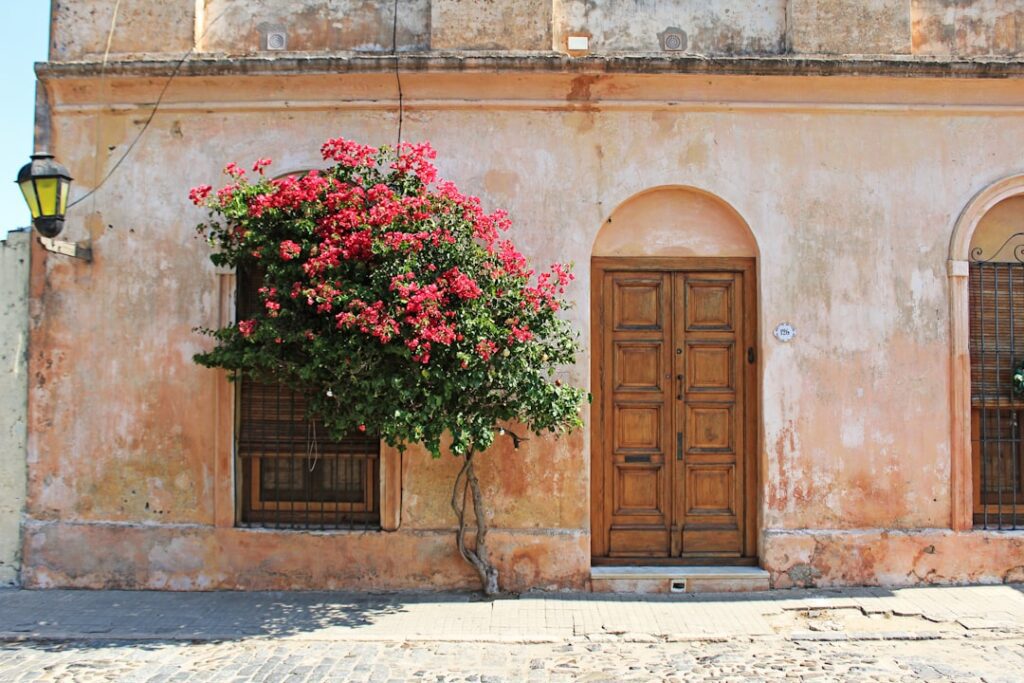
Brown wooden door with red flowers, Colonia Uruguay, Uruguay
FAQs: Your Colonia Uruguay, Uruguay Questions Answered
1. Is Colonia Uruguay, Uruguay safe at night?
Colonia is exceptionally safe. The historic center is well-lit and patrolled. You can comfortably walk alone at night. Standard precautions apply—keep an eye on your belongings in crowded areas—but violent crime is extremely rare.
2. What currency is used and are credit cards accepted?
The Uruguayan Peso (UYU) is the official currency. Credit cards (Visa, Mastercard) are widely accepted in hotels, restaurants, and larger shops. However, it’s wise to carry some cash for small purchases, markets, and tips. ATMs are readily available.
3. How do I get from the ferry terminal to the city center?
The Colonia ferry terminal is a straightforward 10-15 minute walk from the Barrio Histórico. Simply exit and follow the signs or the crowd. Taxis are always waiting and cost about $5-7 USD for the short ride. Book airport transfers at GetYourGuide for convenience if arriving from Montevideo airport.
4. Do I need to speak the local language?
While not essential, basic Spanish is very helpful. In tourist spots, some staff speak English, but menus and signs are primarily in Spanish. Locals are patient and appreciate any effort. A translation app can
Explore More Destinations
- Jozani, Tanzania on a Budget: an Ancient Forest for $35/Day (2026)
- Nsumbu, Zambia on a Budget: Wild Africa for $40/Day (2026)
- Semporna, Malaysia on a Budget: Paradise for $35/Day (2026)
- Khuzestan, Iran on a Budget: Ancient Empires for $30/Day (2026)
- Ngerulmud, Palau on a Budget: Island Majesty for $45/Day (2026)
Ready to Visit Colonia Uruguay?
Start planning your trip today. Compare hotels, find the best tours, and get insider tips.
Your adventure in Colonia Uruguay starts here →
Related Guides
Explore more destinations similar to Colonia Uruguay:
- Babahoyo, Ecuador’s Best Rivers, Rice & Authentic Coastal Culture (2026)
- Seville’s Ultimate Flamenco, Orange Blossoms & Moorish Majesty (2025)
- The Ultimate Lalibela Travel Guide: 3-Day Itinerary not to miss
- How to Experience Boise: 7 Secret Places Most People Miss
{“@context”: “https://schema.org”, “@type”: “FAQPage”, “mainEntity”: [{“@type”: “Question”, “name”: “What is the best time to visit Colonia Uruguay?”, “acceptedAnswer”: {“@type”: “Answer”, “text”: “The best time to visit Colonia Uruguay depends on your preferences. Generally, the dry season offers the most pleasant weather for sightseeing and outdoor activities.”}}, {“@type”: “Question”, “name”: “How many days do I need in Colonia Uruguay?”, “acceptedAnswer”: {“@type”: “Answer”, “text”: “Most travelers spend 3-5 days in Colonia Uruguay to see the main attractions. A week allows for a more relaxed pace and day trips.”}}, {“@type”: “Question”, “name”: “Is Colonia Uruguay expensive to visit?”, “acceptedAnswer”: {“@type”: “Answer”, “text”: “Colonia Uruguay can be visited on various budgets. Accommodation ranges from hostels to luxury hotels, and local restaurants offer affordable dining.”}}]}

