
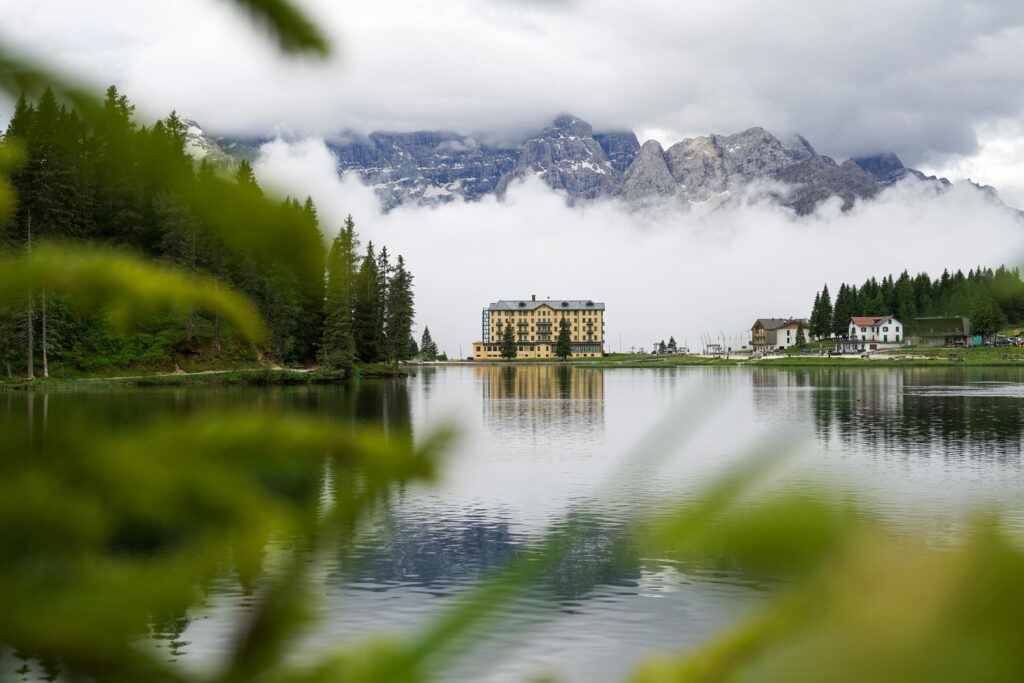
“Discover hidden gems in Civita di Bagnoregio, Italy. Explore off-the-beaten-path wonders that most tourists miss.”
Introduction: A Journey Back in Time
Stepping into Civita di Bagnoregio, Italy, feels like entering a medieval fairy tale. Perched atop a crumbling tufa cliff and accessible only by a footbridge, this UNESCO-listed village—nicknamed “The Dying City”—offers an otherworldly escape. As I crossed the bridge, the crisp morning air carried whispers of ancient history, and the valley below glowed with golden light. The scent of wild thyme and woodsmoke lingered in the air, mingling with the distant chime of church bells.
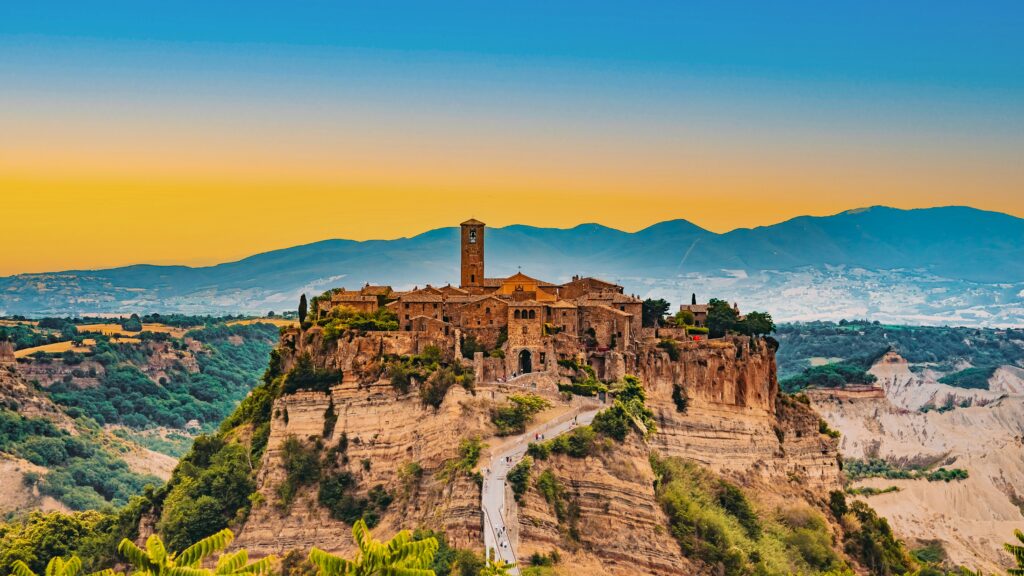
This isn’t just another Italian hilltop town. Civita di Bagnoregio is a living museum where time stands still. Whether you’re a history buff, photographer, or simply seeking serenity, its cobblestone alleys, Etruscan ruins, and panoramic views will leave you spellbound. With only a handful of permanent residents, the village feels like a secret kept between travelers and the wind.
Why Visit Civita di Bagnoregio?
✔ UNESCO World Heritage Site – One of Italy’s most unique medieval villages, frozen in time.
✔ Architectural Wonder – Stone houses with arched doorways, hidden courtyards, and a 7th-century church with frescoes that glow in the afternoon light.
✔ Breathtaking Views – Sweeping vistas of the Tiber River Valley, especially magical at sunrise when mist curls around the cliffs.
✔ Slow Travel Haven – No traffic, no crowds (after sunset), just the sound of your footsteps echoing through history.
Pro Tip: The footbridge (€5 entry) is the only way in—no cars allowed. Wear sturdy shoes; the cobblestones are uneven and steep in places. Pack light; rolling suitcases are impractical here.
“Sipping espresso at a tiny café, watching swallows dart between ancient rooftops, I realized: this is Italy at its most raw and poetic. The village seems to breathe, its stones warmed by centuries of sun.”
Map of Civita
When to Visit for the Best Experience
Seasonal Highlights
- Spring (April–June) – Wildflowers blanket the valley, temperatures are mild (15–25°C). Ideal for hiking and photography. The Festa di San Bonaventura (March) honors the town’s patron saint with processions and candlelit vigils.
- Summer (July–August) – Vibrant but crowded; arrive before 9 AM to beat the heat and tour groups. Evenings are blissfully quiet, perfect for alfresco dinners under strings of fairy lights.
- Fall (September–October) – Golden light bathes the cliffs, and harvest festivals bring the aroma of roasting chestnuts. Don’t miss the Sagra degli Gnocchi (September), where locals serve pillowy potato dumplings with ragù.
- Winter (November–March) – Misty, quiet, and hauntingly beautiful. Fewer than 10 residents remain in winter, and the village feels like your private discovery. Warm up with vin brulé (mulled wine) at La Piazzetta.
Local Festivals
- Palio della Tonna (June) – A raucous donkey race in nearby Bagnoregio, where jockeys dress in medieval costumes. The rivalries are fierce, and the post-race celebrations last all night.
- Natale a Civita (December) – The village transforms into a winter wonderland, with nativity scenes tucked into grottoes and carolers singing in the piazza.
Best Time for Photos: Sunrise (6–7 AM) or sunset (6–8 PM, depending on season), when the light paints the village in honeyed hues. Midday sun washes out the stone facades.
3-Day Civita di Bagnoregio Itinerary
Day 1: Exploring the Village

Morning:
– 6:30 AM: Walk the footbridge at sunrise for crowd-free photos. The valley below is often shrouded in mist, creating an ethereal backdrop.
– 8:00 AM: Breakfast at Bar La Piazzetta—order a cornetto (Italian croissant) filled with apricot jam and a cappuccino.
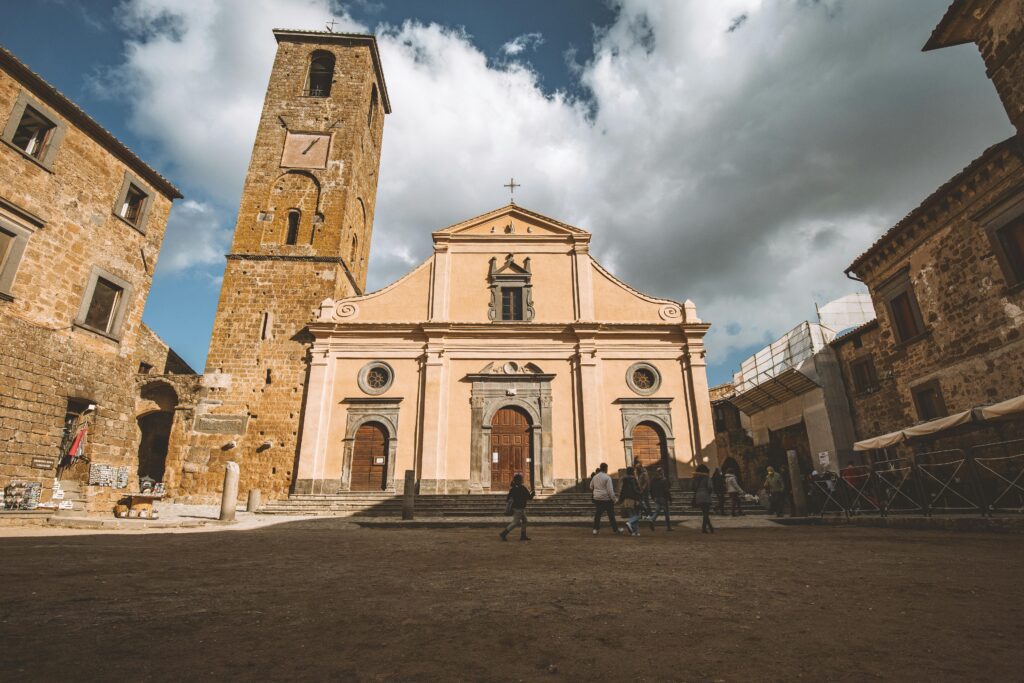
– 9:00 AM: Visit Chiesa di San Donato, the 7th-century church in the main square. Look for the 15th-century wooden crucifix, said to have miraculous powers. Climb the bell tower (€3) for a 360° view.
Afternoon:
– 12:30 PM: Lunch at Alma Civita (reservations recommended). Try their pappardelle al cinghiale (wild boar pasta, €14) and a glass of local Orvieto Classico wine. The terrace overlooks the valley.
– 2:00 PM: Wander hidden alleys like Via della Provvidenza, where cats nap on windowsills. Pop into Bottega Artigiana to watch potters hand-throw traditional orcio (oil jars).
– 4:00 PM: Cool off with lemon granita at Gelateria Il Tufo Allegro, then browse Antica Stamperia for hand-printed linens.
Evening:
– 7:00 PM: Sunset drinks at La Piazzetta, a cliffside bar. Their Aperol Spritz is served with olives and local pecorino.
– 8:30 PM: Dinner at Hostaria del Ponte (book ahead). Their umbricelli al tartufo (hand-rolled pasta with black truffle, €18) is unforgettable.
Day 2: Culture & Nature
Morning:
– 8:00 AM: Tour the Museo Geologico e delle Frane (€6). Learn how erosion shaped Civita’s cliffs through interactive exhibits.
– 10:00 AM: Hike the Belvedere Trail (1.5-hour loop). Start at Porta Santa Maria for panoramic views of the Calanchi Valley. Look for peregrine falcons nesting in the cliffs.
Afternoon:
– 12:30 PM: Picnic with pecorino, wild boar salami, and a bottle of Cervaro della Sala wine from Enoteca Bonci (€25 for a gourmet basket).
– 2:30 PM: Visit Bagnoregio, Civita’s “twin town.” Stop at Chiesa dell’Annunziata to see Renaissance frescoes, then indulge in pistachio gelato at Gelateria Artigianale.
Evening:
– 7:00 PM: Join a twilight walking tour (€20/person) to hear ghost stories of Etruscan spirits said to wander the alleys.
– 9:00 PM: Share a wood-fired pizza at Osteria al Forno di Agnese (try the porcini e salsiccia, €12).
Day 3: Off-the-Beaten-Path
Morning:
– 8:00 AM: Explore The Gardens of Alessandro, a hidden botanical oasis behind a wooden door on Via Madonna della Maestà. The owner, Alessandro, grows rare medicinal herbs and offers tastings of his elderflower liqueur.
– 10:00 AM: Meet Signora Lucia, a lace-maker who demonstrates tombolo (traditional bobbin lace) in her 16th-century workshop.
Afternoon:
– 12:00 PM: Take a cooking class (€65/person) at Casa Civita. Learn to make strangozzi (hand-cut pasta) with saffron from local fields.
– 3:00 PM: Relax with a book in Piazza San Donato. Listen to the fountain’s murmur and watch swallows dive over the rooftops.
Evening:
– 7:30 PM: Stargaze from the footbridge—Civita has minimal light pollution. The Milky Way is visible on clear nights.
Local Experiences & Hidden Gems
Authentic Food Spots
- La Grotta dei Funghi – A cave-like trattoria serving bruschetta al tartufo (€6) and zuppa di farro (spelt soup, €8). Ask for the “secret” mushroom foraging map.
- Antico Forno – A 13th-century bakery still using its original oven. Their ciambelline al vino (wine biscuits, €3) are addictive.
Meeting Locals
- Evening Passeggiata: Join elderly residents at 6 PM in Piazza Cavour for the ritual sunset stroll. They’ll share stories of Civita’s heyday in the 1950s.
- Artisan Visits: Maestro Paolo (Via Porta Santa Maria) carves olive wood spoons using Etruscan techniques.
Photography Hotspots
- Vicolo del Bacio – A narrow alley framed by ivy, perfect for moody portraits.
- Porta Santa Maria – The ancient gate glows amber at sunset.
- Valley Overlooks – Follow the path behind Chiesa di San Donato for unobstructed cliff views.
Practical Tips for Travelers
Getting There
- From Rome: Take a Trenitalia train to Orvieto (1.5 hrs, €8), then a Cotral bus to Bagnoregio (30 mins, €2.50). Taxis from Orvieto cost €50.
- Parking: Parcheggio di Bagnoregio (€2/hour) is a 10-minute walk to the footbridge.
Where to Stay
- La Casa di Bernarda (€150/night) – A B&B with a terrace where breakfast includes homemade pear jam.
- Locanda della Buona Ventura (€120/night) – Sleep in a restored 12th-century stable with exposed stone walls.
Packing Essentials
- Cash – Most shops don’t accept cards. ATMs are in Bagnoregio.
- Reusable Water Bottle – Fill up at the 500-year-old fountain in Piazza San Donato.
FAQs About Civita di Bagnoregio
1. Is Civita di Bagnoregio worth visiting?
Absolutely! Its isolation preserves an authenticity lost in busier towns like Siena. The lack of modern distractions forces you to slow down and savor details—the way sunlight filters through linen curtains, the taste of just-pressed olive oil.
2. How much time should I spend here?
A half-day suffices for highlights, but staying overnight lets you experience the village’s magic after day-trippers leave. Two nights allow deeper exploration (e.g., cooking classes, hiking).
3. Is there Wi-Fi?
Limited—embrace the digital detox! L’Arco Antico café has sporadic connections, but signal drops near the cliffs.
4. Can you visit as a day trip from Rome?
Yes (2.5-hour journey), but you’ll miss the enchanting evenings. Consider staying in Orvieto (30 mins away) if short on time.
5. What’s the best photo spot?
The footbridge at sunrise, when the village glows gold. For drone shots (requires permit), the Belvedere di San Francesco Vecchio offers cliffside perspectives.
Conclusion: Your Unforgettable Adventure Awaits
Civita di Bagnoregio isn’t just a destination—it’s a step into another era. From its crumbling cliffs to its warm-hearted locals, every moment here feels like a discovery. As I left at dawn, the village seemed to sigh, its stones holding centuries of secrets.
Ready to explore? Start planning your trip today before the secret gets out!
Keywords:
“Civita di Bagnoregio Italy travel things to do in Civita di Bagnoregio Italy when to visit Civita di Bagnoregio Italy Civita di Bagnoregio Italy attractions is Civita di Bagnoregio Italy worth visiting”
Explore More Destinations
- Jozani, Tanzania on a Budget: an Ancient Forest for $35/Day (2026)
- Nsumbu, Zambia on a Budget: Wild Africa for $40/Day (2026)
- Semporna, Malaysia on a Budget: Paradise for $35/Day (2026)
- Khuzestan, Iran on a Budget: Ancient Empires for $30/Day (2026)
- Ngerulmud, Palau on a Budget: Island Majesty for $45/Day (2026)
Ready to Visit How to Experience Civita di Bagnoregio?
Start planning your trip today. Compare hotels, find the best tours, and get insider tips.
Your adventure in How to Experience Civita di Bagnoregio starts here →
Related Guides
Explore more destinations similar to How to Experience Civita di Bagnoregio:

