
Düsseldorf, Germany’s Essential Altbier, Art & Altstadt Charm (2026)
While crowds flock to Cologne for its cathedral, Düsseldorf delivers a more refined, walkable Rhineland experience without the overwhelming tourist crush. Here, you can sip a crisp Altbier in a 300-year-old brewery tavern, admire a world-class modern art collection, and stroll a riverside promenade that feels distinctly local. Savvy travelers choose Düsseldorf for its perfect blend of cosmopolitan flair and cozy, historic charm, all within a city center you can comfortably explore on foot.
Why Düsseldorf, Germany Stands Out

A very tall building with lots of windows, Düsseldorf, Germany
- Historic Architecture: The twisted, gabled houses of the Altstadt (Old Town), rebuilt after WWII, perfectly recreate the 18th-century merchant cityscape, earning it the nickname “the longest bar in the world.”
- Cultural Scene: The K20/K21 Kunstsammlung Nordrhein-Westfalen houses one of Europe’s finest collections of 20th-century art, including seminal works by Paul Klee and Pablo Picasso.
- Local Specialties: You must try a glass of Düsseldorf’s signature Altbier, a top-fermented, copper-colored beer served in small, cylindrical glasses called “Stangen” from traditional breweries like Füchschen or Uerige.
Pro Tip: Visit in late July for the massive Größte Kirmes am Rhein funfair, or in November to experience one of Germany’s most authentic Christmas markets. For fewer crowds and pleasant weather, your best bet is the shoulder months of May or September.
Map of Düsseldorf, Germany
Use these interactive maps to explore Düsseldorf, Germany and plan your route:
📍 View Düsseldorf, Germany on OpenStreetMap
🗺️ Open Düsseldorf, Germany in Google Maps
Planning Your Trip: Practical Essentials
Getting There and Around
- By Air: Düsseldorf Airport (DUS) is a major international hub served by Lufthansa, Eurowings, and many others. The S-Bahn (S1 or S11) takes just 12 minutes to the central station (Hauptbahnhof). Book flights at Skyscanner for best deals.
- By Train: Düsseldorf Hauptbahnhof is a key ICE (high-speed train) stop on the Cologne–Frankfurt–Berlin line. The trip from Cologne is only 25 minutes. Reserve tickets at Trainline or the national railway website.
- By Car: The city is at the intersection of autobahns A3, A44, A52, and A57. Driving in the Altstadt is restricted; use park-and-ride facilities. Compare car rentals at RentalCars.com.
- Local Transport: The efficient Rheinbahn network includes trams, U-Bahn, and buses. A 24-hour ticket for the entire city (Preisstufe D) costs around €9. Check the official Rheinbahn website for passes and schedules.
Best Time to Visit
Düsseldorf is a year-round destination with distinct seasonal charms. Summer is vibrant and outdoorsy, while winter is magical with Christmas markets. The shoulder seasons offer the ideal balance of good weather and manageable crowds.
| Season | Weather | Highlights |
|---|---|---|
| Summer (Jun–Aug) | 18–23°C (64–73°F), occasional rain | Beer gardens on the Rheinuferpromenade, open-air festivals, boat tours; expect more tourists. |
| Winter (Dec–Feb) | 0–5°C (32–41°F), cold and gray | Enchanting Christmas markets (mid-Nov–Dec), cozy brewery visits, fewer crowds but bundle up. |
| Shoulder (Apr–May/Sep–Oct) | 10–18°C (50–64°F), mild and pleasant | Perfect for walking tours, enjoying outdoor cafes, and visiting museums without the peak-season rush. |
Budgeting for Düsseldorf, Germany

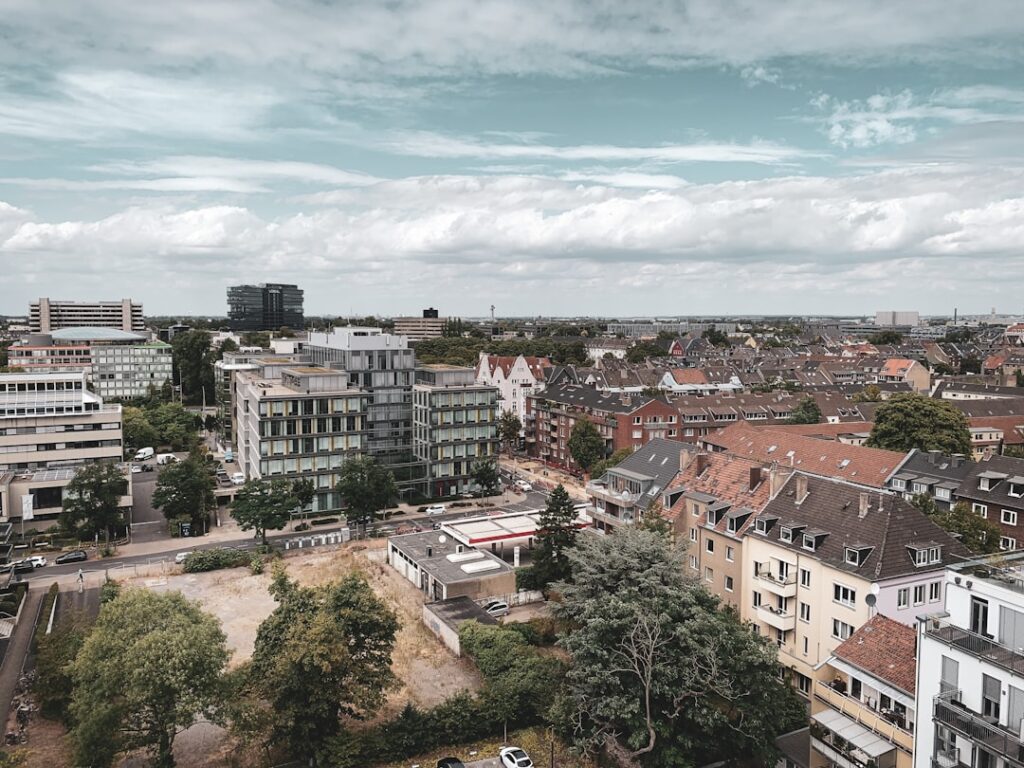
City skyline under blue sky during daytime, Düsseldorf, Germany
| Category | Budget | Mid-range | Luxury |
|---|---|---|---|
| Accommodation | €60–€90/night (hostel/basic hotel) | €120–€200/night (boutique hotel) | €250+/night (5-star like Breidenbacher Hof) |
| Meals | €10–€15 (Imbiss/currywurst, bakery lunch) | €20–€40 (restaurant meal with drink) | €80+ (fine dining at Im Schiffchen) |
| Transport | €9/day (24-hour public transport pass) | €15–€30/day (taxis/short rides) | €80+/day (private driver/chauffeur) |
| Activities | Free (riverside walks, window shopping in Königsallee) | €10–€20 (museum entry, Altbier tour) | €50+ (private guided tour, theater tickets) |
| Daily Total | €80–€120 | €170–€300 | €450+ |
Top Attractions and Must-See Sights
| Attraction | Description | Hours | Entry Fee |
|---|---|---|---|
| Königsallee (“Kö”) | This elegant, canal-lined boulevard is Germany’s premier luxury shopping street, from designer flagships to the stunning Kö-Galerie mall. | Stores: 10am–8pm (Mon-Sat) | Free to stroll |
| Altstadt (Old Town) | The historic heart, packed with over 260 bars and restaurants, the Rathaus (town hall), and the iconic Schloss Tower. | Always open | Free |
| Kunstsammlung NRW (K20/K21) | A world-class modern art museum split between two buildings: K20 focuses on classics like Klee and Picasso, while K21 features contemporary installations. | 10am–6pm (Tue-Fri), 11am–6pm (Sat-Sun) | €12 (K20 or K21), €18 combo ticket |
| Rheinturm & Rheinuferpromenade | Climb the 240.5m telecom tower for panoramic views, then stroll the transformed riverside promenade, a masterpiece of urban design. | Tower: 10am–11:30pm (Sun-Thu), 10am–12:30am (Fri-Sat) | €9 for tower observation deck |
3-Day Itinerary: Düsseldorf, Germany’s Highlights & Hidden Gems
Day 1: Historic Heart & Hops
- Morning (9 AM): Start at the Marktplatz to admire the equestrian statue of Jan Wellem and the ornate Rathaus. Then, walk to the Schiffahrt Museum in a restored paddle steamer (€3) for unique Rhine history.
- Afternoon (1 PM): Dive into the Altstadt’s lanes for lunch at Zum Schiffchen (Berger Str. 29), one of Düsseldorf’s oldest restaurants, for a massive Rheinischer Sauerbraten (€18). Afterwards, embark on a self-guided Altbier tour, hitting the “Big Four” breweries: Uerige, Füchschen, Schumacher, and Kürzer.
- Evening (7 PM): Enjoy a more refined dinner at Brauerei Kürzer (Kurze Str. 18), where modern German cuisine meets their excellent house brew. Cap the night with a walk along the illuminated Rheinuferpromenade.
Day 2: Art, Architecture & Elegance
- Morning (10 AM): Head to K20 am Grabbeplatz (€12) to spend 2-3 hours with masterpieces by Paul Klee, Piet Mondrian, and a significant collection of works by Joseph Beuys.
- Afternoon (1:30 PM): Stroll down the magnificent Königsallee, window-shopping and crossing the iconic Triton Fountain. For lunch, duck into Bistro Zicke (Königsallee 90) for a lighter, French-inspired meal (€15-20). Then, explore the tranquil Hofgarten, Germany’s first public park.
- Evening (6 PM): Take the U-Bahn to the MedienHafen (Media Harbour). Marvel at the deconstructivist architecture by Frank Gehry, then enjoy dinner with a view at Fuchs und Hase (Hammer Str. 23) for modern European dishes (€25-35).
Day 3: Castles, Towns & Farewell Feasts
- Morning (9 AM): Take the S-Bahn S28 (20 min, €6.40 round-trip) to Neuss, a Roman-founded sister city. Explore the quaint Altmarkt and the imposing St. Quirin’s Cathedral.
- Afternoon (12:30 PM): Return to Düsseldorf and head to the Benrath Palace & Park (U71 tram, 25 min). Tour the stunning pink Rococo palace (€14 for a guided tour) and its expansive Baroque gardens.
- Evening (7 PM): For your final meal, savor authentic Japanese cuisine in Düsseldorf’s “Little Tokyo” around Immermannstraße. Locals recommend Naniwa Noodles & Soups (Immermannstr. 28) for incredible ramen (€12-15). End with a final Altbier at your favorite brewery from Day 1.
Cultural Insights & Etiquette
- Language: German is official. Key phrases: “Ein Altbier, bitte” (An Altbier, please), “Zahlen, bitte” (The bill, please). English is widely spoken in tourist areas.
- Customs: Punctuality is valued. When toasting, make eye contact. In traditional breweries, waitstaff keep track of your drinks with tally marks on your coaster—place your coaster on top of your glass when you’re finished.
- Tipping: Round up the bill or leave 5-10% for good service in restaurants. For taxi fares, simply round up to the nearest euro.
- Dress Code: Smart-casual is the norm. Germans dress neatly; you’ll feel underdressed in athletic wear at nicer restaurants or theaters.
- Business Hours: Most shops close by 8pm on weekdays and 4pm on Saturdays, with almost everything closed on Sundays. Museums often close on Mondays.
Where to Eat: Düsseldorf, Germany’s Best Bites
Düsseldorf’s culinary scene is a delightful mix of hearty Rhineland staples, a surprising concentration of top-tier Japanese restaurants (it has the largest Japanese community in Germany), and innovative modern cuisine. The Altstadt is your go-to for traditional atmospheres, while the MedienHafen showcases contemporary flair.
Must-Try Local Specialties
- Altbier: The city’s signature copper-colored, top-fermented beer. Must-try spots are the historic brewery taverns (Brauhäuser) like Uerige (Berger Str. 1) or Füchschen (Ratinger Str. 28).
- Himmel un Ääd: Translating to “Heaven and Earth,” this is a comforting dish of black pudding, fried onions, mashed potatoes, and applesauce. Find it at traditional inns like Zum Schlüssel (Bolkerstr. 43).
- Rheinischer Sauerbraten: A pot roast marinated for days in vinegar and spices, served with potato dumplings and red cabbage. Zum Schiffchen is legendary for its version.
Restaurant Recommendations by Budget
| Type | Restaurant | Specialty | Price Range |
|---|---|---|---|
| Budget | Curry (Berger Str. 22, Altstadt) | Iconic, no-frills currywurst and fries | €5–€8 |
| Mid-range | Brauerei Kürzer (Kurze Str. 18, Altstadt) | Modern twists on German classics paired with their own excellent Altbier | €18–€30 |
| Fine dining | Im Schiffchen (Kaiserswerther Markt 9, Kaiserswerth) | Three-Michelin-star French haute cuisine in a picturesque district | €200+ tasting menu |
Where to Stay
Your neighborhood choice defines your Düsseldorf experience. The Altstadt is perfect for nightlife and history, the Stadtmitte is ideal for shopping and central access, while Oberkassel offers upscale, quiet charm. Compare prices and book at Booking.com or Airbnb for apartments.
Best Neighborhoods for Accommodation
- Altstadt: The historic heart, buzzing with energy day and night. Perfect for those who want to be in the middle of the action, steps from breweries and sights. Can be noisy on weekends.
- Stadtmitte/Carlstadt: Just south of the Altstadt, this area is more tranquil yet central. You’ll find elegant boutique hotels, upscale restaurants, and easy walks to the Königsallee and Hofgarten.
- Oberkassel: A posh, residential district across the Rhine, connected by a charming ferry. Offers beautiful Art Nouveau buildings, quiet streets, and stunning views back to the city skyline.

A tall tower in Macau Tower, Düsseldorf, Germany
FAQs: Your Düsseldorf, Germany Questions Answered
1. Is Düsseldorf, Germany safe at night?
Düsseldorf is generally very safe. The Altstadt and main tourist areas are well-lit and populated into the night. Standard precautions apply: be aware of your belongings in crowded bars and on public transport late at night.
2. What currency is used and are credit cards accepted?
Germany uses the Euro (€). Credit and debit cards (especially Girocard, Visa, and Mastercard) are widely accepted in hotels, department stores, and restaurants. However, some smaller shops, bakeries, and traditional brewery taverns (Brauhäuser) are cash-only. It’s wise to always carry some
{“@context”: “https://schema.org”, “@type”: “FAQPage”, “mainEntity”: [{“@type”: “Question”, “name”: “What is the best time to visit Du00fcsseldorf?”, “acceptedAnswer”: {“@type”: “Answer”, “text”: “The best time to visit Du00fcsseldorf depends on your preferences. Generally, the dry season offers the most pleasant weather for sightseeing and outdoor activities.”}}, {“@type”: “Question”, “name”: “How many days do I need in Du00fcsseldorf?”, “acceptedAnswer”: {“@type”: “Answer”, “text”: “Most travelers spend 3-5 days in Du00fcsseldorf to see the main attractions. A week allows for a more relaxed pace and day trips.”}}, {“@type”: “Question”, “name”: “Is Du00fcsseldorf expensive to visit?”, “acceptedAnswer”: {“@type”: “Answer”, “text”: “Du00fcsseldorf can be visited on various budgets. Accommodation ranges from hostels to luxury hotels, and local restaurants offer affordable dining.”}}]}
Related Guides
Explore more destinations similar to Düsseldorf:
- Cheboksary, Russia’s Hidden Chuvash Culture, Volga Views & Soviet-Era Splendor (2026)
- Buckingham Palace, UK’s Epic Pageantry, Portraits & Palace Secrets (2025)
- Trancoso, Brazil’s Essential Beaches, Bohemian Charm & Bahian Culture (2025)
- Khorramshahr, Iran’s Best Resilience, Riverfronts & Rebirth (2025)

