
Dunhuang, China’s Incredible Silk Road Echoes, Desert Sunsets & Buddhist Art (2026)
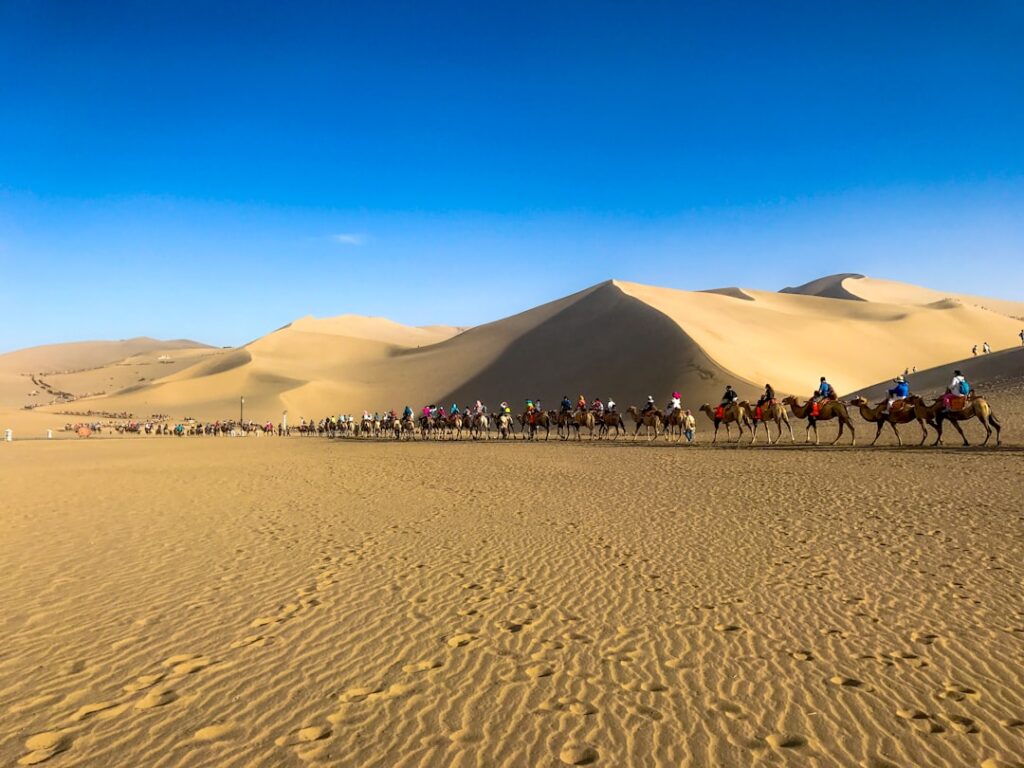
Sunset at the Mingsha Shan sand dunes reveals a phenomenon travelers have described for centuries: as the wind sweeps across the crescent-shaped dunes, they emit a low, resonant hum, like a distant chant. This “Singing Sand Mountain” is the overture to a city that was, for over a thousand years, the gateway and guardian of the Silk Road. Here, where the Gobi Desert meets the oasis, you’re not just visiting a town; you’re stepping into the echo chamber of ancient commerce, faith, and art.
Why Dunhuang, China Stands Out

Group of people riding on a camel, Dunhuang, China
- Historic Architecture: The Nine-Story Pavilion at Mogao Caves, built in the 9th century, is an iconic wooden landmark protecting a 35.5-meter tall Buddha statue within Cave 96.
- Cultural Scene: The annual Silk Road (Dunhuang) International Cultural Expo each September transforms the city into a global hub of performances, exhibitions, and forums celebrating the ancient trade route’s legacy.
- Local Specialties: You must try Dunhuang *Liangpi* (cold skin noodles), a chewy, refreshing wheat noodle dish served with a savory, vinegary sauce and shreds of gluten, perfect after a day in the desert heat.
Pro Tip: To experience the Mogao Caves without the heaviest crowds, aim for the first English-language tour of the day at 9:00 AM, which you must book online in advance. For the Singing Sand Mountains and Crescent Lake, arrive just before 5:00 PM; you’ll avoid the midday scorch and have perfect light for photography before the 7:30 PM sunset spectacle.
Map of Dunhuang, China
Use these interactive maps to explore Dunhuang, China and plan your route:
📍 View Dunhuang, China on OpenStreetMap
🗺️ Open Dunhuang, China in Google Maps
Planning Your Trip: Practical Essentials
Getting There and Around
- By Air: Dunhuang Mogao International Airport (DNH) has direct flights from Beijing, Xi’an, Chengdu, and Shanghai via airlines like China Eastern and Air China. A taxi to the city center takes 20 minutes and costs about 40 RMB. Book flights at Skyscanner for best deals.
- By Train: The Dunhuang Railway Station is on the Liuyuan-Dunhuang line. A high-speed train from Liuyuan (connected from major cities) takes about 1.5 hours. The overnight train from Lanzhou (the provincial capital) is a classic 12-hour journey. Reserve tickets at Trainline or the national railway website.
- By Car: Driving offers freedom for the Gobi landscapes. Route G215 connects Dunhuang to Jiayuguan. Parking is generally easy and affordable in town. Compare car rentals at RentalCars.com.
- Local Transport: Taxis are inexpensive and plentiful for city trips (starting at 5 RMB). For the main attractions like Mogao Caves (25km away) or the sand dunes (6km), hiring a taxi for a half-day (approx. 150-200 RMB) is your best bet. Public buses run to major sites but are less frequent.
Best Time to Visit
The ideal times to visit are the shoulder seasons, when the desert climate is most forgiving. Summers are intensely hot but dry, while winters are bitingly cold. Each season offers a distinct atmosphere, from the vibrant green of the oasis in spring to the stark, beautiful solitude of the desert in winter.
| Season | Weather | Highlights |
|---|---|---|
| Summer (Jun–Aug) | Hot & Dry, 20°C to 36°C (68°F to 97°F) | All attractions open, long daylight hours for exploring, but expect peak crowds and intense midday sun at desert sites. |
| Winter (Dec–Feb) | Very Cold, -15°C to 2°C (5°F to 35°F) | Extreme solitude at major sites, dramatically low prices, and a chance to see the dunes dusted with rare snow—but some tours may be limited. |
| Shoulder (Apr–May/Sep–Oct) | Mild & Pleasant, 10°C to 25°C (50°F to 77°F) | The absolute best time. Comfortable for desert hiking, smaller crowds (except early Oct national holiday), and perfect light for photography. |
Budgeting for Dunhuang, China

Aerial view of white and gray house on white sand beach during daytime, Dunhuang, China
| Category | Budget | Mid-range | Luxury |
|---|---|---|---|
| Accommodation | Hostel/Guesthouse: 80-150 RMB/night | 3-4 Star Hotel: 300-600 RMB/night | 5-Star Desert Resort: 1000+ RMB/night |
| Meals | Street Food/Local Eateries: 20-40 RMB/meal | Restaurant Meals: 50-100 RMB/meal | Fine Dining/Resort Dining: 150+ RMB/meal |
| Transport | Public Bus/Walking: 2-10 RMB/day | Taxi Day Hire: 150-250 RMB/day | Private Car & Driver: 500+ RMB/day |
| Activities | Free sights, walking the city | Mogao Caves (238 RMB), Dunes Park (110 RMB) | Private cave tours, helicopter rides over dunes |
| Daily Total | 200-350 RMB | 600-1000 RMB | 1500+ RMB |
Top Attractions and Must-See Sights
| Attraction | Description | Hours | Entry Fee |
|---|---|---|---|
| Mogao Caves (Caves of the Thousand Buddhas) | A UNESCO site with 492 decorated caves containing 45,000 sqm of murals and 2,000+ painted sculptures, spanning 1,000 years of Buddhist art. | 8:00 AM – 6:00 PM (Peak: Apr-Oct), Booking Required | 238 RMB (Includes guide & shuttle) |
| Mingsha Shan & Yueya Quan (Singing Sand Dunes & Crescent Lake) | Vast golden dunes that “sing” in the wind, cradling a perennial crescent-shaped oasis—a stunning natural paradox. | 5:00 AM – 8:30 PM | 110 RMB (Park Entry), Camel Ride: 100 RMB |
| Yumen Pass & Yangguan Pass | The two famed “Jade Gate” and “Sun Gate” frontier forts of the Han Dynasty, marking the dramatic western exit from ancient China into the barren wastes. | 8:30 AM – 6:00 PM | Yumen: 40 RMB, Yangguan: 50 RMB |
| Dunhuang Museum | Essential context before the caves, housing over 10,000 relics from the Silk Road, including rare Tibetan Buddhist texts and detailed Mogao reproductions. | 9:00 AM – 6:00 PM (Closed Mon) | Free (ID Required) |
3-Day Itinerary: Dunhuang, China’s Highlights & Hidden Gems
Day 1: The Heart of the Silk Road
- Morning (7:30 AM): Secure tickets online for the 9:00 AM English tour at the Mogao Caves Digital Exhibition Center. Watch the exceptional introductory films before the 20-minute shuttle to the caves themselves. Your guide will show you 8-10 of the open caves—savvy visitors listen closely to the stories of donors and artisans depicted in the murals.
- Afternoon (12:30 PM): Have lunch at Dunhuang Jingjiao Fandian near the museum for authentic local dishes like *Shazhou Mianpian* (hand-torn noodles in soup). Then, spend 2 hours at the Dunhuang Museum to solidify your understanding of the artifacts you’ve just seen.
- Evening (6:00 PM): Stroll the vibrant Shazhou Night Market. Skip the generic souvenirs and head for the food stalls. Don’t miss the *Yangrou Paomo* (crumbled bread in lamb stew) at Lao Zhou Jia stall, followed by sweet *Li Guangxing’s* apricot pulp drink.
Day 2: Desert Wonders & Frontier Sentiment
- Morning (8:00 AM): Hire a taxi (approx. 30 RMB) to Mingsha Shan and Yueya Quan. Arrive early to climb the dunes before the heat. For 100 RMB, take a 45-minute camel caravan ride across the dune ridges—it’s the classic, if touristy, experience. The view of the fragile Crescent Lake from the high dune is unforgettable.
- Afternoon (1:00 PM): Return to town for a quick lunch of *Liangpi* at Wu Ji Dunhuang Liangpi. Then, take a pre-arranged taxi (half-day hire, 200 RMB) for the 60km drive to the ancient frontier passes. Visit Yangguan Pass first, where you can walk a reconstructed section of the wall and gaze into the vast emptiness beyond, just as departing caravans once did.
- Evening (7:00 PM): Head to Yumen Pass for sunset. The low angle of light turns the eroded Han Dynasty fortress ruins a deep, glowing gold against the stark desert—a profoundly moving sight. Return to Dunhuang for a relaxed dinner.
Day 3: Artistic Legacy & Local Life
- Morning (9:00 AM): Visit the Dunhuang Academy Art Museum and the Dunhuang Research Institute to see meticulous reproductions of cave art and understand the immense conservation work. Then, explore the White Horse Pagoda, a quiet, lesser-visited stupa commemorating the horse of a Kumarajiva, a legendary Buddhist translator.
- Afternoon (12:30 PM): Enjoy a farewell lunch at Xiaofangzi Special Snacks for their superb *Dunhuang Niangpizi* (steamed flour rolls with meat). Afterwards, wander the old streets around Dong Dajie, popping into small shops selling replicas of cave manuscript calligraphy.
- Evening (6:00 PM): For a final cultural immersion, book tickets (around 200-400 RMB) for the spectacular outdoor live performance “Impression Dunhuang” or “Silk Road Show”, which use the desert landscape as a backdrop for epic song and dance recounting the city’s history.
Cultural Insights & Etiquette
- Language: Mandarin is standard. Locals speak a Northwestern dialect. Useful phrases: “Nǐ hǎo” (Hello), “Xièxie” (Thank you), “Mògāo Kū zěnme zǒu?” (How to get to Mogao Caves?). Download a translation app like Pleco.
- Customs: When visiting religious or historical sites, maintain a respectful demeanor. Avoid loud conversations inside the Mogao Caves. It’s polite to accept tea if offered by a shopkeeper.
- Tipping: Not customary or expected in China. In high-end hotels or for exceptional private guide service, a small tip may be accepted but is not required.
- Dress Code: Modesty is key for temple sites. Cover shoulders and knees. For the desert, wear loose, light-colored clothing, a wide-brimmed hat, and sturdy, closed-toe shoes—the sand gets extremely hot.
- Business Hours: Government offices and museums typically operate 9:00 AM-5:00 PM. Shops and restaurants stay open later, especially around the night market. Major national holidays (Oct 1-7, Chinese New Year) see massive domestic travel.
Where to Eat: Dunhuang, China’s Best Bites
Dunhuang cuisine is a hearty reflection of its oasis and Silk Road heritage, blending wheat, lamb, and cool, vinegary flavors to combat the dry heat. Dining is informal and centered around robust flavors. The night market is the beating heart of food culture, but don’t overlook small, family-run restaurants tucked away on side streets.
Must-Try Local Specialties
- Dunhuang Liangpi: The iconic cold dish of chewy wheat starch noodles with a savory, vinegary, and slightly spicy sauce, topped with wheat gluten and cucumber shreds. Find the best at Wu Ji Dunhuang Liangpi (multiple locations).
- Yangrou Paomo: A hearty lamb stew where you crumble flatbread into the broth yourself, then eat it with tender lamb and glass noodles. A communal, satisfying meal. Try it at Lao Zhou Jia in the night market or Tong He Ju restaurant.
- Shazhou Mianpian: Hand-torn noodle pieces in a rich, often tomato-based broth with vegetables and meat. It’s comfort food with a local twist. Dunhuang Jingjiao Fandian serves an excellent version.
Restaurant Recommendations by Budget
| Type | Restaurant | Specialty | Price Range |
|---|---|---|---|
| Budget | Shazhou Night Market Stalls | Street food galore: Skewers, *Liangpi*, *Paomo*, apricot drinks | 10-30 RMB per item |
| Mid-range | Dunhuang Jingjiao Fandian (Near Museum) | Comprehensive local menu in a clean, traditional setting | 50-80 RMB per person |
| Fine dining | Yueya Restaurant (in Silk Road Dunhuang Hotel) | Elevated interpretations of local cuisine in an elegant atmosphere | 150+ RMB per person |
Where to Stay
Accommodation in Dunhuang ranges from basic guesthouses to stunning desert resorts. Most travelers stay in the city center for convenience to food and transport, while luxury seekers opt for unique desert lodgings. Compare prices and book at Booking.com or Airbnb for apartments.
Best Neighborhoods for Accommodation
- City Center (near Mingshan Road): The most convenient area, walking distance to the night market, shops, and taxi stands. You’ll find a concentration of 3-4 star hotels here. Ideal for first-time visitors and those relying on taxis for day trips.
- Near the Dunes/M
A group of sand dunes in the desert, Dunhuang, China

Related Guides
Explore more destinations similar to Dunhuang:
- Dinguiraye, Guinea: Hidden Spiritual Heritage, Untouched Landscapes & Living Traditions (2026)
- Svaneti’s Mestia, Georgia’s Best Towers, Trails & Timeless Culture (2026)
- Weymouth, England: Essential Seaside Charm, Georgian Splendor & Jurassic Coast Adventures (2025)
- Sokotra, Yemen’s Best Alien Landscapes, Ancient Culture & Untouched Beaches (2025)
{“@context”: “https://schema.org”, “@type”: “FAQPage”, “mainEntity”: [{“@type”: “Question”, “name”: “What is the best time to visit Dunhuang?”, “acceptedAnswer”: {“@type”: “Answer”, “text”: “The best time to visit Dunhuang depends on your preferences. Generally, the dry season offers the most pleasant weather for sightseeing and outdoor activities.”}}, {“@type”: “Question”, “name”: “How many days do I need in Dunhuang?”, “acceptedAnswer”: {“@type”: “Answer”, “text”: “Most travelers spend 3-5 days in Dunhuang to see the main attractions. A week allows for a more relaxed pace and day trips.”}}, {“@type”: “Question”, “name”: “Is Dunhuang expensive to visit?”, “acceptedAnswer”: {“@type”: “Answer”, “text”: “Dunhuang can be visited on various budgets. Accommodation ranges from hostels to luxury hotels, and local restaurants offer affordable dining.”}}]}

