
Wahiba Sands, Oman’s Incredible Dunes, Stars & Bedouin Culture (2026)
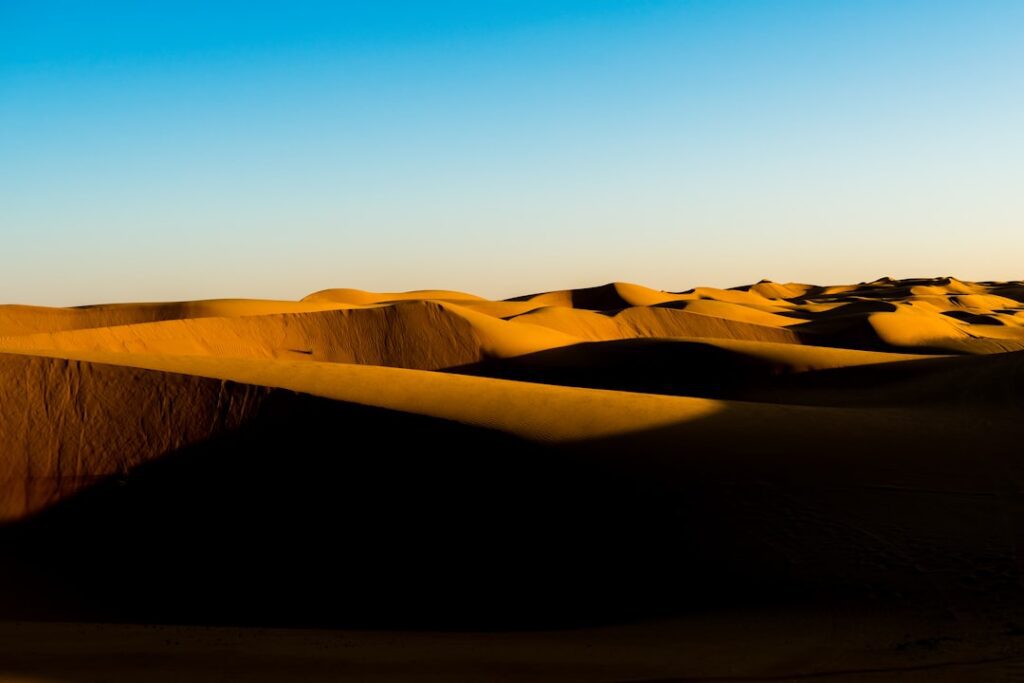
Sunset in Wahiba Sands reveals a landscape of pure geometry, where 12,500 square kilometers of sculpted dunes glow like molten copper. The only sounds are the whisper of shifting sand and the distant call of a camel. This is the Empty Quarter’s accessible edge, a sea of sand where the temperature can swing 50°F in a single day, offering a raw, elemental escape just a three-hour drive from Muscat’s modernity.
Why Wahiba Sands, Oman Stands Out

The shadow of a person walking in the desert, Wahiba Sands, Oman
- Historic Architecture: The traditional Bedouin goat-hair tents, or ‘bait al-sha’ar’, are nomadic architectural marvels, designed for rapid assembly and disassembly to follow grazing routes.
- Cultural Scene: The authentic experience of a nightly majlis, where you sit on carpets under the stars, share sweet Omani halwa, and listen to stories passed down for generations.
- Local Specialties: Shuwa, a celebratory dish of marinated lamb slow-cooked in an underground sand oven for up to 48 hours, infusing it with smoky, tender flavor.
Pro Tip: The absolute best time for photography and comfortable exploration is the hour just after sunrise (around 6:00-7:30 AM) in the months of November through February. The low-angle light casts long, dramatic shadows across the dune crests, and the temperature is perfectly cool. By 9 AM, the sun becomes intense.
Map of Wahiba Sands, Oman
Use these interactive maps to explore Wahiba Sands, Oman and plan your route:
📍 View Wahiba Sands, Oman on OpenStreetMap
🗺️ Open Wahiba Sands, Oman in Google Maps
Planning Your Trip: Practical Essentials
Getting There and Around
- By Air: All travelers fly into Muscat International Airport (MCT). Major airlines like Oman Air, Emirates, and Qatar Airways operate here. From Muscat, you must drive. Book flights at Skyscanner for best deals.
- By Train: Oman has no passenger railway system. Your journey will be entirely by road.
- By Car: The drive from Muscat takes 2.5-3 hours via Route 23. A 4×4 vehicle is NON-NEGOTIABLE for entering the sands themselves. You can rent a 4×4 in Muscat or book a tour with a driver. Compare car rentals at RentalCars.com.
- Local Transport: There is no public transport within Wahiba Sands. Your options are a pre-booked guided tour, a private 4×4 with driver, or your own rented 4×4. Most desert camps arrange transfers from the nearest paved-road meeting point.
Best Time to Visit
Timing is critical for comfort in the desert. The winter months offer sublime conditions, while summer is fiercely hot and best avoided by most.
| Season | Weather | Highlights |
|---|---|---|
| Summer (Jun–Aug) | Extremely hot (95°F–115°F+). Intense sun, minimal relief. | Very few tourists; some camps close. Only for those seeking extreme heat experiences. |
| Winter (Dec–Feb) | Perfect daytime temps (70°F–85°F), chilly nights (can drop to 50°F). | Ideal for all activities, comfortable camping, and clear night skies. Peak season. |
| Shoulder (Mar–May/Oct–Nov) | Warm to hot days (80°F–95°F), pleasant evenings. | Good value, fewer visitors than peak winter, and still very manageable weather. |
Budgeting for Wahiba Sands, Oman

White snow covered field during daytime, Wahiba Sands, Oman
| Category | Budget | Mid-range | Luxury |
|---|---|---|---|
| Accommodation | Basic shared tent: 15-25 OMR/night | Private tented chalet with bathroom: 50-80 OMR/night | Luxury desert camp suite: 120-200+ OMR/night |
| Meals | Included in most camp stays; simple local cafes on route: 2-3 OMR | Full board at mid-range camp (breakfast, lunch, dinner) | Gourmet dining under the stars at luxury camps |
| Transport | Shared tour from Muscat: 20-30 OMR/day | Private 4×4 transfer from Muscat: 80-120 OMR/day | Private driver-guide with dedicated vehicle: 150+ OMR/day |
| Activities | Included dune bashing, camel ride at camp | Sandboarding, extra guided tours: 5-15 OMR/activity | Private falconry display, bespoke star-gazing session |
| Daily Total | 40-60 OMR/day | 100-150 OMR/day | 250+ OMR/day |
Note: 1 Omani Rial (OMR) ≈ $2.60 USD. Budget is per person based on shared arrangements.
Top Attractions and Must-See Sights
| Attraction | Description | Hours | Entry Fee |
|---|---|---|---|
| Dune Bashing & High Dunes | A thrilling 4×4 ride over the massive dunes near Al Wasil, offering panoramic views from crests over 100m high. | Daylight hours; best at sunrise/sunset | Typically included in camp/tour packages |
| Bedouin Family Visit | An authentic cultural exchange at a nomadic family’s settlement, learning about goat-herding, weaving, and traditional coffee preparation. | Arranged by camps, usually late afternoon | 10-15 OMR (often included in premium tours) |
| Wadi Bani Khalid | A stunning desert oasis with permanent turquoise pools and palm groves, a 90-minute drive from the sands’ edge. | Sunrise to Sunset | Free |
| Star-Gazing | With virtually zero light pollution, the Milky Way is vividly clear; many camps provide telescopes and astronomy insights. | After nightfall | Included in camp stay or small fee for guided session |
3-Day Itinerary: Wahiba Sands, Oman’s Highlights & Hidden Gems
Day 1: Arrival & Immersion
- Morning (7-9 AM): Depart Muscat in your 4×4. Stop at the Friday Market in Sinaw (best on Wednesdays) to see livestock trading and local crafts. Fuel up and lower tire pressure to 18 PSI for the sand.
- Afternoon (12-3 PM): Arrive at your desert camp near Al Wasil. After a welcome drink of Omani coffee and dates, take a guided 4×4 tour to the high dunes for your first breathtaking view of the sea of sand.
- Evening (6-8 PM): Experience a sunset camel ride (approx. 10 OMR). Enjoy a traditional Omani barbecue dinner at the camp, followed by a majlis session with stories around the fire.
Day 2: Culture & Adventure
- Morning (8-10 AM): After breakfast, visit a local Bedouin family. Witness the art of weaving Sadu textiles and taste fresh laban (buttermilk). It’s respectful to bring a small gift like dates or fruit.
- Afternoon (12-4 PM): Try sandboarding down the softer dunes (boards often provided by camps). Later, take a drive to a secluded dune area for a quiet, packed lunch with a view few ever see.
- Evening (5 PM onward): Climb a dune for sunset photography. Enjoy a special Shuwa dinner if pre-arranged with your camp. Cap the night with a guided star-gazing session, identifying constellations clear to the naked eye.
Day 3: Oasis & Departure
- Morning (8-11 AM): Depart the sands for Wadi Bani Khalid (1.5-hour drive). Hike past the first popular pools to the quieter upper pools for a refreshing, memorable swim in the emerald waters.
- Afternoon (12-2 PM): Enjoy lunch at the simple restaurant by the wadi entrance, trying their grilled chicken and fresh fruit. Begin the scenic drive back towards Muscat.
- Evening: Stop for a final photo at the dramatic “Edge of the Sands” viewpoint on Route 23 before your tires are re-inflated for the highway, marking your return from the timeless desert to the modern world.
Cultural Insights & Etiquette
- Language: Arabic is official. Key phrases: “As-salamu alaykum” (Hello), “Shukran” (Thank you). English is widely understood in tourism, but a few Arabic greetings go a long way.
- Customs: Always accept coffee or dates when offered—it’s a sign of hospitality. Use your right hand for eating and greeting. When visiting a Bedouin home, remove your shoes before entering the seating area.
- Tipping: Not mandatory but appreciated. For a driver-guide, 5-10 OMR per day is generous. At camps, leaving 2-3 OMR for the staff in a common tip box is a kind gesture.
- Dress Code: Modesty is key. Wear loose, breathable clothing covering shoulders and knees. For women, a scarf is useful. Sunglasses, a wide-brimmed hat, and closed-toe shoes for sand walking are essential.
- Business Hours: Shops in nearby towns close for midday (1-4 PM) and reopen in the evening. Friday is the holy day. Desert camps operate on a full-board schedule for guests.
Where to Eat: Wahiba Sands, Oman’s Best Bites
Dining in the sands is intrinsically linked to your desert camp. Meals are communal, hearty, and often cooked over open fires, featuring Omani staples like rice, grilled meats, and stews.
Must-Try Local Specialties
- Shuwa: The festival dish. Must be ordered a day in advance at your camp. The lamb is marinated with Omani spices, wrapped in banana leaves, and cooked in a sand pit.
- Majboos: A fragrant rice dish similar to biryani, with chicken, lamb, or fish, spiced with turmeric, cumin, and dried lime (loomi).
- Halwa: A sticky, sweet gelatinous confection made from rosewater, saffron, nuts, and sugar. Served with coffee. The best is from Sur or Nizwa, but camps often provide it.
Restaurant Recommendations by Budget
| Type | Restaurant | Specialty | Price Range |
|---|---|---|---|
| Budget | Local Cafeteria in Al Wasil/Mintirib | Simple chicken majboos, grilled fish, and fresh roti. | 1.5 – 3 OMR per meal |
| Mid-range | Your Desert Camp Dining Tent | Full Omani buffet dinners, barbecue nights, and breakfast spreads. | Included in accommodation |
| Fine dining | Private Dining at 1000 Nights Camp or Sama Al Wasil | Romantic, set-menu dinners served on a private dune under lantern light. | 30-50 OMR per person extra |
Where to Stay
Accommodation is exclusively in desert camps, ranging from basic to ultra-luxurious. Location is key—camps deeper in the sands offer more isolation and better views. Compare prices and book at Booking.com or Airbnb for apartments in Muscat, but book desert camps directly or via specialist tour operators for the best rates and packages.
Best Areas for Accommodation
- Near Al Wasil/Mintirib (Sands Edge): Easier access, good for first-timers or shorter stays. Camps like Desert Nights Camp are here. Slightly less remote feeling.
- Deep in the Central Sands: For true isolation and epic dunes. Requires longer 4×4 transfer but rewards with utter silence and vast skies. Sama Al Wasil and 1000 Nights Camp have deeper locations.
- Luxury Bubble Camps: Mobile, eco-friendly camps that can be set up in exclusive locations. Offers the most private and immersive experience, often booked through high-end tour operators.
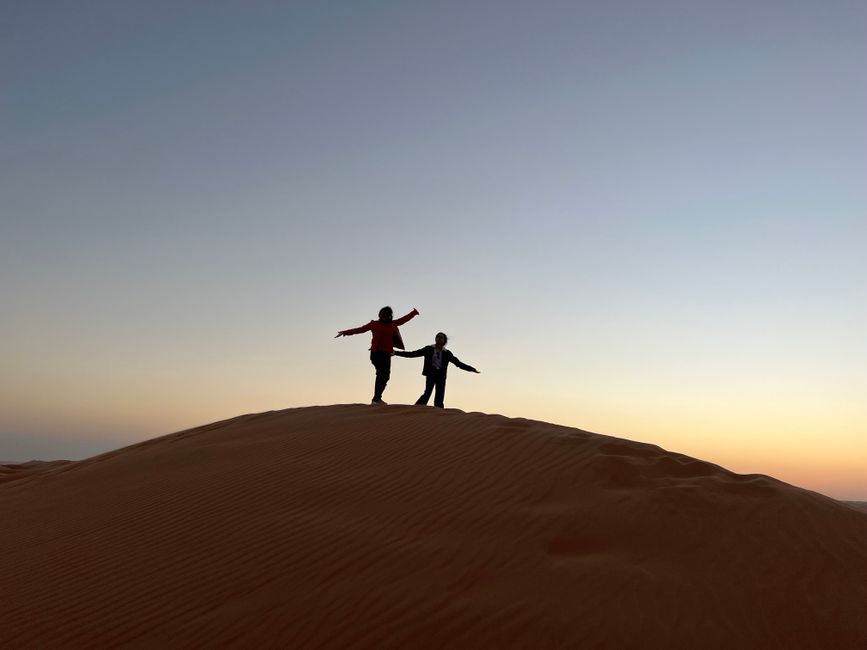
Two silhouetted figures stand atop a desert dune during twilight, Wahiba Sands, Oman
FAQs: Your Wahiba Sands, Oman Questions Answered
1. Is Wahiba Sands, Oman safe at night?
Extremely safe. Crime is virtually nonexistent. The primary considerations are environmental: stay within your camp boundaries at night, as it’s easy to get disoriented in the featureless dunes. Always have a flashlight. The desert wildlife is shy and poses no threat.
2. What currency is used and are credit cards accepted?
The Omani Rial (OMR) is the currency. While major desert camps accept credit cards, you must carry ample cash (OMR) for tipping, small purchases in local towns, and payments to Bedouin families. There are no ATMs in the desert.
3. How do I get from the airport to the desert?
You don’t go directly. From Muscat International Airport (MCT), take a taxi to your Muscat hotel or car rental agency (approx. 10-15 OMR). The desert journey begins from Muscat by pre-arranged 4×4 transfer or rental. For seamless planning, book a full desert tour package that includes airport pickup at GetYourGuide for convenience.
4. Do I need to speak the local language?
No. English is the lingua franca of Omani tourism. All camp staff and guides speak excellent English. Learning a few Arabic greetings (“Marhaba,” “Shukran”) is a respectful and appreciated gesture that will bring smiles.
5. What’s the appropriate dress code?
Modest, loose-fitting, and breathable is the rule. For both men and women, clothing should cover shoulders and knees. Lightweight long-sleeved shirts and trousers are ideal for sun protection. Swimwear is only appropriate at private camp pools or secluded areas of Wadi Bani Khalid.
Final Thoughts: Wahiba Sands, Oman Awaits
Wahiba Sands offers a rare duality: profound tranquility and heart-pounding adventure, all framed by one of the planet’s most beautiful landscapes. It’s a place where you disconnect to reconnect—with nature, with a slower pace of life, and with the enduring hospitality of Bedouin culture. Savvy travelers know the magic isn’t just in the epic dunes, but in the quiet moments: sipping coffee at
Related Guides
Explore more destinations similar to Wahiba Sands:
- Gobabis, Namibia’s Ultimate Cattle Country, Kalahari Sunsets & Frontier Spirit (2026)
- Tijuana, Mexico’s Hidden Street Food, Craft Beer & Border Culture (2025)
- Tzaneen, South Africa’s Ultimate Waterfalls, Forests & Tropical Fruit (2025)
- Lijiang, China’s Hidden Ancient Canals, Naxi Culture & Snow Mountain Majesty (2025)
{“@context”: “https://schema.org”, “@type”: “FAQPage”, “mainEntity”: [{“@type”: “Question”, “name”: “What is the best time to visit Wahiba Sands?”, “acceptedAnswer”: {“@type”: “Answer”, “text”: “The best time to visit Wahiba Sands depends on your preferences. Generally, the dry season offers the most pleasant weather for sightseeing and outdoor activities.”}}, {“@type”: “Question”, “name”: “How many days do I need in Wahiba Sands?”, “acceptedAnswer”: {“@type”: “Answer”, “text”: “Most travelers spend 3-5 days in Wahiba Sands to see the main attractions. A week allows for a more relaxed pace and day trips.”}}, {“@type”: “Question”, “name”: “Is Wahiba Sands expensive to visit?”, “acceptedAnswer”: {“@type”: “Answer”, “text”: “Wahiba Sands can be visited on various budgets. Accommodation ranges from hostels to luxury hotels, and local restaurants offer affordable dining.”}}]}

