
Fukuoka, Japan’s Incredible Ramen, Festivals & Seaside Serenity (2026)
While crowds flock to Tokyo for neon and Kyoto for temples, Fukuoka delivers a uniquely relaxed, flavorful, and accessible Japanese experience without the overwhelming crush. As the closest major Japanese city to mainland Asia, it has absorbed centuries of cultural exchange, resulting in a dynamic port city where ancient shrines sit beside cutting-edge architecture, and the birthplace of tonkotsu ramen hums with yatai (food stall) culture every evening. Savvy travelers choose Fukuoka for its walkable scale, incredible food scene, and the feeling of discovering a city that lives for itself, not just for tourists.
Why Fukuoka, Japan Stands Out

City skyline under white clouds during daytime, Fukuoka, Japan
- Historic Architecture: The 17th-century Fukuoka Castle ruins in Maizuru Park offer panoramic city views and are stunning during cherry blossom season in late March/early April.
- Cultural Scene: The Hakata Gion Yamakasa festival in July, a 770-year-old tradition, features teams racing through the streets with elaborate, one-ton floats at dawn.
- Local Specialties: You must try a steaming bowl of Hakata-style tonkotsu ramen, characterized by its rich, milky pork bone broth and thin noodles, best enjoyed at a nighttime yatai stall.
Pro Tip: For the perfect blend of pleasant weather and vibrant culture, visit in early November. The summer humidity has passed, the autumn leaves are beautiful, and you can catch the spectacular Hojoya Festival at Hakozaki Shrine, one of Japan’s three major festivals, without the peak-season crowds of spring.
Map of Fukuoka, Japan
Use these interactive maps to explore Fukuoka, Japan and plan your route:
📍 View Fukuoka, Japan on OpenStreetMap
🗺️ Open Fukuoka, Japan in Google Maps
Planning Your Trip: Practical Essentials
Getting There and Around
- By Air: Fukuoka Airport (FUK) is uniquely close to the city center, just two subway stops (5 minutes) from Hakata Station. It’s served by major international and domestic carriers. Book flights at Skyscanner for best deals.
- By Train: Hakata Station is a major Shinkansen (bullet train) hub. The trip from Osaka takes about 2.5 hours and from Tokyo around 5 hours. Reserve tickets at Trainline or the national railway website.
- By Car: Driving is not recommended for exploring the compact city center, but can be useful for day trips to the countryside. Parking is expensive and limited. Compare car rentals at RentalCars.com.
- Local Transport: The subway system (two lines) and extensive bus network are efficient. A one-day subway pass costs 620 yen. The Nishitetsu railway is ideal for trips to nearby Dazaifu. Check official city transport websites for passes and schedules.
Best Time to Visit
Fukuoka enjoys relatively mild weather, but timing your visit can define your experience. Shoulder seasons offer the ideal balance of comfort and activity.
| Season | Weather | Highlights |
|---|---|---|
| Summer (Jun–Aug) | Hot & humid, 25-32°C (77-90°F), rainy season in June/July | Vibrant festivals like Hakata Gion Yamakasa (July), beach days at Momochi, lively evening atmosphere. Can be crowded and sticky. |
| Winter (Dec–Feb) | Cool & dry, 5-12°C (41-54°F), rare snowfall | Illuminations (like at Canal City), perfect for hot ramen, onsen (hot springs) visits, and fewer tourists. Some outdoor attractions are less green. |
| Shoulder (Apr–May/Sep–Oct) | Mild & pleasant, 15-25°C (59-77°F), low rainfall | Cherry blossoms (late Mar-early Apr) or autumn colors, ideal for walking and outdoor cafes, comfortable festival-going in autumn. |
Budgeting for Fukuoka, Japan

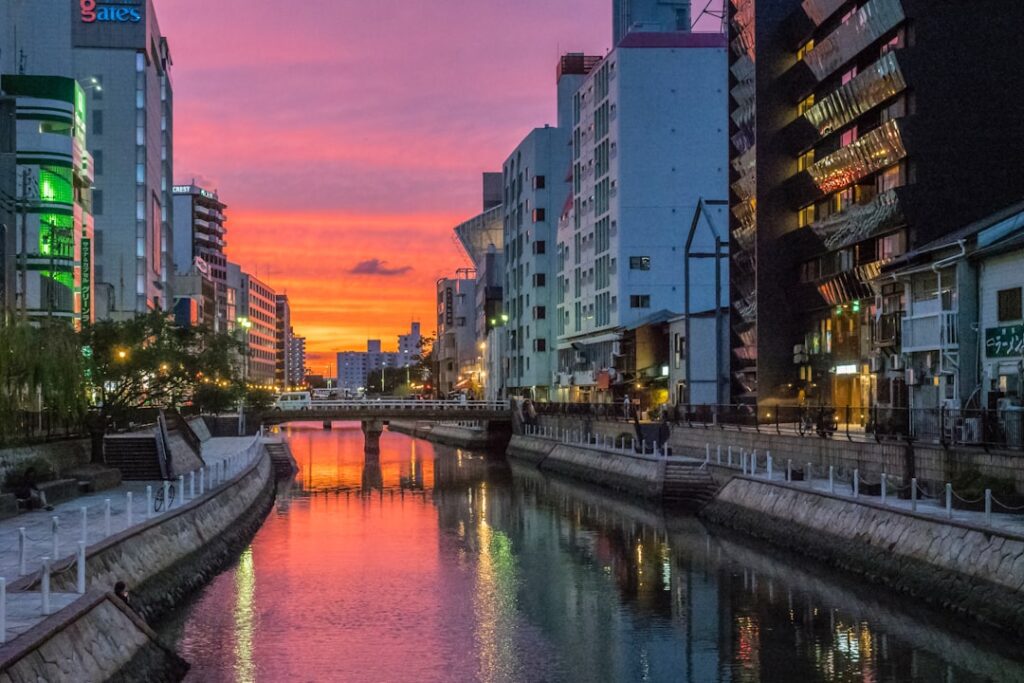
A river with a bridge and buildings, Fukuoka, Japan
| Category | Budget | Mid-range | Luxury |
|---|---|---|---|
| Accommodation | 3,000-6,000 JPY for hostels/capsule hotels | 10,000-18,000 JPY for business hotels/ryokan | 25,000+ JPY for luxury hotels like The Ritz-Carlton |
| Meals | 1,000-2,000 JPY (ramen stalls, convenience store meals) | 3,000-6,000 JPY (restaurant set lunches, nice dinners) | 10,000+ JPY (kaiseki, high-end sushi) |
| Transport | 620 JPY/day subway pass or bicycle rental | 1,500-3,000 JPY in taxi fares | Private car hire (8,000+ JPY/day) |
| Activities | Free (shrines, parks, yatai browsing) | 500-1,500 JPY (museum entries, temple fees) | Guided tours, special experiences (5,000+ JPY) |
| Daily Total | 6,000-10,000 JPY | 15,000-25,000 JPY | 40,000+ JPY |
Top Attractions and Must-See Sights
| Attraction | Description | Hours | Entry Fee |
|---|---|---|---|
| Ohori Park & Fukuoka Castle Ruins | A beautiful Japanese-style park with a large central pond, perfect for strolling, with the historic castle ruins and a stunning traditional garden (Japanese Garden) attached. | Park: 24/7; Japanese Garden: 9:00-17:00 | Park: Free; Japanese Garden: 240 JPY |
| Kushida Shrine | The heart of Hakata, this 8th-century shrine is the spiritual home of the famous Yamakasa festival and houses fascinating festival floats year-round. | 4:00-22:00 (varies slightly) | Free (donation appreciated) |
| Canal City Hakata | Not just a mall, but an experiential complex with a canal running through it, daily fountain shows, theaters, and a vast array of shops and restaurants. | Shops: 10:00-21:00; Restaurants: until 23:00 | Free |
| Fukuoka Tower & Seaside Momochi | At 234 meters, Japan’s tallest seaside tower offers 360-degree views; the surrounding Momochi area features futuristic architecture, beaches, and the Fukuoka City Museum. | 9:30-22:00 (last entry 21:30) | 800 JPY (adult) |
3-Day Itinerary: Fukuoka, Japan’s Highlights & Hidden Gems
Day 1: Hakata Heart & Ramen Soul
- Morning (7-9 AM): Start at the bustling Hakata Station complex. Grab a coffee and explore JR Hakata City, then walk 10 minutes to Kushida Shrine. See the magnificent Yamakasa floats up close before the crowds arrive.
- Afternoon (12-3 PM): Head to the Hakata Riverain area. For lunch, join the queue at Ramen Stadium in Canal City or find a local favorite like Ichiran (the original flagship is here) for a solo ramen booth experience. Afterwards, wander through Canal City and catch the spectacular fountain show (every 30 mins from 10 AM).
- Evening (6-8 PM): Experience Fukuoka’s iconic yatai (food stalls). The best clusters are along the river in Nakasu or on Tenjin’s southern streets. Try Yatai Yamachan for ramen or Motsunabe (offal hotpot), a Fukuoka specialty. End the night with a stroll through the illuminated Nakasu district.
Day 2: History, Art & City Views
- Morning (9 AM): Take the subway to Ohori Park Station (5 min from Tenjin). Spend the morning exploring the serene park, crossing its islands, and visiting the exquisite Japanese Garden (240 JPY). Then, hike up to the Fukuoka Castle ruins in Maizuru Park for the best city skyline photos.
- Afternoon (1 PM): Walk 15 minutes to the Fukuoka Art Museum (near the park) or take a short taxi to the Fukuoka Asian Art Museum in Tenjin. For lunch, seek out Ganso Hakata Motsunabe Yamaya in the Imaizumi area for a authentic, hearty hotpot.
- Evening (6 PM): Take the subway to Nishijin Station and visit Fukuoka Tower. Time your visit for sunset to see the city transition from day to glittering night. For dinner, head back to Tenjin and explore the maze of underground restaurants, or try a renowned mentaiko (spicy cod roe) dish at Mentaiju.
Day 3: Spiritual Dazaifu & Modern Shopping
- Morning (8 AM): Take the Nishitetsu train from Tenjin Station to Dazaifu Station (about 30 min, 400 JPY). Walk down the charming approach lined with shops selling umegae mochi (grilled rice cakes) to the magnificent Dazaifu Tenmangu Shrine, dedicated to the god of learning.
- Afternoon (12 PM): Visit the superb Kyushu National Museum next to the shrine (630 JPY), which tells the story of Japanese history through its cultural exchanges with Asia. Have lunch at one of the traditional restaurants along the shrine path.
- Evening (5 PM): Return to Fukuoka. For your final evening, indulge in some shopping in Tenjin (Mitsukoshi, Daimaru, and the trendy Iwataya department stores) or the underground mall. For a memorable farewell dinner, book a table at a yakiniku (Japanese BBQ) restaurant like Yakiniku Champion in Nakasu to grill premium Kyushu beef.
Cultural Insights & Etiquette
- Language: Key phrases: “Arigatou gozaimasu” (Thank you), “Sumimasen” (Excuse me/Sorry). While English signage is common in transport hubs, learning a few phrases is appreciated. Many restaurants have picture or plastic food menus.
- Customs: Bow slightly when greeting. Slurping noodles is not just acceptable, it’s a sign you’re enjoying the meal. Never stick chopsticks upright in a bowl of rice. Be quiet and respectful in temples and shrines.
- Tipping: Tipping is not practiced in Japan and can cause confusion. Excellent service is standard. A simple thank you is sufficient.
- Dress Code: Smart-casual is fine. Modest dress (covered shoulders/knees) is required for temple visits. You’ll need to remove shoes when entering ryokan, some restaurants, and temple buildings.
- Business Hours: Department stores: 10:00-20:00. Museums: often 9:00-17:00, closed one day a week (often Monday). Restaurants: Lunch 11:30-14:00, Dinner 18:00-23:00. Many close on public holidays.
Where to Eat: Fukuoka, Japan’s Best Bites
Fukuoka is a food lover’s paradise, famous for dishes born from its port history. Dining ranges from humble, soulful street stalls to world-class restaurants. The rule here is to follow the locals—if there’s a queue, it’s usually worth the wait.
Must-Try Local Specialties
- Hakata Tonkotsu Ramen: The rich, creamy broth made from pork bones simmered for hours, served with thin, straight noodles. Top with red pickled ginger, sesame, and garlic. Try it at a yatai or at legendary shops like Ichiran (headquarters in Hakata) or Shin Shin.
- Motsunabe: A hearty hotpot of beef or pork offal, vegetables, and chili in a miso or soy-based broth, finished with champon noodles. A must for group dining. Motsunabe Yamaya and Motsunabe Miyawaki are local institutions.
- Mentaiko: Spicy seasoned pollock roe, a Korean-influenced delicacy. Eat it on its own, with rice, or as pasta sauce. The Hakata Mentaiju shop in the station or the Mentaiko Bussan area of Canal City are perfect for tasting and buying souvenirs.
Restaurant Recommendations by Budget
| Type | Restaurant | Specialty | Price Range |
|---|---|---|---|
| Budget | Yatai Stalls (Nakasu/Tenjin area) | Ramen, yakitori, oden | 700-1,500 JPY per dish |
| Mid-range | Ganso Hakata Motsunabe Yamaya (Imaizumi) | Authentic motsunabe hotpot | 3,000-4,000 JPY per person |
| Fine dining | Wadakin (Daimyo area) | Exquisite Yakiniku (Japanese BBQ) with premium beef | 10,000+ JPY per person |
Where to Stay
Fukuoka’s compact layout means you’re never far from the action. The main hubs are Hakata (for transport), Tenjin (for shopping/nightlife), and Nakasu (in between). Compare prices and book at Booking.com or Airbnb for apartments.
Best Neighborhoods for Accommodation
- Tenjin: The bustling commercial and shopping heart. Packed with department stores, underground malls, bars, and restaurants. Best for shoppers, foodies, and those who want to be in the center of the action. Can be noisy at night.
- Hakata: Centered on the main train station. Extremely convenient for day trips and arrival/d
Yellow and black boat on water near city buildings during daytime, Fukuoka, Japan

Related Guides
Explore more destinations similar to Fukuoka:
- Fryslân, Netherlands (Wadden Sea cycling): Hidden Windmills, Wadlopen & Waterways (2025)
- Sareh Kunda, Gambia: Best River Life, Kankurang Mystique & Authentic Mandinka Culture (2026)
- Bacalar, Mexico’s Best Lagoon Colors, Mayan History & Jungle Serenity (2025)
- Lençóis Paulista, Brazil: Hidden Sugar Cane, Sunsets & São Paulo’s Serene Escape (2026)

