
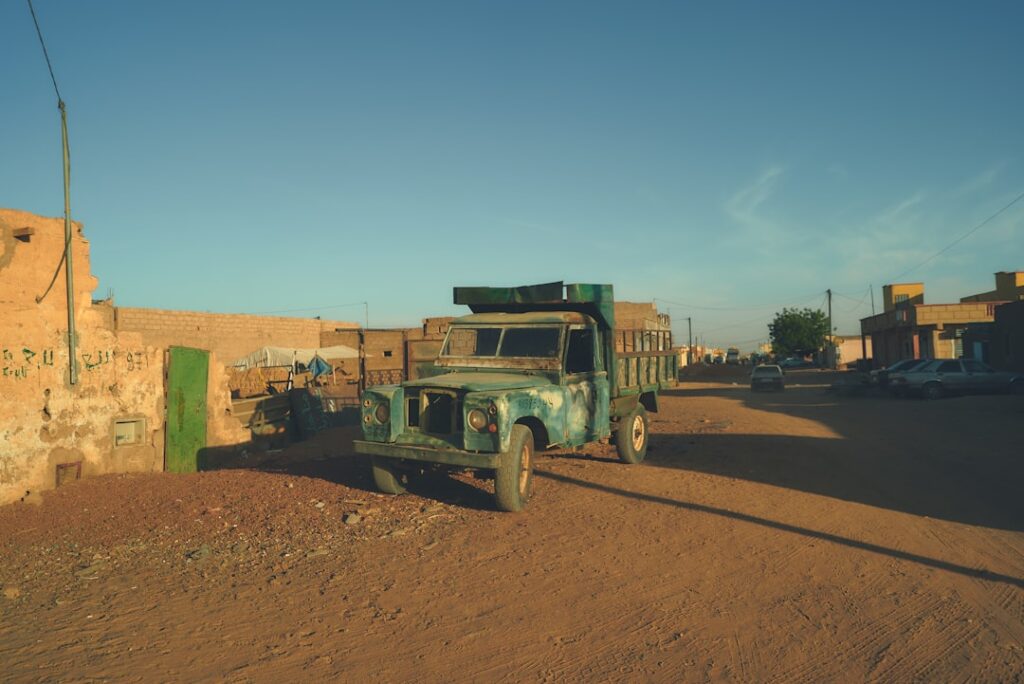
Rosso, Mauritania: Hidden River Crossings, Saharan Markets & Cultural Crossroads (2026)
While travelers queue for hours to cross the Senegal River at the official border post, just a few kilometers away, the historic ferry at Rosso, Mauritania offers a glimpse into a slower, more authentic West Africa. For less than 500 Ouguiya, you can join locals, livestock, and traders on a wooden vessel that has plied these waters for generations, watching the sun cast long shadows over the riverbanks as you drift between nations. This is the real, unfiltered pulse of the borderlands.
Why Rosso, Mauritania Stands Out

An old building with a windmill in the background, Rosso, Mauritania
- Historic Architecture: The Grand Mosque of Rosso, built in the 1930s, showcases a unique fusion of Moorish design and Saharan mud-brick construction, standing as a testament to the town’s enduring spiritual and cultural significance.
- Cultural Scene: The weekly *Loumo* (Sunday Market) transforms the town into a vibrant hub where Mauritanian traders from the interior meet Senegalese merchants, creating a dynamic spectacle of commerce, language, and tradition.
- Local Specialties: You must try *Thieboudienne*, Senegal’s national fish and rice dish, which here takes on a Mauritanian twist with locally caught river fish and aromatic Saharan spices.
Pro Tip: Plan your visit for a Sunday to experience the market at its peak, but arrive early in the morning (before 9 AM) to avoid the intense midday heat and to see the freshest produce and most active trading. The best weather for exploration is between November and February.
Map of Rosso, Mauritania
Use these interactive maps to explore Rosso, Mauritania and plan your route:
📍 View Rosso, Mauritania on OpenStreetMap
🗺️ Open Rosso, Mauritania in Google Maps
Planning Your Trip: Practical Essentials
Getting There and Around
- By Air: The nearest major airport is Nouakchott–Oumtounsy International (NKC), about 200km north. From there, you’ll need a shared taxi or private car (a 3-4 hour journey). Book flights at Skyscanner for best deals.
- By Train: There is no passenger train service to Rosso. The famous Iron Ore Train runs from Nouadhibou to Zouérat, far to the north. Overland travel is by road.
- By Car: The RN2 highway connects Nouakchott to Rosso. The drive is straightforward but be prepared for checkpoints. Car rentals are best arranged in Nouakchott. Compare car rentals at RentalCars.com.
- Local Transport: Within Rosso, *taxi-brousses* (shared bush taxis) and motorcycle taxis are the primary modes. A short trip within town costs around 100-200 MRO. There are no formal passes; negotiate fares before setting off.
Best Time to Visit
Timing is crucial for comfort in Rosso’s Saharan climate. The ideal window offers manageable temperatures for exploring the market and riverfront.
| Season | Weather | Highlights |
|---|---|---|
| Summer (Jun–Aug) | Extremely hot, 35°C–45°C (95°F–113°F), humid near the river. | Fewest visitors, but outdoor activity is limited to early mornings and late evenings. |
| Winter (Dec–Feb) | Pleasant and dry, 20°C–30°C (68°F–86°F), cool nights. | Perfect for market days and ferry crossings; peak season for regional travelers. |
| Shoulder (Apr–May/Sep–Oct) | Warm to hot, 28°C–38°C (82°F–100°F), less predictable. | Good balance of decent weather and smaller crowds, ideal for photography. |
Budgeting for Rosso, Mauritania

A sign that is sitting in the dirt, Rosso, Mauritania
| Category | Budget | Mid-range | Luxury |
|---|---|---|---|
| Accommodation | 5,000-10,000 MRO ($13-$26) for a basic auberge | 15,000-25,000 MRO ($40-$65) for a comfortable hotel with AC | Limited true luxury; top hotels ~30,000+ MRO ($78+) |
| Meals | 1,000-2,000 MRO ($2.60-$5.20) at street stalls | 3,000-5,000 MRO ($8-$13) at a local restaurant | 6,000+ MRO ($15+) for the best hotel restaurant meal |
| Transport | 100-500 MRO ($0.26-$1.30) for motorcycle/bush taxi | 10,000-15,000 MRO ($26-$39) for a private day taxi | Private car with driver from Nouakchott ~50,000 MRO ($130) |
| Activities | Free (market, river walk), Ferry: 500 MRO ($1.30) | Guided market tour: ~5,000 MRO ($13) | Private cultural tour with translator |
| Daily Total | 7,000-13,000 MRO ($18-$34) | 25,000-40,000 MRO ($65-$104) | 60,000+ MRO ($156+) |
Top Attractions and Must-See Sights
| Attraction | Description | Hours | Entry Fee |
|---|---|---|---|
| The Rosso Ferry Crossing | Experience the timeless rhythm of local life on this essential wooden ferry linking Mauritania and Senegal. | Sunrise to Sunset | ~500 MRO per person |
| The Sunday Market (Loumo) | A sensory overload of colors, sounds, and smells where Saharan and Sahelian cultures converge for weekly trade. | 6 AM – 2 PM (Sun only) | Free |
| Rosso Grand Mosque | An architectural landmark with distinctive minarets, offering a peaceful retreat and a view of traditional craftsmanship. | Outside prayer times | Free (donation appreciated) |
| Senegal River Banks | Stroll along the riverfront at dusk to see fishermen returning with their catch and the sky painted in spectacular hues. | Always accessible | Free |
3-Day Itinerary: Rosso, Mauritania’s Highlights & Hidden Gems
Day 1: Arrival & Immersion in Border Life
- Morning (7-9 AM): After arriving from Nouakchott, settle into your hotel. Then, head directly to the **Rosso Ferry Landing**. Watch the chaotic, fascinating loading process. For a true experience, take the short crossing to the Senegalese side and back (cost: ~500 MRO each way).
- Afternoon (12-3 PM): Enjoy lunch at **Restaurant Le Flamboyant** near the market area. Try their *Mafé* (peanut stew with meat) for about 2,500 MRO. Afterwards, explore the quieter streets behind the main market to see traditional Mauritanian houses.
- Evening (6-8 PM): Take a leisurely walk along the riverbank as the sun sets. For dinner, seek out a small *gargote* (local eatery) for grilled fish and rice. Ask your hotel for the current best spot.
Day 2: Market Day & Cultural Discovery
- Morning (7-10 AM): Dive into the **Sunday Market** at its peak. Start at the textile section to see magnificent Mauritanian *melhfas* (women’s wraps) and then move to the spice stalls. Be prepared to bargain politely. A local guide, arranged the day before for ~5,000 MRO, can be invaluable.
- Afternoon (12-3 PM): Have a late lunch at **Cafétéria du Marché**, right in the market, for a simple but delicious plate of *riz sauce* (rice with sauce) for 1,500 MRO. Visit the **Grand Mosque** in the quieter afternoon heat.
- Evening (6-8 PM): Enjoy a cup of strong, sweet Mauritanian tea (a three-stage ceremony) at a local tea stall. For dinner, try **Auberge Rosso’s** restaurant for a more varied menu, including their version of *Thieboudienne*.
Day 3: Riverside & Departure
- Morning (8-10 AM): Hire a *pirogue* (dugout canoe) from a riverside fisherman for a peaceful 1-hour trip on the Senegal River (negotiate to ~3,000 MRO). This offers a unique, water-level perspective of the town and birdlife.
- Afternoon (12-2 PM): Enjoy a final lunch, perhaps sampling *Yassa* (marinated chicken or fish with onions and lemon) at a local spot. Do some last-minute souvenir shopping for spices or fabric.
- Evening: Depart for your next destination. If heading to Nouakchott, savvy travelers know to leave by 3 PM to ensure arrival before dark.
Cultural Insights & Etiquette
- Language: Arabic (Hassaniya dialect) is official; French is widely used in business. Wolof and Pulaar are also spoken. Key phrases: “As-salamu alaykum” (Hello), “Shukran” (Thank you), “Kayf halak?” (How are you?).
- Customs: Greetings are lengthy and important. Always use your right hand for eating, shaking hands, and giving/receiving items. Public displays of affection are frowned upon. It’s polite to accept at least the first cup of tea if offered.
- Tipping: Not universally expected but appreciated for good service. In restaurants, rounding up the bill is sufficient. For guides or drivers, 5-10% is a good guideline.
- Dress Code: Conservative dress is key. Men should avoid shorts. Women should wear loose-fitting clothing that covers shoulders and knees; a headscarf is not mandatory but respectful.
- Business Hours: Shops open early (7-8 AM), close for a long lunch (12-3 or 4 PM), and reopen until 7 or 8 PM. Government hours are typically 8 AM-3 PM, Sunday-Thursday. Friday is the holy day.
Where to Eat: Rosso, Mauritania’s Best Bites
Dining in Rosso is about hearty, flavorful West African staples. You’ll find exceptional value at local *gargotes*, where large communal platters are the norm. Don’t expect fancy decor; the focus is squarely on generous, satisfying food.
Must-Try Local Specialties
- Thieboudienne: The “king of dishes.” Fish, rice, and vegetables stewed in a rich tomato sauce. For an authentic version, ask at **Restaurant Le Fleuve** or any busy local lunch spot.
- Mafé: A rich, creamy peanut stew with beef or chicken, served over rice. Look for it at market-day stalls or **Cafétéria du Marché**.
- Grilled Capitaine: The Nile perch from the Senegal River, simply grilled over charcoal and served with lime and onion sauce. Best enjoyed at simple riverside shacks in the evening.
Restaurant Recommendations by Budget
| Type | Restaurant | Specialty | Price Range |
|---|---|---|---|
| Budget | Market Street Food Stalls | Brochettes (skewers), fried plantains, beans | 500-1,500 MRO |
| Mid-range | Restaurant Le Flamboyant (Central Market Area) | Full Senegalese/Mauritanian meals, good variety | 2,000-4,000 MRO |
| Fine dining | Auberge Rosso Restaurant (in the hotel) | The most extensive menu in town, Western options available | 4,000-7,000 MRO |
Where to Stay
Accommodation in Rosso is functional rather than luxurious, focused on providing a clean base for travelers and traders. Most hotels are clustered near the market and transport hubs. Compare prices and book at Booking.com or Airbnb for apartments (though local Airbnb options are very limited).
Best Neighborhoods for Accommodation
- City Centre/Market Area: The most convenient location for the ferry, market, and restaurants. Can be noisy. Best for short stays and those relying on public transport. Suits budget travelers and explorers.
- Riverside: A quieter, more scenic option with a few auberges offering river views. You’ll be a 10-15 minute walk from the main action. Ideal for those seeking a slightly more peaceful experience.

Explore the stunning rock formations and natural landscapes of Ayoun el Atr…, Rosso, Mauritania
FAQs: Your Rosso, Mauritania Questions Answered
1. Is Rosso, Mauritania safe at night?
Rosso is generally safe, but standard precautions are essential. Avoid walking alone in poorly lit areas at night. The market area is bustling during the day but quiet after dark. Petty theft can occur in crowded places, so keep valuables secure. Always use registered taxi services recommended by your hotel for evening travel.
2. What currency is used and are credit cards accepted?
The Mauritanian Ouguiya (MRO) is the currency. Credit cards are virtually useless in Rosso outside of maybe the top hotel. You must operate on cash. Bring enough Euros or USD to exchange, or withdraw cash in Nouakchott before arriving. Small denominations are helpful for daily expenses.
3. How do I get from the airport to the city center?
You’ll fly into Nouakchott (NKC). From there, you have two main options: a shared taxi (“sept-place”) from the main taxi station (Gare de Rosso) costing about 5,000 MRO per seat for the 3-4 hour journey, or a private taxi arranged through your hotel for 40,000-60,000 MRO. Book airport transfers at GetYourGuide for convenience, though options specifically for Rosso may be limited.
4. Do I need to speak the local language?
You can manage with basic French. Very little English is spoken. Learning a few Hassaniya Arabic greetings (like “As-salamu alaykum”) will earn you immense goodwill. For anything complex, like arranging transport or a guide, having a French phrasebook or translation app is highly recommended.
5. What’s the appropriate dress code?
Conservative, loose-fitting clothing is non-negotiable. For men, long trousers and shirts are expected. For women,
Related Guides
Explore more destinations similar to Rosso:
- Kanazawa, Japan’s Ultimate Samurai Districts, Gold Leaf & Garden Perfection (2025)
- Trancoso, Brazil’s Essential Beaches, Bohemian Charm & Bahian Culture (2025)
- Sarmizegetusa Regia, Romania: Essential Ancient Mysteries, Mountain Majesty & Dacian Heritage (2025)
- Hualien, Taiwan’s Essential Taroko Gorge, Indigenous Culture & Coastal Wonders (2025)

