
Purmamarca, Argentina’s Amazing Mountains, Markets & Ancient Colors (2026)
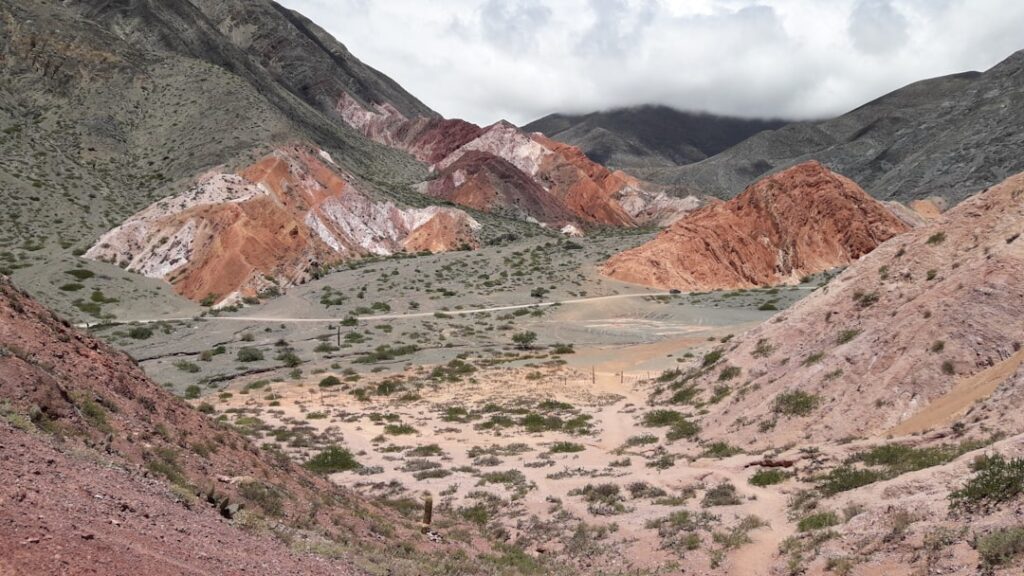
Just after dawn, the sun hits the Cerro de los Siete Colores, and the Hill of Seven Colors reveals its secret: it’s not just seven, but a shifting spectrum of ochre, lavender, green, and rust. The air is crisp and thin at 7,900 feet, carrying the scent of burning wood from adobe homes and the distant murmur of the morning market. This is the Quebrada de Humahuaca, a UNESCO World Heritage landscape where geology tells a 600-million-year story and time moves at the pace of a wandering llama.
Why Purmamarca, Argentina Stands Out

Brown concrete building near brown rocky mountain under blue sky during daytime, Purmamarca, Argentina
- Historic Architecture: The 17th-century Santa Rosa de Lima Church, built in 1648 with cactus wood beams and adobe walls, stands as a stunning example of colonial Andean architecture against the multi-colored mountain.
- Cultural Scene: The weekly artisan market around the main plaza is a living tradition, where Quechua and Atacameño communities sell handwoven ponchos, silver *sikus* (panpipes), and salteña pastries.
- Local Specialties: You must try humita en chala, a savory steamed corn paste wrapped in its own husk, often enjoyed with a warming cup of coca leaf tea to help with the altitude.
Pro Tip: The absolute best time to visit is during the shoulder seasons of April-May or September-October. You’ll avoid the peak summer (Dec-Feb) heat and the winter (Jun-Aug) tourist rush from the Northern Hemisphere, securing better prices and a more tranquil experience. Arrive at the Cerro by 7:30 AM for the most dramatic, crowd-free light.
Map of Purmamarca, Argentina
Use these interactive maps to explore Purmamarca, Argentina and plan your route:
📍 View Purmamarca, Argentina on OpenStreetMap
🗺️ Open Purmamarca, Argentina in Google Maps
Planning Your Trip: Practical Essentials
Getting There and Around
- By Air: Martín Miguel de Güemes International Airport (SLA) in Salta is the main gateway, 110 km away. Aerolíneas Argentinas and LATAM offer domestic connections. From there, your best bet is a 2-hour pre-booked shuttle or rental car. Book flights at Skyscanner for best deals.
- By Train: There are no direct passenger trains to Purmamarca. The famous *Tren a las Nubes* (Train to the Clouds) departs from Salta but doesn’t stop here. Regional bus is the primary public transport. For other Argentine rail journeys, reserve tickets at Trainline or the national railway website.
- By Car: Driving from Salta via RN9 is straightforward and spectacular. Rental cars are available at Salta airport; a 4×4 is not necessary for Purmamarca itself but is recommended for exploring deeper into the Quebrada. Parking is informal and free around the village edges. Compare car rentals at RentalCars.com.
- Local Transport: Purmamarca is tiny and entirely walkable. To visit nearby Tilcara or Humahuaca, catch a local bus from the small terminal; fares are about ARS 300-500 (approx. $3-5 USD). Taxis are available for short hops or custom tours.
Best Time to Visit
Purmamarca’s high desert climate means intense sun, cool nights, and minimal rain. The ideal visit balances comfortable daytime temperatures with vibrant cultural activity.
| Season | Weather | Highlights |
|---|---|---|
| Summer (Dec–Feb) | Warm days (68-80°F/20-27°C), frequent afternoon thunderstorms, cool nights. | Lush landscapes, vibrant festivals like Carnaval in Feb, but also peak tourist crowds and higher prices. |
| Winter (Jun–Aug) | Crisp, sunny days (55-65°F/13-18°C), very cold nights (can drop below freezing). | Brilliant blue skies, perfect hiking weather, and the influx of international tourists seeking winter sun. |
| Shoulder (Apr–May/Sep–Oct) | The sweet spot: mild days (60-75°F/16-24°C), chilly nights, minimal rain. | Optimal conditions for exploring, fewer crowds, better accommodation rates, and stunning light for photography. |
Budgeting for Purmamarca, Argentina

Red blue and green textile, Purmamarca, Argentina
| Category | Budget | Mid-range | Luxury |
|---|---|---|---|
| Accommodation | Hostel dorm: ARS 8,000/night | Boutique hostel private room or basic hotel: ARS 20,000-35,000/night | Luxury adobe lodge: ARS 60,000+/night |
| Meals | Market empanadas & local lunch: ARS 5,000/day | Restaurant meals & wine: ARS 12,000-18,000/day | Fine dining at top lodges: ARS 25,000+/day |
| Transport | Local buses & walking: ARS 1,500/day | Taxi tours & inter-town buses: ARS 8,000/day | Private driver/guide: ARS 30,000+/day |
| Activities | Hiking, plaza visits (free) | Paseo de los Colorados walk, museum entry: ARS 3,000 | Private 4×4 tour to Salinas Grandes: ARS 25,000+ |
| Daily Total | ARS 14,500 (approx. $14 USD) | ARS 43,000-66,000 (approx. $43-66 USD) | ARS 120,000+ (approx. $120+ USD) |
Note: Argentine peso (ARS) rates are highly variable due to inflation and parallel exchange markets. USD estimates are approximate based on the informal “blue dollar” rate, which offers far better value than official rates. Always carry cash (USD or Euros) to exchange locally.
Top Attractions and Must-See Sights
| Attraction | Description | Hours | Entry Fee |
|---|---|---|---|
| Cerro de los Siete Colores | The iconic, rainbow-striped mountain formed by 75 million years of sedimentary layers, best viewed from the town’s eastern edge. | Always accessible | Free |
| Paseo de los Colorados | A gentle, 3km loop trail that winds through stunning, eroded red rock formations right behind the village. | Dawn to dusk | Free (donation appreciated) |
| Santa Rosa de Lima Church & Main Plaza | The historic heart of town, featuring the 1648 adobe church and a sprawling plaza shaded by ancient algarrobo trees. | Church: 9 AM – 7 PM (approx.) | Free |
| Artisan Market (Feria) | A daily circle of vibrant stalls selling ponchos, ceramics, and crafts, operating under the principle of true barter. | 8 AM – 8 PM daily | Free to browse |
3-Day Itinerary: Purmamarca, Argentina’s Highlights & Hidden Gems
Day 1: Colors & Crafts of Purmamarca
- Morning (7:30 AM): Sunrise at the **Cerro de los Siete Colores** viewpoint on Calle Buenos Aires. The low light makes the mineral stripes glow. Follow this with a walk on the **Paseo de los Colorados** loop (allow 1.5 hours).
- Afternoon (12:30 PM): Explore the **Artisan Market** around the plaza. For lunch, grab a table at **El Patio** on the plaza for their superb llama steak or quinoa stew (around ARS 7,000).
- Evening (6:00 PM): Visit the simple yet profound **Santa Rosa de Lima Church**. As dusk falls, join locals for a *mate* circle if invited—it’s a sign of friendship. Dine at **La Comarca**, known for its clay-oven dishes and local wine list.
Day 2: Ancient Quebrada & Salt Flats Adventure
- Morning (7:00 AM): Book a shared tour (ARS 15,000 per person) to the **Salinas Grandes**, vast salt flats at 11,000 feet. The journey via the Cuesta de Lipán pass offers breathtaking views. Pack sunglasses—the salt glare is intense.
- Afternoon (1:30 PM): Return to Purmamarca for a late lunch at **Qenti**, a cozy spot serving massive *locro* (hearty stew). Then, visit the small **Museo de Sitio** to understand the area’s pre-Hispanic history.
- Evening (7:00 PM): A relaxed evening. Enjoy a *humita* from a street vendor and listen to live *folklórica* music that often spills from bars like **La Casona**.
Day 3: Cultural Crossroads in Tilcara
- Morning (9:00 AM): Catch a local bus (ARS 400, 30 mins) north to **Tilcara**. Head straight to the **Pucará de Tilcara**, a partially reconstructed pre-Inca fortress with incredible valley views (entry ARS 2,000).
- Afternoon (12:30 PM): Wander Tilcara’s craft market, then have lunch at **El Nuevo Progreso**, an institution famous for its *empanadas salteñas*. Visit the quirky **Museo de los Pintores** if time allows.
- Evening (5:00 PM): Return to Purmamarca. For your final night, savor a sunset *asado* (barbecue) at your hotel or a farewell dinner at a *peña* if one is scheduled, where music and dance take center stage.
Cultural Insights & Etiquette
- Language: Spanish is official. A few Quechua words go far: “*Allillanchu*” (hello, how are you?), “*Yusulpayki*” (thank you). English is limited outside tourist hubs.
- Customs: Life moves slowly (*poco a poco*). Greet shopkeepers when entering. Always ask permission before photographing people, especially elders and artisans.
- Tipping: 10% is customary in restaurants if service isn’t included. For guides, ARS 1,000-2,000 per person for a half-day tour is appreciated.
- Dress Code: Modest, layered clothing is wise. The sun is fierce—hats and sunscreen are mandatory. Bring a warm jacket for nights year-round.
- Business Hours: Expect a long siesta from about 1 PM to 5 PM, where many shops close. Dinner starts late, around 9 PM. Many places close on national holidays.
Where to Eat: Purmamarca, Argentina’s Best Bites
Dining here is about hearty, altitude-friendly Andean cuisine. You’ll find earth ovens (*hornos de barro*), ancient grains like quinoa and *kiwicha*, and meats like llama and goat. Portions are generous, designed for the mountain climate.
Must-Try Local Specialties
- Locro: A thick, celebratory stew of corn, beans, squash, and meat. It’s a staple during festivals. Find a rich version at **Qenti** or any family-run *comedor*.
- Tamales and Humitas: Corn-based parcels steamed in husks. *Humitas* are sweeter/creamier; *tamales* are savory with meat. The best are from street vendors or market stalls in the morning.
- Emapanadas Salteñas: Smaller, baked (not fried) pastries filled with spiced beef, potatoes, and hard-boiled egg. **El Patio** on the plaza is renowned for theirs.
Restaurant Recommendations by Budget
| Type | Restaurant | Specialty | Price Range |
|---|---|---|---|
| Budget | **Market Stalls** (Plaza Principal) | Fresh empanadas, humitas, tamales | ARS 800-1,500 per item |
| Mid-range | **El Patio** (On the main plaza) | Regional classics like llama steak and locro, with plaza views | ARS 6,000-10,000 per main |
| Fine dining | **Restaurant of Hotel Manantial del Silencio** (Outskirts of town) | Elevated Andean cuisine in a stunning, tranquil setting | ARS 12,000+ per main |
Where to Stay
Accommodation ranges from basic hostels to luxurious adobe-walled lodges. Most places are within a 5-10 minute walk of the plaza, and many feature beautiful courtyards and mountain views. Book well in advance for peak seasons. Compare prices and book at Booking.com or Airbnb for apartments.
Best Neighborhoods for Accommodation
- Around the Main Plaza: The most convenient location for markets, restaurants, and bus stops. Can be noisy during the day but wonderfully central. Ideal for first-time visitors and those without a car.
- Eastern Edge of Town (towards the Cerro): Offers the most spectacular, direct views of the Hill of Seven Colors. You’ll find quieter, often higher-end lodges here, a short walk from the center.
- Along the Access Road (RN52): Several larger hotels and hostels are situated here. They offer more space, parking, and panoramic valley views, but require a slightly longer (10-15 min) walk into town.

Shop with colorful bags and mountains in the background., Purmamarca, Argentina
FAQs: Your Purmamarca, Argentina Questions Answered
1. Is Purmamarca, Argentina safe at night?
Purmamarca is generally very safe. The village is small, close-knit, and sees many tourists. Standard precautions apply: stick to lit areas, don’t flash valuables, and be mindful of altitude if walking back after a meal. Crime is rare, but safeguarding your belongings in crowded markets is always wise.
2. What currency is used and are credit cards accepted?
The Argentine Peso (ARS) is the official currency. Due to complex exchange controls, savvy travelers bring US dollars or Euros in cash to exchange at the favorable informal “blue dollar” rate in Salta or via trusted contacts. Credit cards are accepted in many hotels and some restaurants, but often at the inferior official exchange rate. **Cash is king** in markets, for taxis, and small eateries.
Related Guides
Explore more destinations similar to Purmamarca:
- The Ultimate Ksar of Ouadane, Mauritania Guide (2025)
- Isla Suasi, Peru’s Incredible Solitude, Stargazing & Sustainable Luxury (2025)
- Novokuznetsk, Russia’s Best Steel, Siberian Spirit & Soviet History (2026)
- Lake George, Uganda’s Hidden Wildlife, Waterways & Untamed Savannah (2026)
{“@context”: “https://schema.org”, “@type”: “FAQPage”, “mainEntity”: [{“@type”: “Question”, “name”: “What is the best time to visit Purmamarca?”, “acceptedAnswer”: {“@type”: “Answer”, “text”: “The best time to visit Purmamarca depends on your preferences. Generally, the dry season offers the most pleasant weather for sightseeing and outdoor activities.”}}, {“@type”: “Question”, “name”: “How many days do I need in Purmamarca?”, “acceptedAnswer”: {“@type”: “Answer”, “text”: “Most travelers spend 3-5 days in Purmamarca to see the main attractions. A week allows for a more relaxed pace and day trips.”}}, {“@type”: “Question”, “name”: “Is Purmamarca expensive to visit?”, “acceptedAnswer”: {“@type”: “Answer”, “text”: “Purmamarca can be visited on various budgets. Accommodation ranges from hostels to luxury hotels, and local restaurants offer affordable dining.”}}]}

