
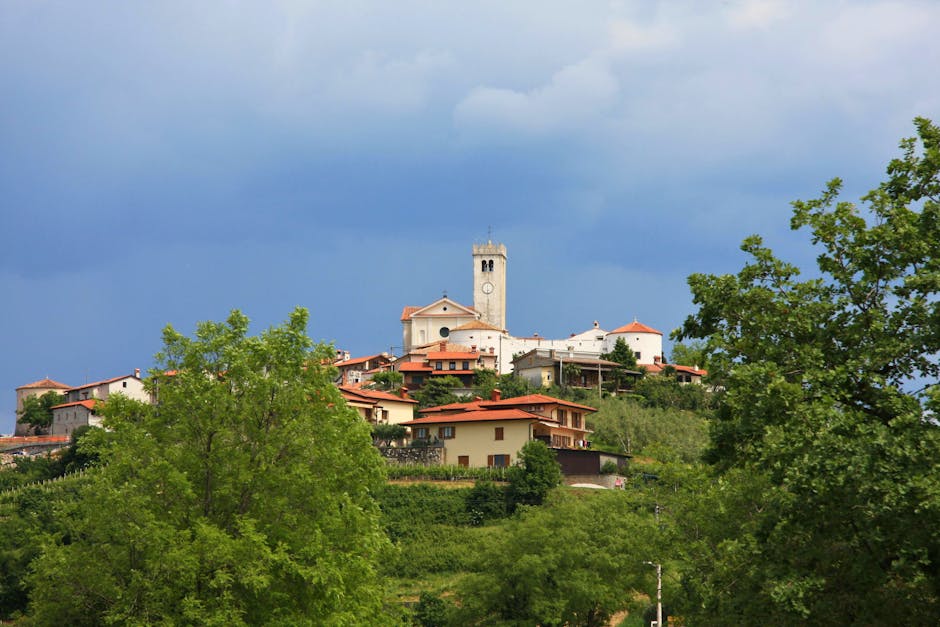
Nova Gorica, Slovenia’s Hidden Wine, History & A Borderless Vibe (2025)
While crowds flock to the Venetian canals of Italy just 90 minutes away, Nova Gorica, Slovenia delivers a fascinating, layered story of 20th-century history and world-class wine without the tourist premiums. Built from scratch after WWII as a socialist utopia for the Slovenian side of a divided region, this planned city now forms a vibrant, unified urban area with its Italian twin, Gorizia. Here, you can have breakfast in Slovenia, cross an invisible line in a park for an espresso in Italy, and be back for a wine tasting by lunch—all without showing a passport.
Why Nova Gorica, Slovenia Stands Out
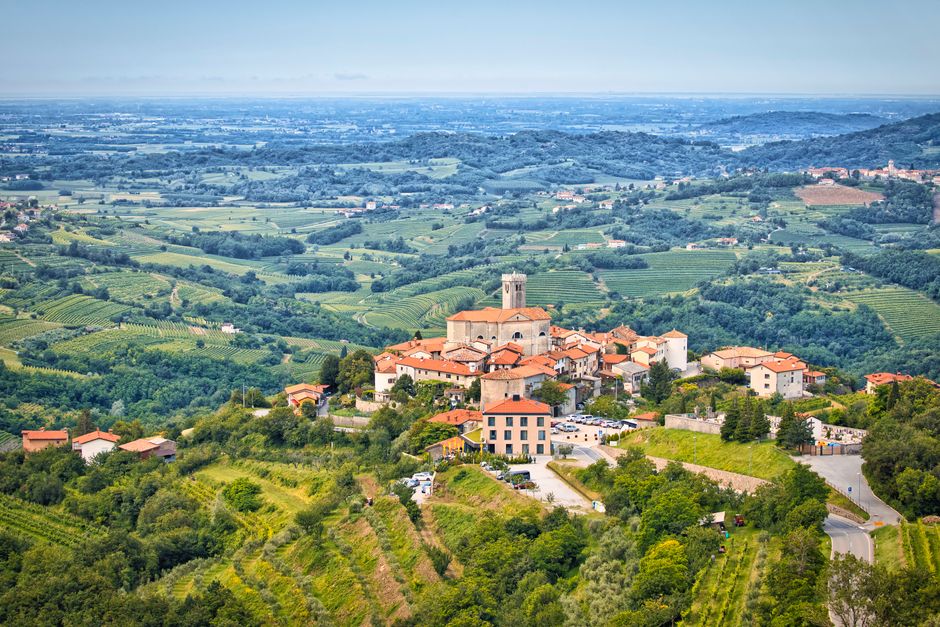
Picturesque aerial view of Šmartno village surrounded by vineyards in Nova …, Nova Gorica, Slovenia
- Historic Architecture: The monumental, socialist-era Trg Evrope (Europe Square), inaugurated in 2004, symbolizes the city’s modern identity as a bridge between cultures, featuring a unique circular design.
- Cultural Scene: The annual Gorizia-Nova Gorica Transborder Festival turns the entire twin-city area into one stage for music, theater, and art, erasing the border completely.
- Local Specialties: You must try a glass of Vipava Valley Rebula or Zelen, crisp white wines from the sun-drenched slopes just minutes from the city center.
Pro Tip: Visit in late September or early October during the grape harvest. The weather is ideal, the vineyards are buzzing with activity, and you can experience authentic “trgatev” (harvest) events at local wineries, which are less crowded and more personal than the peak summer season.
Map of Nova Gorica, Slovenia
Use these interactive maps to explore Nova Gorica, Slovenia and plan your route:
📍 View Nova Gorica, Slovenia on OpenStreetMap
🗺️ Open Nova Gorica, Slovenia in Google Maps
Planning Your Trip: Practical Essentials
Getting There and Around
- By Air: The closest major airport is Trieste–Friuli Venezia Giulia (TRS) in Italy, 45 minutes by car. Ljubljana Jože Pučnik Airport (LJU) is a 1-hour, 15-minute drive. Book flights at Skyscanner for best deals.
- By Train: Direct trains connect Nova Gorica to Ljubljana (approx. 2.5 hours) and Sežana, with easy connections to Trieste. The station is a key hub. Reserve tickets at Trainline or the national railway website.
- By Car: The A1 motorway links Nova Gorica to Ljubljana. Driving is ideal for exploring the Vipava Valley vineyards. Parking is generally easy and affordable. Compare car rentals at RentalCars.com.
- Local Transport: Local buses (Arriva) are efficient and connect Nova Gorica with Gorizia (Italy) and surrounding towns. A single urban ticket costs around €1.30. For the twin-city experience, your best bet is walking or cycling across the border.
Best Time to Visit
The Vipava Valley’s microclimate offers pleasant conditions for much of the year. Spring and autumn are sublime for outdoor exploration and wine culture, while summer brings vibrant festivals.
| Season | Weather | Highlights |
|---|---|---|
| Summer (Jun–Aug) | Warm, 25-30°C (77-86°F), low humidity | Open-air festivals, bustling café terraces, day trips to the Adriatic coast. Moderate crowds. |
| Winter (Dec–Feb) | Cool, 3-8°C (37-46°F), occasional rain | Cozy wine taverns (“vinoteke”), Christmas markets in Gorizia, lower hotel rates. Some vineyards are dormant. |
| Shoulder (Apr–May/Sep–Oct) | Mild, 15-22°C (59-72°F), perfect for walking | Vineyards in bloom or harvest, ideal cycling weather, no crowds, and the best food & wine experiences. |
Budgeting for Nova Gorica, Slovenia

Detailed close-up of fresh green leaves backlit by sunlight, Nova Gorica, Slovenia
| Category | Budget | Mid-range | Luxury |
|---|---|---|---|
| Accommodation | Hostel/guesthouse: €35-50 | 3-4 star hotel: €70-110 | Design hotel/spa: €130+ |
| Meals | Gostilna lunch menu: €8-12 | Restaurant dinner: €20-35 | Fine dining w/wine pairing: €60+ |
| Transport | Local buses/walking: €3-5 | Regional taxi/day car rental: €25-40 | Private driver/transfers: €80+ |
| Activities | Park walks, border crossing, church visits: Free | Wine tasting, museum entry: €10-20 | Private vineyard tour & gourmet picnic: €70+ |
| Daily Total | €50-70 | €110-160 | €250+ |
Top Attractions and Must-See Sights
| Attraction | Description | Hours | Entry Fee |
|---|---|---|---|
| Kostanjevica Hill & Monastery | A serene hilltop monastery with a crypt holding the last French Bourbon kings and stunning views over both cities. | Mon-Sat: 10 AM – 12 PM, 3 PM – 5 PM | Crypt: €3 |
| Trg Evrope (Europe Square) | The symbolic heart of the twin cities, a circular plaza where you literally cross the Italy-Slovenia border with a step. | Always open | Free |
| Goriška Museum (Nova Gorica) | Houses the fascinating “Nova Gorica – A City Born on the Green Table” exhibit about the city’s unique planned origins. | Tue-Sat: 10 AM – 6 PM | €4 |
| Sveta Gora (Holy Mountain) | A historic pilgrimage site with a majestic basilica offering panoramic views of the entire Soča and Vipava valley region. | Church: 7 AM – 7 PM | Free |
3-Day Itinerary: Nova Gorica, Slovenia’s Highlights & Hidden Gems
Day 1: History & The Borderless City
- Morning (9 AM): Start at Trg Evrope. Walk the circular plaza, crossing the border multiple times. Have a coffee at Caffè degli Specchi on the Italian side (Piazza della Vittoria, Gorizia).
- Afternoon (1 PM): Visit the Goriška Museum to understand the city’s genesis. For lunch, head to Gostilna pri Mari in Solkan (5-min drive) for their famous “Solkan štruklji” (rolled dumplings).
- Evening (6 PM): Drive up to Kostanjevica Hill for sunset views. Dine at Vipava 1881 in the valley for modern Slovenian cuisine paired with local wines.
Day 2: Wine & The Vipava Valley
- Morning (10 AM): Book a tour at Movia or Bratič winery (€15-25 per tasting). These are some of Slovenia’s most celebrated producers. Book ahead.
- Afternoon (1:30 PM): Lunch at a “gostilna” in a village like Vipavski Križ. Try “jota” (sauerkraut stew) and “pršut” (air-dried ham). Explore the village’s medieval fortress.
- Evening (7 PM): Return to Nova Gorica. Experience the casual vibe at Vinoteka Bacchus in the center, sampling wines by the glass from small local growers.
Day 3: Culture & The Soča River
- Morning (9 AM): Take a 25-minute drive to the Great Soča Gorge near Bovec (free access). Walk the trails for breathtaking turquoise river views.
- Afternoon (12:30 PM): Have lunch in the alpine town of Kobarid at Topli Val, known for its exceptional trout. Visit the award-winning Kobarid Museum (€8) about WWI’s Isonzo Front.
- Evening (6 PM): Back in Nova Gorica, enjoy a final dinner at Restavracija Rupa, set in a unique circular building, for a creative take on Karst and coastal cuisine.
Cultural Insights & Etiquette
- Language: Slovenian is the official language. In border areas, Italian is widely spoken. English is common in hospitality. Learn “Hvala” (Thank you – pronounced “HVAH-lah”) and “Na zdravje!” (Cheers!).
- Customs: The border is open, but always carry your passport or EU ID card for occasional checks. Respect the history—the division was a painful reality for locals until 2004.
- Tipping: Rounding up the bill or leaving 5-10% for good service in restaurants is appreciated but not mandatory. In bars, rounding up is standard.
- Dress Code: Casual smart is fine for most places. Bring comfortable walking shoes for hills and vineyards. Cover shoulders and knees when visiting churches like Sveta Gora.
- Business Hours: Shops typically open Mon-Fri 8/9 AM-7 PM, Sat until 1 PM. Many close on Sunday. Restaurants often have a break between 3 PM and 6 PM.
Where to Eat: Nova Gorica, Slovenia’s Best Bites
Dining here is a cross-border affair, blending hearty Slovenian “gostilna” fare, Italian trattoria classics, and innovative wine-country cuisine. Locals recommend following the “kmetija” (farm) signs for the most authentic agritourism meals.
Must-Try Local Specialties
- Vipava Valley Pršut & Zelen: The region’s air-dried ham paired with its signature peppery white wine. Try it at any local “vinoteka” or farm.
- Štruklji: Rolled dumplings that can be savory (with cottage cheese) or sweet (with walnuts, apple). Gostilna pri Mari in Solkan is legendary for them.
- Goriška Brda Cherry Cake (Gibanica): A layered pastry from the neighboring hill region. Find it in cafes, especially in the spring.
Restaurant Recommendations by Budget
| Type | Restaurant | Specialty | Price Range |
|---|---|---|---|
| Budget | Okrepčevalnica Špajza (Nova Gorica center) | Hearty, home-style daily menus and burek. | €5-10 |
| Mid-range | Gostilna Mahorčič (Vipava town) | Authentic Vipava Valley dishes in a rustic setting. | €15-25 |
| Fine dining | Restavracija Rupa (Nova Gorica) | Creative, seasonal tasting menus in a unique architectural space. | €40-60+ |
Where to Stay
Accommodation ranges from city-center hotels perfect for border-hopping to charming rural guesthouses amid the vineyards. Your best bet for a true local experience is a “tourist farm” in the Vipava Valley. Compare prices and book at Booking.com or Airbnb for apartments.
Best Neighborhoods for Accommodation
- Nova Gorica Center: Practical for train travel, shopping, and easy walks into Italy. Offers modern hotels but less local charm. Ideal for short stays.
- Solkan: A picturesque suburb with the famous stone-arch bridge over the Soča. Quieter, with excellent traditional restaurants and a village feel.
- Vipava Valley Villages (e.g., Vipava, Goče): The top choice for atmosphere. You’ll stay on wine farms, wake up to vineyard views, and enjoy direct access to producers. Requires a car.
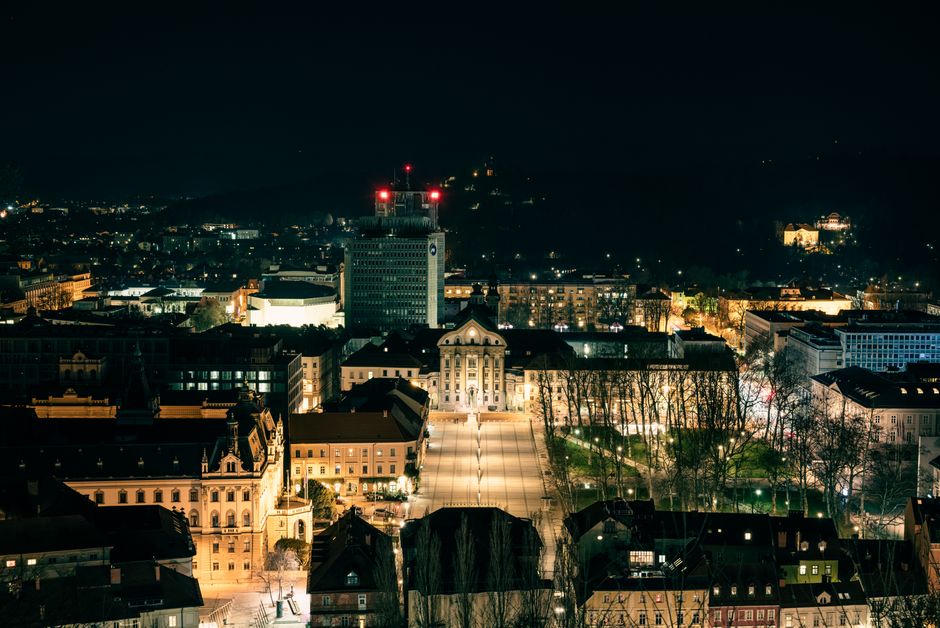
Stunning aerial view of illuminated Ljubljana cityscape at night, Nova Gorica, Slovenia
FAQs: Your Nova Gorica, Slovenia Questions Answered
1. Is Nova Gorica, Slovenia safe at night?
Yes, it is considered very safe. The city center and border areas are well-lit and peaceful at night. Standard precautions apply, but violent crime is rare. Walking between Nova Gorica and Gorizia in the evening is common and safe.
2. What currency is used and are credit cards accepted?
Slovenia uses the Euro (€). In Nova Gorica, cards are widely accepted. In Gorizia, Italy, cards are also common, though some smaller Italian cafes prefer cash. It’s wise to have some euros on hand for market stalls, small wineries, or rural “gostilnas”.
3. How do I get from the airport to the city center?
From Trieste Airport (TRS), the most direct option is a pre-booked shuttle or taxi (approx. €50-60, 45 min). Public transport requires a bus to Trieste Centrale station, then a train to Gorizia, and a short walk. From Ljubljana Airport (LJU), a direct GoOpti shuttle (book online) is the most convenient, costing around €25-35 per person. Book airport transfers at GetYourGuide for convenience.
4. Do I need to speak the local language?
Not at all. English is commonly spoken in hotels, restaurants, and wineries that cater to visitors. In the border area, many people speak Slovenian, Italian, and often English. Learning a few basic Slovenian or Italian pleasantries is always appreciated.
5. What’s the appropriate dress code?
Smart-casual is perfect. For daytime exploring and winery visits, comfortable clothing and shoes are key. For dinner at a nicer restaurant, neat casual wear is acceptable. Remember modesty (covered shoulders/knees) for church visits. Always pack a light jacket—the “burja” wind in the Vipava Valley can be brisk.
Final Thoughts: Nova Gorica, Slovenia Awaits
Nova
Related Guides
Explore more destinations similar to Nova Gorica:

