
Great Ocean Road, Australia: Stunning Coastal Drama, Rainforest Secrets & Living History (2025)
While crowds flock to the Sydney Harbour Bridge, savvy travelers discover a different kind of Australian monument: a 243-kilometer-long war memorial, painstakingly carved by hand by returning soldiers between 1919 and 1932. The Great Ocean Road isn’t just a scenic drive; it’s a living history lesson where you trace the coastline past shipwreck graveyards, through fern gullies older than the Amazon, and to the foot of limestone stacks that vanish into the Southern Ocean’s mist. This is where Australia’s raw power meets its poignant past.
Why Great Ocean Road, Australia Stands Out

Gray asphalt road beside mountain surrounded by green leafed trees during d…, Great Ocean Road, Australia
- Historic Architecture: The road itself is the monument, but the Cape Otway Lightstation (1848) stands as Australia’s oldest surviving lighthouse, a sentinel that guided ships through the treacherous “Shipwreck Coast.”
- Cultural Scene: The annual Apollo Bay Music Festival each March transforms this fishing village into a vibrant hub of folk, blues, and world music, echoing through the streets and against the mountain backdrop.
- Local Specialties: You must try a fresh crayfish (Southern Rock Lobster) from a dockside shack in Port Campbell or Apollo Bay, best enjoyed with chips and a view of the working harbor.
Pro Tip: Drive east to west (from Torquay towards Port Campbell). This puts you on the ocean side of the road for the entire journey, making every scenic pull-over effortless and safe. For the fewest coaches, start your day’s drive before 9 AM or after 3 PM.
Map of Great Ocean Road, Australia
Use these interactive maps to explore Great Ocean Road, Australia and plan your route:
📍 View Great Ocean Road, Australia on OpenStreetMap
🗺️ Open Great Ocean Road, Australia in Google Maps
Planning Your Trip: Practical Essentials
Getting There and Around
- By Air: Fly into Melbourne’s Tullamarine Airport (MEL). From there, it’s a 90-minute drive to Torquay, the road’s official start. Book flights at Skyscanner for best deals.
- By Train: V/Line trains run from Melbourne’s Southern Cross Station to Geelong (1 hour), where you can connect to local buses, but service is limited. A car is highly recommended. Check schedules at the Public Transport Victoria website.
- By Car: This is the definitive way to experience the road. The drive from Melbourne to Torquay is straightforward via the M1. Allow a minimum of 3 days. Compare car rentals at RentalCars.com.
- Local Transport: Public transport is sparse. V/Line buses run once or twice daily between Geelong and Apollo Bay/Warrnambool, but you’ll miss most stops. Tours are an alternative, but they lack flexibility.
Best Time to Visit
The Great Ocean Road is a year-round destination, but the experience shifts dramatically with the seasons. Summer brings crowds and vibrant energy, while winter offers storm-watching drama and solitude. The shoulder seasons are often considered the sweet spot.
| Season | Weather | Highlights |
|---|---|---|
| Summer (Dec–Feb) | Warm, 20-25°C (68-77°F), sunny but can be windy. | Perfect for beach days, bustling markets, and long evenings. Expect peak crowds and higher accommodation prices. |
| Winter (Jun–Aug) | Cool, 10-15°C (50-59°F), frequent rain and dramatic Southern Ocean storms. | Epic, moody photography at the Twelve Apostles with fewer tourists. Some seasonal attractions may have reduced hours. |
| Shoulder (Mar–May & Sep–Nov) | Mild, 15-20°C (59-68°F), less predictable but often pleasant. | Ideal balance of good weather and manageable crowds. Wildflowers bloom in spring, and autumn offers serene forest walks. |
Budgeting for Great Ocean Road, Australia

Rock formation in sea, Great Ocean Road, Australia
| Category | Budget | Mid-range | Luxury |
|---|---|---|---|
| Accommodation | $80-120/night (hostel, campsite, basic motel) | $150-250/night (B&B, holiday park cabin, hotel) | $300+/night (boutique lodge, cliff-top retreat) |
| Meals | $30/day (bakery pies, fish & chips, self-catering) | $60-80/day (cafe lunches, pub dinners) | $120+/day (fine dining with local wine) |
| Transport | $40/day (fuel share, occasional bus) | $60-80/day (own rental car fuel) | $150+/day (private tour or premium car hire) |
| Activities | $0-20 (beaches, hikes, scenic lookouts) | $50 (lighthouse entry, short guided walks) | $150+ (helicopter flight, gourmet tour) |
| Daily Total | $150-200 | $300-400 | $600+ |
Top Attractions and Must-See Sights
| Attraction | Description | Hours | Entry Fee |
|---|---|---|---|
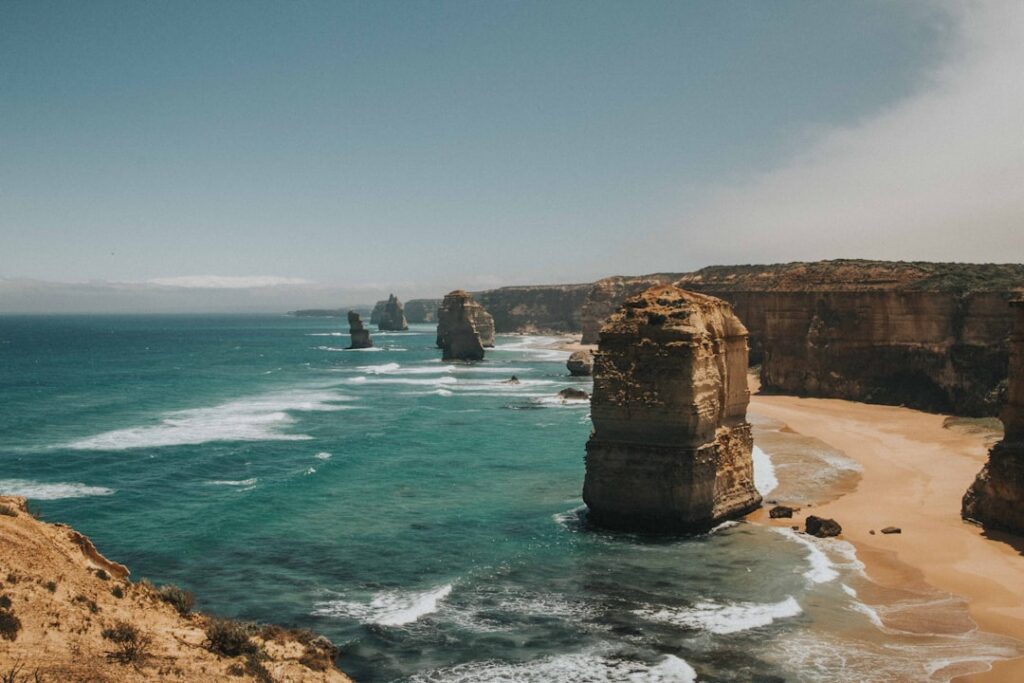
| The Twelve Apostles | Iconic limestone stacks rising from the Southern Ocean; best viewed at sunrise or sunset for golden light. | Visitor Centre: 9am-5pm. Lookouts: 24/7. | Free (Parking fees apply) |
| Loch Ard Gorge | Site of the 1878 shipwreck; walk down into the serene gorge and learn the tragic tale of two survivors. | 24/7 | Free |
| Great Otway National Park | A lush, temperate rainforest featuring the magical Melba Gully and the towering Californian Redwoods at Beech Forest. | 24/7 | Free (Some car parks have fees) |
| Cape Otway Lightstation | Australia’s oldest mainland lighthouse; climb to the top for panoramic views and explore the keeper’s cottages. | 9am-5pm | $19.50 AUD Adult |
3-Day Itinerary: Great Ocean Road, Australia’s Highlights & Hidden Gems
Day 1: Surf Coast & Rainforest Immersion
- Morning (7-9 AM): Depart Torquay, home of surf brands Rip Curl and Quiksilver. Stop at Bells Beach (a 5-minute detour) to watch surfers tackle the famous break.
- Afternoon (12-3 PM): Lunch at The Bottle of Milk in Lorne ($18-25 for a legendary burger). Then, hike to Erskine Falls (30-min return) before detouring inland to the magical Redwood Forest at Beech Forest.
- Evening (6-8 PM): Check into Apollo Bay. Enjoy dinner at Chris’s Beacon Point Restaurant (book ahead) for Greek-inspired seafood with breathtaking views, or grab fresh fish and chips from the Apollo Bay Fishermen’s Co-op.
Day 2: Shipwreck Coast & The Apostles
- Morning (8 AM): Visit the Cape Otway Lightstation ($19.50) – keep an eye out for koalas in the trees along the access road. Then, walk through the ancient rainforest at Maits Rest on a beautiful boardwalk loop (free, 30 mins).
- Afternoon (1 PM): Arrive at the Twelve Apostles. Walk the Gibson Steps down to the beach (if accessible) for a ground-level perspective. Then, explore Loch Ard Gorge and the nearby Razorback formation.
- Evening (5:30 PM): Check into Port Campbell. For a memorable sunset, skip the crowded Apostles and head to the quieter but equally stunning Loch Ard Gorge or The Arch. Dine at 12 Rocks Cafe & Beach Bar for hearty, local fare.
Day 3: Western Wonders & Return Journey
- Morning (9 AM): Drive 10 minutes west to The Grotto, London Bridge, and the Bay of Islands. These formations are often less crowded and offer spectacular, windswept beauty.
- Afternoon (12 PM): For a different perspective, consider a 15-minute helicopter flight over the Apostles from Port Campbell Heliport (from $145). Alternatively, begin your journey back towards Melbourne, stopping for a late lunch at Timboon Railway Shed Distillery for whisky and wood-fired pizza.
- Evening: If returning to Melbourne, take the inland route (A1) via Colac for a faster journey (approx. 2.5 hours). Stop in the historic gold-rush town of Ballarat for a final dinner.
Cultural Insights & Etiquette
- Language: English. A casual “G’day” works as a greeting. You’ll hear “arvo” for afternoon and “brekkie” for breakfast.
- Customs: This is a relaxed, coastal region. Be patient on single-lane sections of the road and use designated pull-over bays to let faster locals pass. Always swim between the red and yellow flags at patrolled beaches.
- Tipping: Not obligatory but appreciated for good service. Rounding up the bill or leaving 5-10% in sit-down restaurants is a generous gesture.
- Dress Code: Extremely casual. Layers are essential—coastal weather changes rapidly. Sturdy shoes are needed for cliff-top walks and rainforest tracks.
- Business Hours: Smaller towns may have shops that close early (5-6 PM). Many cafes and restaurants in tourist towns are open 7 days. Major public holidays (Christmas, Easter, Australia Day) see reduced services.
Where to Eat: Great Ocean Road, Australia’s Best Bites
The dining scene here is defined by the ocean and the farm. You’ll move from trendy surf-town cafes to classic fish and chip shops, and into paddock-to-plate restaurants showcasing local dairy, beef, and berries. Don’t expect flashy fine dining; expect incredibly fresh, honest food.
Must-Try Local Specialties
- Crayfish (Southern Rock Lobster): The king of local seafood. For the authentic experience, buy a cooked cray from a fisherman’s co-op (like in Apollo Bay or Port Fairy) and enjoy it on the wharf.
- Apollo Bay Scallop Pie: A regional icon. The Great Ocean Road Brewhouse in Apollo Bay does a famous version, with fresh scallops in a creamy sauce under a flaky pastry lid.
- Timboon Ice Cream & Whisky: From the Timboon Railway Shed Distillery, sample small-batch single malt whisky followed by rich, creamy ice cream made on-site with local ingredients.
Restaurant Recommendations by Budget
| Type | Restaurant | Specialty | Price Range |
|---|---|---|---|
| Budget | Apollo Bay Fishermen’s Co-op (Apollo Bay) | Freshly battered fish, scallops, and chips eaten on the harbor wall. | $15-25 AUD |
| Mid-range | La Bimba (Apollo Bay) | Modern Australian share plates with a Mediterranean twist and great ocean views. | $35-60 AUD main |
| Fine dining | Brae (Birregurra, inland detour) | World-renowned, multi-award-winning degustation using hyper-local produce from its own farm. Book months ahead. | $380+ AUD per person |
Where to Stay
Accommodation ranges from basic motels and caravan parks to luxurious eco-retreats. Booking ahead is crucial, especially from December to April and on weekends. Compare prices and book at Booking.com or Airbnb for apartments.
Best Neighborhoods for Accommodation
- Lorne: The most cosmopolitan stop, with a beautiful beach, great dining, and the Qdos Arts complex. Suits those wanting a lively vibe and more amenities. Can be busy and pricey.
- Apollo Bay: A perfect middle-ground. A working fishing harbor with a fantastic beach, good restaurants, and a friendly atmosphere. Ideal as a base for exploring the Otways.
- Port Campbell: Small, quiet, and incredibly close to the Twelve Apostles and Loch Ard Gorge. Best for photographers and those who want to be at the heart of the Shipwreck Coast. Limited dining options.

Body of water during daytime, Great Ocean Road, Australia
FAQs: Your Great Ocean Road, Australia Questions Answered
1. Is Great Ocean Road, Australia safe at night?
Very safe in terms of personal security. The main hazards are wildlife (kangaroos and wombats are most active at dawn/dusk) and fatigue on the winding roads. Avoid driving these roads at night if you are not accustomed to them. In towns, standard precautions apply.
2. What currency is used and are credit cards accepted?
Australian Dollars (AUD). Credit/debit cards (Visa, Mastercard) are widely accepted in all towns. It’s wise to carry some cash for small vendors, parking meters, or in case of poor reception in remote areas affecting EFTPOS.
3. How do I get from the airport to the start of the road?
Melbourne Airport (MEL) to Torquay is about a 90-minute drive. Options include: rental car (most flexible, from ~$50/day), a pre-booked shuttle bus (~$80 one-way), or a taxi/rideshare (~$150-200). Book airport transfers at GetYourGuide for convenience.
4. Do I need to speak the local language?
English is the language. Australians are generally friendly and informal. Knowing a few slang terms can be fun, but you’ll have no issues communicating. A simple “please” and “thank you” goes a long way.
5. What’s the appropriate dress code?
Utterly practical and casual. Think comfortable walking shoes, a warm layer (even in summer), a waterproof jacket, sun protection (hat, sunglasses, SPF50+), and swimwear. There’s no need for formal attire anywhere on the road.
Final Thoughts: Great Ocean Road, Australia Awaits
The Great Ocean Road delivers an experience that is both grand and intimate. You’ll be humbled by the scale of the cliffs and the ocean’s power, yet charmed by the quiet magic of a sun-dappled rainforest or the story of a historic shipwreck. It’s a journey that connects you to the forces of nature and the resilience of human history. Your best souvenir won’t be a trinket, but the memory of standing on a windswept cliff as the last light of day turns the Twelve Apostles to gold. For that moment
Related Guides
Explore more destinations similar to Great Ocean Road:
- Debre Damo, Ethiopia: Essential Ancient Monasteries, Rock-Hewn Churches & Living Traditions (2025)
- Hagia Sophia, Turkey: Best Byzantine Grandeur, Ottoman Splendor & Spiritual Harmony (2025)
- Koh Kret, Thailand’s Essential Pottery, River Life & Mon Heritage (2025)
- Cobh, Ireland’s Best Titanic History, Rainbow Houses & Coastal Walks (2026)

