
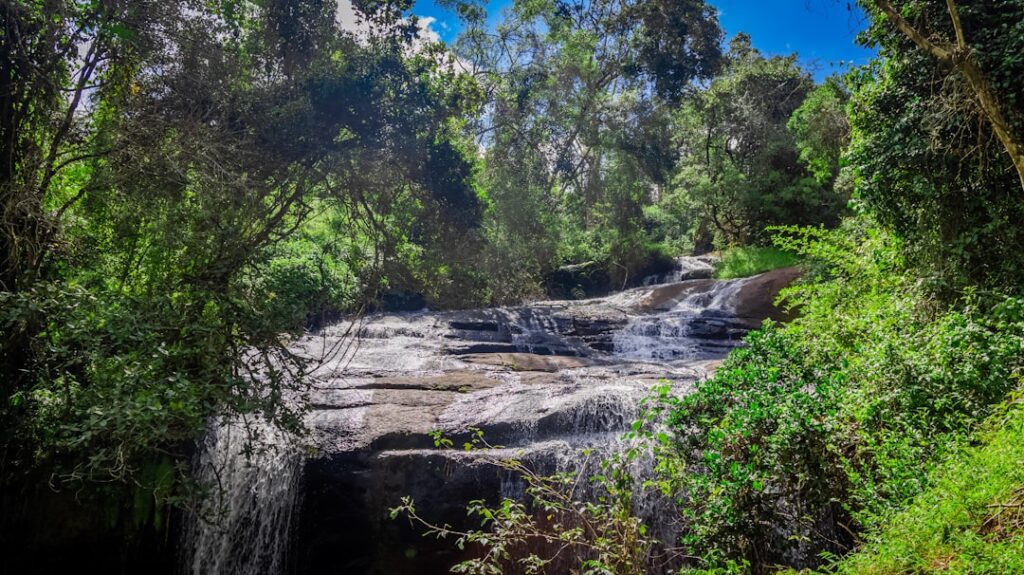
Zomba, Malawi’s Essential Plateaus, History & Botanical Beauty (2025)
Sunrise on the Zomba Plateau reveals a world apart: a cool, misty highland forest at 1,800 meters, where the air smells of pine and damp earth, a stark contrast to the tropical lowlands just 45 minutes below. Here, you can stand at the edge of a 1,000-meter cliff, watching eagles circle over a patchwork of tea plantations and distant Lake Chilwa. This former colonial capital, often bypassed for Lake Malawi, offers a uniquely temperate escape woven with layers of Malawian history.
Why Zomba, Malawi Stands Out

A large body of water surrounded by mountains, Zomba, Malawi
- Historic Architecture: The grand, whitewashed State House, built in the 1880s, served as the seat of government until 1975 and is a powerful symbol of the nation’s colonial and post-independence eras.
- Cultural Scene: The vibrant Zomba Arts Festival, typically held in August, transforms the town with live music, theater, and dance, showcasing Malawi’s incredible creative talent.
- Local Specialties: You must try a plate of *Nkhuku ya Mphanzi* (grilled chicken) with *nsima* (a staple maize porridge), best enjoyed at a local *chigubu* (informal grill spot) for an authentic taste.
Pro Tip: Visit between May and October during the dry, cool season. For the absolute best experience on the plateau, arrive on a weekday morning before 9 AM; you’ll have the stunning viewpoints like Emperor’s View all to yourself before the occasional weekend day-trippers arrive from Blantyre.
Map of Zomba, Malawi
Use these interactive maps to explore Zomba, Malawi and plan your route:
📍 View Zomba, Malawi on OpenStreetMap
🗺️ Open Zomba, Malawi in Google Maps
Planning Your Trip: Practical Essentials
Getting There and Around
- By Air: Fly into Chileka International Airport (BLZ) in Blantyre, 65km away. Ethiopian Airlines, Kenya Airways, and South African Airways serve it. A pre-booked taxi to Zomba costs about MWK 45,000. Book flights at Skyscanner for best deals.
- By Train: Limited passenger rail connects from Blantyre, but it’s infrequent and slow. The scenic journey takes over 2 hours for a short distance. Most travelers opt for road transport. Check schedules at the national railway website.
- By Car: The drive from Blantyre is a scenic 90-minute journey on the well-maintained M3 road. Parking is generally easy in town. Compare car rentals at RentalCars.com for pick-up in Blantyre.
- Local Transport: Minibuses are the lifeblood, connecting the plateau and town (MWK 500-1,000). For the plateau, you’ll need a 4×4 vehicle (hire locally for ~MWK 50,000/day with driver) or join a tour. Taxis within town are affordable (MWK 3,000-5,000 per short trip).
Best Time to Visit
Zomba’s climate is defined by altitude: pleasantly cool on the plateau and warm in the town below. The dry season offers clear skies and ideal hiking, while the rainy season brings lush greenery and dramatic waterfalls.
| Season | Weather | Highlights |
|---|---|---|
| Cool & Dry (May–Aug) | Plateau: 10-22°C, sunny, chilly nights. Town: 15-25°C. | Best for hiking, clear views from peaks, festival season. Peak for local tourism. |
| Hot & Dry (Sep–Nov) | Plateau: 15-28°C. Town: 20-35°C, increasingly humid. | Great for early morning plateau trips, vibrant jacaranda blooms in October. |
| Rainy (Dec–Apr) | Warm with heavy afternoon showers. Plateau can be misty. | Landscape is incredibly lush, waterfalls like Williams Falls are at their most powerful. Fewer visitors. |
Budgeting for Zomba, Malawi

Aerial view of a historic brick church with Gothic architecture, Zomba, Malawi
| Category | Budget | Mid-range | Luxury |
|---|---|---|---|
| Accommodation | MWK 15,000-25,000 (basic guesthouse) | MWK 40,000-80,000 (comfortable lodge/B&B) | MWK 100,000+ (exclusive plateau retreat) |
| Meals | MWK 3,000-6,000 (street food/local eatery) | MWK 8,000-15,000 (restaurant meal & drink) | MWK 20,000+ (fine dining at a hotel) |
| Transport | MWK 2,000/day (minibuses) | MWK 15,000/day (taxi for local trips) | MWK 50,000+ (private 4×4 with driver for plateau) |
| Activities | Free (hiking, botanical gardens) | MWK 5,000-10,000 (guided walk, entry fees) | MWK 25,000+ (full-day private guided plateau tour) |
| Daily Total | MWK 20,000-35,000 (~$12-$21) | MWK 65,000-110,000 (~$38-$65) | MWK 200,000+ (~$118+) |
Top Attractions and Must-See Sights
| Attraction | Description | Hours | Entry Fee |
|---|---|---|---|
| Zomba Plateau | A vast granite massif offering hiking, stunning views at Emperor’s View, trout dams, and dense cedar forests. | Daylight hours | Free (Vehicle park fee: MWK 1,000) |
| Zomba Botanical Gardens | Established in 1891, these serene gardens are among the oldest in Africa, with majestic trees and peaceful lawns. | 8 AM – 5 PM | MWK 1,000 |
| Malawi University Museum | Houses fascinating collections on Malawian history, culture, and archaeology, including relics from the Stone Age. | Mon-Fri, 7:30 AM – 4:30 PM | MWK 2,000 |
| Chancellor College (University of Malawi) | The beautiful, sprawling campus has a vibrant atmosphere and is home to the famous “Great Hall.” | Open Campus | Free |
3-Day Itinerary: Zomba, Malawi’s Highlights & Hidden Gems
Day 1: Historic Heart & Botanical Serenity
- Morning (7-9 AM): Start with a peaceful walk through the **Zomba Botanical Gardens**. Find the giant fig tree planted in the 1890s and listen to the chorus of birds. Your best bet is to go early to enjoy the cool, quiet atmosphere.
- Afternoon (12-3 PM): Explore the historic **Old Town**. See the State House (view from outside), the colonial-era post office, and the vibrant **Zomba Market**. For lunch, head to **Annie’s Lodge** for a hearty burger or a local chicken curry (MWK 8,000).
- Evening (6-8 PM): Enjoy a sundowner at a viewpoint overlooking the town before dinner at **Pakachere Restaurant** at the Backpackers, known for its relaxed vibe and good pizzas (MWK 9,000).
Day 2: Plateau Adventure
- Morning (7:30 AM): Arrange a 4×4 vehicle with a driver (MWK 50,000 for the day) or join a group tour to explore the **Zomba Plateau**. First stop: **Emperor’s View** for breathtaking panoramas. Savvy visitors know to bring a jacket—it can be chilly up top.
- Afternoon (1 PM): Have a picnic lunch by the tranquil **Trout Dam** (pack supplies from town). Afterwards, take a guided walk to **Williams Falls** (tip guide MWK 3,000), a beautiful cascade in the forest.
- Evening (7 PM): Return to town for a well-earned dinner at **Ku Chawe Inn**’s restaurant. While it’s part of a hotel, the food is excellent and the setting is lovely. Try the grilled trout, caught from the plateau dams (MWK 12,000).
Day 3: Culture & Campus Life
- Morning (9 AM): Take a minibus (MWK 500) or short taxi to **Chancellor College**. Wander the green campus, see the iconic Great Hall, and soak in the academic energy. Don’t miss the small **bookshop** for local publications.
- Afternoon (12 PM): Visit the **Malawi University Museum** on campus for a deep dive into the country’s past. For lunch, try **St. Luke’s Hospital Canteen**—a surprising insider tip for cheap, delicious, and hygienic local meals like rice and beans (MWK 2,500).
- Evening (5 PM): For your final evening, experience local life at a *chigubu*. Ask a taxi driver to take you to a good spot for *Nkhuku ya Mphanzi*. Enjoy grilled chicken and *nsima* under the stars for an authentic and memorable farewell (MWK 4,000).
Cultural Insights & Etiquette
- Language: Chichewa is the national language. English is widely spoken in town. Learn greetings: “Moni” (Hello), “Zikomo” (Thank you/Please/Excuse me).
- Customs: Always greet people before asking questions or for help. Use your right hand for giving and receiving items, including money. A gentle handshake is common.
- Tipping: Not mandatory but appreciated. In restaurants, 5-10% is fine if service isn’t included. Tip guides MWK 3,000-5,000 for a half-day.
- Dress Code: Modesty is respected. Avoid very short shorts or revealing tops, especially when visiting markets or rural areas. On the plateau, dress in layers.
- Business Hours: Shops: 7:30 AM – 5 PM (often closed 12-1 PM). Government offices: 7:30 AM – 4:30 PM. Sunday is a quiet day for worship and rest.
Where to Eat: Zomba, Malawi’s Best Bites
Zomba’s dining scene is a mix of simple local eateries, backpacker-friendly cafes, and a few hotel restaurants offering higher-end meals. The focus is on hearty, satisfying food, with fresh ingredients from the surrounding fertile region.
Must-Try Local Specialties
- Nsima with Relish: The national staple. It’s a thick maize porridge served with a side dish (*ndiwo*) like pumpkin leaves, beans, or fish. Try it at any local restaurant like **Mdala Restaurant**.
- Grilled Trout: A unique Zomba specialty, thanks to the plateau’s cold streams. Served whole, simply grilled with lemon. **Ku Chawe Inn** is the classic spot.
- Mandasi: Deep-fried doughnuts, a popular and cheap snack sold by street vendors in the morning. Perfect with a cup of tea.
Restaurant Recommendations by Budget
| Type | Restaurant | Specialty | Price Range |
|---|---|---|---|
| Budget | Mdala Restaurant (near market) | Authentic, no-frills local meals like nsima and chicken | MWK 3,000-5,000 |
| Mid-range | Pakachere Restaurant (at Backpackers) | Western and Malawian fusion, great pizzas and social vibe | MWK 7,000-12,000 |
| Fine dining | Annie’s Lodge Restaurant | Well-prepared international dishes and steaks in a garden setting | MWK 10,000-18,000 |
Where to Stay
Accommodation ranges from basic guesthouses in town to charming B&Bs and the historic hotel on the plateau’s edge. Staying in town puts you close to amenities and local life, while plateau lodges offer unparalleled tranquility and cool air. Compare prices and book at Booking.com or Airbnb for apartments.
Best Neighborhoods for Accommodation
- Old Town/City Centre: The most convenient location for markets, museums, and transport. You’ll find a mix of guesthouses and B&Bs. Ideal for travelers wanting to be in the heart of things.
- Near Chancellor College: A quieter, greener area with a youthful vibe due to the university. Good for mid-range B&Bs and easy access to campus attractions.
- Plateau Edge (e.g., Ku Chawe area): For stunning views and cool climate. This area is home to the iconic Ku Chawe Inn and a few other lodges. Perfect for a peaceful retreat, but you’ll need transport to get to town.
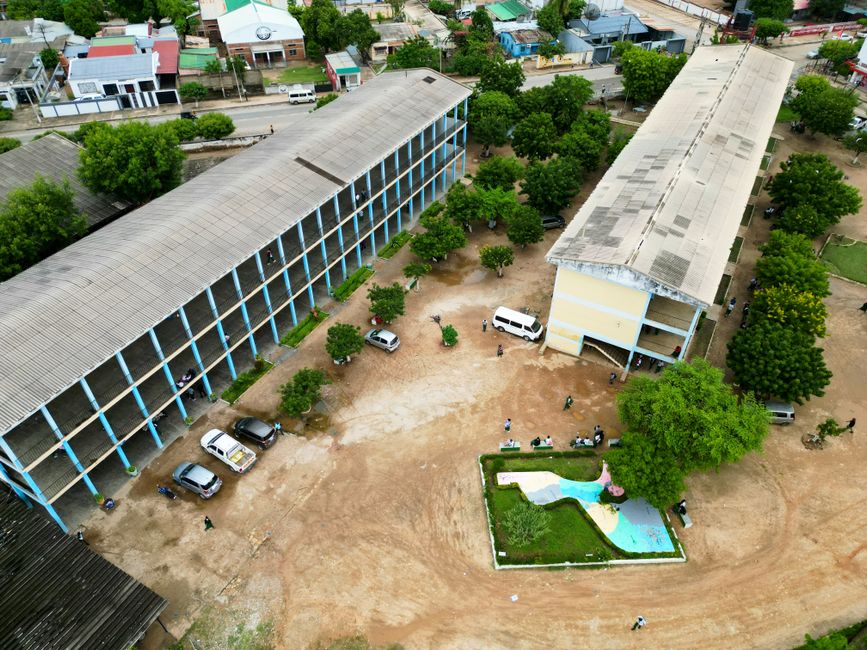
Aerial shot of a school building complex surrounded by trees and vehicles., Zomba, Malawi
FAQs: Your Zomba, Malawi Questions Answered
1. Is Zomba, Malawi safe at night?
Zomba is generally considered safe. However, as with any town, it’s wise to take basic precautions. Avoid walking alone in unlit areas at night; use a taxi for evening journeys. Petty theft can occur, so don’t flash valuables. The plateau is remote, so never hike alone and always inform someone of your plans.
2. What currency is used and are credit cards accepted?
The Malawian Kwacha (MWK) is the currency. Carry cash, as it’s king in Zomba. While some hotels (like Ku Chawe) and higher-end restaurants may accept Visa/Mastercard, many smaller establishments, markets, and transport options are cash-only. ATMs are available in town for withdrawals.
3. How do I get from the airport to the city center?
From Chileka Airport (BLZ) in Blantyre, the most reliable option is a pre-arranged taxi, which takes about 90 minutes and costs approximately MWK 45,000. You can also take a minibus to Blantyre city centre first (MWK 1,000), then another minibus to Zomba (MWK 2,500), but this is time-consuming with luggage. Book airport transfers at GetYourGuide for convenience.
4. Do I need to speak the local language?
No, but it helps immensely. English is an official language and is widely spoken in businesses, hotels, and by guides. Learning a few Chichewa greetings (“Moni”, “Zikomo”) will be met with warm smiles and appreciation, showing
Related Guides
Explore more destinations similar to Zomba:
- Longyearbyen, Norway’s Best Arctic Wilderness, Polar Bears & Midnight Sun (2026)
- Puerto Varas, Chile on a Budget: the Lake District for $40/Day (2026)
- Juanjuí, Peru’s Best Coffee, Waterfalls & Amazonian Gateway (2026)
- Mongolia’s Khovsgol Lake, Mongolia: Incredible Wilderness, Nomadic Culture & Crystal Waters (2026)

