
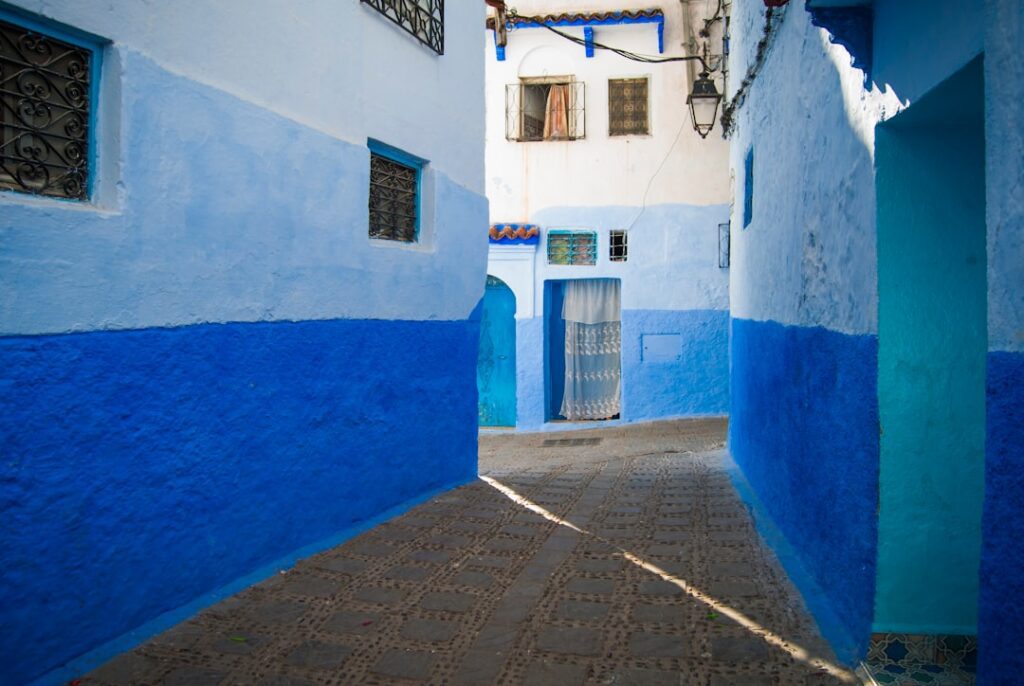
Chefchaouen’s Rif Mountains, Morocco: Ultimate Blue Labyrinths, Mountain Trails & Andalusian Soul (2025)
While over 2 million visitors a year photograph Chefchaouen’s famous blue-washed medina, fewer than 20% venture into the surrounding Rif Mountains. This is where the real magic happens. Here, you’ll find ancient footpaths trodden by Berber shepherds for centuries, terraced fields of the region’s legendary kif (cannabis), and villages where time feels suspended. The mountains aren’t just a backdrop; they’re the living, breathing heart of northern Morocco, offering a raw authenticity the town below can’t match on its own.
Why Chefchaouen’s Rif Mountains, Morocco Stands Out

A man walks by doors and rugs., Chefchaouen’s Rif Mountains, Morocco
- Historic Architecture: The 15th-century Grand Mosque’s distinctive octagonal minaret, built by Andalusian refugees, is a unique fusion of Spanish and Moroccan design you won’t see elsewhere in the country.
- Cultural Scene: The annual Chefchaouen Arts & Culture Festival transforms the town and surrounding hills with music, from traditional Gnawa to international acts, drawing performers and audiences into the mountain air.
- Local Specialties: You must try the local goat cheese, known as *jben*, often drizzled with mountain honey and served with fresh, warm bread—a simple, sublime taste of the Rif.
Pro Tip: The absolute best time for hiking is late April to early June. The wildflowers are spectacular, the temperatures are mild (20-25°C), and you’ll avoid both the summer heat and the larger tourist crowds that arrive in July and August. Start your hikes at 7 AM to have the trails to yourself.
Map of Chefchaouen’s Rif Mountains, Morocco
Use these interactive maps to explore Chefchaouen’s Rif Mountains, Morocco and plan your route:
📍 View Chefchaouen’s Rif Mountains, Morocco on OpenStreetMap
🗺️ Open Chefchaouen’s Rif Mountains, Morocco in Google Maps
Planning Your Trip: Practical Essentials
Getting There and Around
- By Air: The nearest major airports are Tangier Ibn Battouta (TNG, 2.5 hours by car) and Fès-Saïss (FEZ, 3.5 hours). From Tangier, CTM buses run regularly to Chefchaouen. Book flights at Skyscanner for best deals.
- By Train: There is no direct train to Chefchaouen. The closest rail station is in Ouezzane or Tangier, followed by a bus or grand taxi. Reserve tickets at Trainline or the national railway website.
- By Car: Driving offers the most flexibility for exploring the mountains. The N2 road from Tetouan is scenic but winding. Rental cars are best picked up at an airport. Compare car rentals at RentalCars.com.
- Local Transport: For mountain villages, shared “grand taxis” (old Mercedes) depart from Place Mohammed V in Chefchaouen. Negotiate the fare before departing. For hikes, hiring a local guide with a 4×4 for drop-off/pick-up is your best bet.
Best Time to Visit
The climate here is Mediterranean, but the altitude brings cooler temperatures and more rain than the coast. Shoulder seasons are ideal for active exploration.
| Season | Weather | Highlights |
|---|---|---|
| Summer (Jun–Aug) | Warm & dry, 25-35°C. Cooler in the mountains but strong sun. | Vibrant atmosphere in town, perfect for evening strolls. Mountain trails are dry but busy; start hikes early. |
| Winter (Dec–Feb) | Cool & wet, 5-15°C. Snow caps the highest peaks. | Dramatic, moody scenery with misty valleys. Few tourists, lower prices. Some higher trails may be inaccessible. |
| Shoulder (Apr–May/Sep–Oct) | Mild & pleasant, 15-25°C. Occasional spring showers or autumn clarity. | Prime hiking conditions. Wildflowers in spring, golden hues in fall. Optimal balance of good weather and manageable crowds. |
Budgeting for Chefchaouen’s Rif Mountains, Morocco

A city in the mountains, Chefchaouen’s Rif Mountains, Morocco
| Category | Budget | Mid-range | Luxury |
|---|---|---|---|
| Accommodation | 200-400 MAD/night (hostel/dar) | 600-1000 MAD/night (riad with terrace) | 1200+ MAD/night (boutique hotel with mountain views) |
| Meals | 30-50 MAD (street food, tagine at a local canteen) | 80-150 MAD (restaurant meal with drink) | 200+ MAD (multi-course fine dining) |
| Transport | 20-50 MAD/day (local buses, shared taxis) | 300-500 MAD/day (private taxi for a day trip) | 700+ MAD/day (private 4×4 with driver-guide) |
| Activities | Free (self-guided medina walks, hiking trailheads) | 200-400 MAD (half-day guided hike, hamam visit) | 600+ MAD (full-day private guided mountain trek with picnic) |
| Daily Total | 250-500 MAD | 1,100-2,000 MAD | 2,700+ MAD |
Top Attractions and Must-See Sights
| Attraction | Description | Hours | Entry Fee |
|---|---|---|---|
| Akchour Waterfalls | A stunning series of turquoise pools and cascades reached via a beautiful 1.5-hour hike through God’s Bridge natural rock arch. | Daylight hours | Free (10-20 MAD for parking) |
| The Spanish Mosque | An abandoned mosque on a hill east of town, offering the definitive panoramic sunset view over Chefchaouen’s blue medina nestled in the green mountains. | Always accessible | Free |
| Kasbah Museum | Explore the 15th-century fortress and its gardens, with ethnographic exhibits showcasing Rif Mountain culture, textiles, and history. | 9 AM – 1 PM, 3 PM – 6:30 PM (Closed Tue) | 60 MAD |
| Talassemtane National Park | A vast protected area of fir and pine forests, deep gorges, and rare wildlife like the Barbary macaque. The gateway to serious Rif trekking. | Daylight hours | Free (Guide recommended: ~400 MAD/day) |
3-Day Itinerary: Chefchaouen’s Rif Mountains, Morocco’s Highlights & Hidden Gems
Day 1: Medina Immersion & Mountain Vistas
- Morning (7-9 AM): Get lost in the blue medina as it wakes up. The soft morning light makes the blue hues incredibly photogenic, and you’ll have the winding lanes almost to yourself. Head towards the Ras El Ma spring to see locals gathering water.
- Afternoon (12-3 PM): Lunch at **Restaurant Tissemlal** in the heart of the medina for a classic chicken tagine with preserved lemons and olives (around 80 MAD). Afterwards, visit the Kasbah Museum to understand the region’s history.
- Evening (6-8 PM): Hike up to the Spanish Mosque for sunset (30-minute walk). Afterwards, enjoy dinner at **Cafe Restaurant Sofia** for their rooftop views and delicious lamb mechoui.
Day 2: Waterfalls & Rural Life
- Morning (8 AM): Hire a grand taxi to Akchour (approx. 150 MAD for the 45-minute journey). Start the hike to the waterfalls. Your best bet is to go all the way to the larger upper falls—it’s worth the extra 45 minutes.
- Afternoon (1 PM): Enjoy a fresh trout lunch at one of the simple restaurants by the river in Akchour (like **Restaurant La Perle d’Akchour** for about 60 MAD).
- Evening (6 PM): Return to Chefchaouen. Experience a traditional hamam (public bath); **Hamam El Majdouli** is a good local option. Follow it with a relaxed dinner of *rghaif* (Moroccan pancakes) and *jben* from a street vendor.
Day 3: High Mountain Trek & Local Craft
- Morning (7 AM): With a pre-booked guide (approx. 400-500 MAD), take a 4×4 into Talassemtane National Park. Trek for 2-3 hours through the fir forests towards the remote village of El Kelaâ.
- Afternoon (12 PM): Enjoy a picnic lunch prepared by your guide amidst the cedars. Visit a local cooperative to see traditional wool weaving using natural dyes like saffron and indigo.
- Evening (5 PM): Return to Chefchaouen for your final evening. Shop for authentic handicrafts at the **Collective Artisanal** (fixed prices). Have a farewell feast at **Aladdin Restaurant** for their spectacular mountain views and mixed grill.
Cultural Insights & Etiquette
- Language: Arabic and Berber (Tamazight) are official. French and Spanish are widely spoken in the north. Learn a few phrases: “Salam alaykum” (hello), “Shukran” (thank you), “La, shukran” (no, thank you).
- Customs: The Rif region is more conservative than major cities. Public displays of affection are frowned upon. Always ask permission before photographing people, especially in rural mountain villages.
- Tipping: Expected for services. Round up taxi fares. Leave 10% in sit-down restaurants. For guides, 50-100 MAD per day is appreciated for good service.
- Dress Code: Modesty is key. Cover shoulders and knees for both men and women, especially when hiking near villages. In Chefchaouen, it’s slightly more relaxed but still respectful.
- Business Hours: Shops open 9 AM – 1 PM, close for siesta, and reopen 3 PM – 8 PM. Many close for Friday prayers. Everything slows during Ramadan, though non-Muslims can eat discreetly.
Where to Eat: Chefchaouen’s Rif Mountains, Morocco’s Best Bites
Dining here is hearty and rustic, reflecting the mountain terrain. You’ll find an abundance of fresh goat cheese, walnuts, honey, and trout from the streams. Don’t expect a sophisticated culinary scene; instead, savor the honest, flavorful home-cooking style.
Must-Try Local Specialties
- Tagine Kefta: Meatball tagine with eggs and tomatoes, a comforting staple. Try it at **Casa Hassan** in the medina.
- Fresh Trout (Truite): Grilled or pan-fried, caught from the mountain rivers. The restaurants in Akchour serve the absolute freshest.
- Bessara: A warm, savory fava bean soup, often eaten for breakfast with a drizzle of olive oil. Look for it in the early morning at the market near Place Outa el Hammam.
Restaurant Recommendations by Budget
| Type | Restaurant | Specialty | Price Range |
|---|---|---|---|
| Budget | **Cafe Clock** (Medina) | Fusion Moroccan dishes & camel burgers in a quirky cultural hub | 40-80 MAD |
| Mid-range | **Restaurant Beldi Bab Ssour** (Near Bab El Ain) | Family-run spot with a gorgeous terrace and superb chicken tagine with figs | 70-120 MAD |
| Fine dining | **Lalla Mesouda** (Medina) | Elegant multi-course Moroccan feasts served in a beautifully restored blue house | 200+ MAD |
Where to Stay
Your main choice is staying in the medina for atmosphere or in the newer town (“Ensanche”) for convenience. For true mountain immersion, a few guesthouses exist in villages like Akchour. Compare prices and book at Booking.com or Airbnb for apartments.
Best Neighborhoods for Accommodation
- The Medina (Old Town): The quintessential experience—waking up in a blue-painted *dar* (house) with interior courtyards. Can be noisy and confusing to navigate, but utterly charming. Best for atmosphere seekers.
- Ensanche (New Town): Just outside the medina walls. Offers more modern amenities, easier parking, and hotel-style accommodations. A 5-10 minute walk to the main gates. Best for those wanting convenience and space.
- Hillside Guesthouses: A handful of places on the slopes above town offer breathtaking panoramic views. Requires a taxi or a steep walk to the medina, but rewards with tranquility and vistas.

A blue and white building with steps leading up to it, Chefchaouen’s Rif Mountains, Morocco
FAQs: Your Chefchaouen’s Rif Mountains, Morocco Questions Answered
1. Is Chefchaouen’s Rif Mountains, Morocco safe at night?
Chefchaouen is generally very safe, even at night. The medina is well-lit and populated until late. However, when hiking in the mountains, always be off the trails before dusk. In rural areas, standard precautions apply: avoid isolated areas and be aware of your surroundings.
2. What currency is used and are credit cards accepted?
The currency is the Moroccan Dirham (MAD). Cash is king, especially in the medina, small restaurants, and for taxis. Some larger riads and upscale restaurants accept credit cards (Visa/Mastercard). ATMs are available in the new town and at Place Mohammed V.
3. How do I get from the airport to the city center?
From Tangier Airport, the most direct option is a pre-booked private transfer (approx. 600-800 MAD, 2.5 hours). Cheaper: take a taxi to Tangier CTM bus station (100 MAD), then a CTM bus to Chefchaouen (50 MAD, 2 hours). Book airport transfers at GetYourGuide for convenience.
4. Do I need to speak the local language?
No, but it helps. In tourist areas, basic English, French, or Spanish will suffice. In the mountains, a guide becomes essential for communication. Learning a few Arabic or Berber greetings will earn you warm smiles and goodwill.
5. What’s the appropriate dress code?
Modest, loose-fitting clothing is essential. For hiking,
Explore More Destinations
- Jozani, Tanzania on a Budget: an Ancient Forest for $35/Day (2026)
- Nsumbu, Zambia on a Budget: Wild Africa for $40/Day (2026)
- Semporna, Malaysia on a Budget: Paradise for $35/Day (2026)
- Khuzestan, Iran on a Budget: Ancient Empires for $30/Day (2026)
- Ngerulmud, Palau on a Budget: Island Majesty for $45/Day (2026)
Ready to Visit Chefchaouen’s Rif Mountains?
Start planning your trip today. Compare hotels, find the best tours, and get insider tips.
Your adventure in Chefchaouen’s Rif Mountains starts here →
Related Guides
Explore more destinations similar to Chefchaouen’s Rif Mountains:

