
Warsaw, Poland’s Amazing Resilience, Royalty & Riverside Charm (2025)
What if a city could be rebuilt from memory? Warsaw proves it can. After being systematically destroyed in 1944, its citizens used 18th-century paintings by Bernardo Bellotto to meticulously reconstruct 85% of the Old Town, brick by brick. Today, you walk on UNESCO-listed cobblestones that are a living monument to collective will, where a vibrant, modern city buzzes around a painstakingly resurrected heart.
Why Warsaw, Poland Stands Out

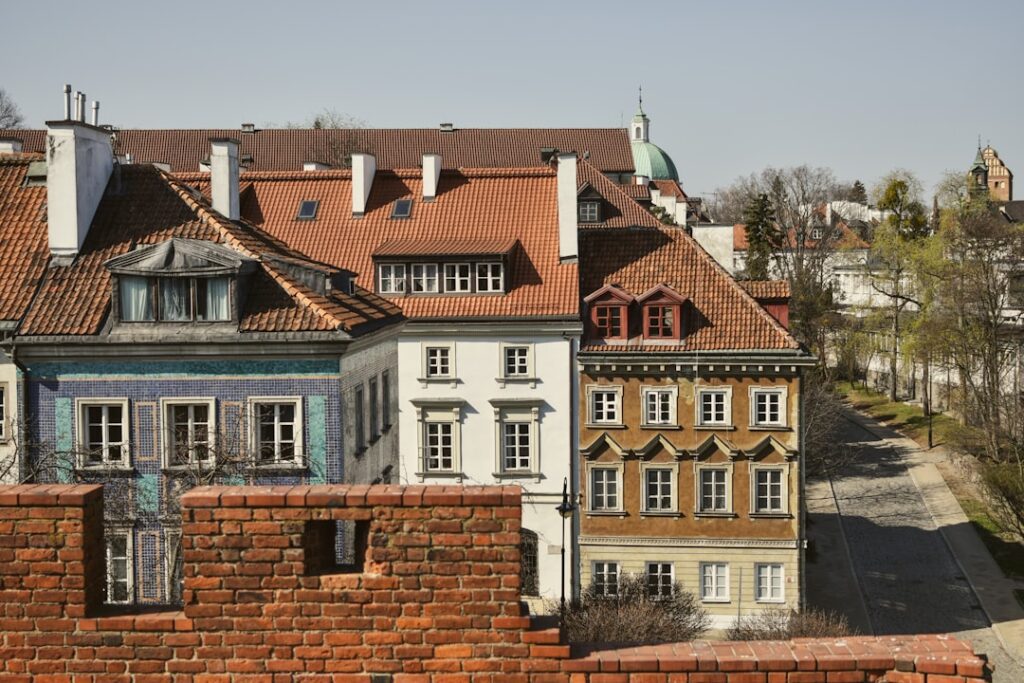
Buildings with red roofs are seen on a sunny day., Warsaw, Poland
- Historic Architecture: The Royal Castle, rebuilt from 1971-1984, is a stunning symbol of rebirth, housing original works by Rembrandt and Canaletto.
- Cultural Scene: The annual Warsaw Autumn International Festival of Contemporary Music, held since 1956, is a premier avant-garde classical music event in Eastern Europe.
- Local Specialties: You must try *pierogi ruskie* (dumplings filled with potato, cheese, and onion), best enjoyed at a traditional *mleczny* (milk bar).
Pro Tip: For the perfect blend of good weather and manageable crowds, target the shoulder months of May or September. Locals often flee the city in August, leaving it quieter for you, but many small shops and restaurants run on reduced hours.
Map of Warsaw, Poland
Use these interactive maps to explore Warsaw, Poland and plan your route:
📍 View Warsaw, Poland on OpenStreetMap
🗺️ Open Warsaw, Poland in Google Maps
Planning Your Trip: Practical Essentials
Getting There and Around
- By Air: Warsaw Chopin Airport (WAW) is the main hub, served by LOT Polish Airlines and major European carriers. The S2 or S3 commuter train is your best bet to the city center (20 mins, ~15 PLN). Book flights at Skyscanner for best deals.
- By Train: Excellent rail connections from Kraków (2.5 hours), Gdańsk (3 hours), and Berlin (5.5 hours). Centralna Station is the main hub. Reserve tickets at Trainline or the national railway website.
- By Car: Driving is not recommended for exploring the center; traffic is heavy and parking is expensive and scarce. For day trips, rentals are useful. Compare car rentals at RentalCars.com.
- Local Transport: An efficient network of trams, buses, and a metro. Buy a 24/48/72-hour travel pass (24 PLN/48 PLN/72 PLN) for unlimited rides. The official Warsaw Public Transport website has schedules and route planners.
Best Time to Visit
Warsaw is a year-round destination with distinct seasonal personalities. Your ideal time depends on whether you prioritize sunny café culture, festive markets, or budget-friendly exploration without the crowds.
| Season | Weather | Highlights |
|---|---|---|
| Summer (Jun–Aug) | 18°C – 25°C (64°F – 77°F), sunny and pleasant, occasional rain. | Vistula River beaches, open-air concerts, lush parks; peak crowds and higher prices. |
| Winter (Dec–Feb) | -4°C – 3°C (25°F – 37°F), cold with potential for snow. | Magical Christmas markets in the Old Town (late Nov-Dec), cozy cellar restaurants, lower hotel rates. |
| Shoulder (Apr–May/Sep–Oct) | 10°C – 18°C (50°F – 64°F), mild and often sunny. | Best overall experience: fewer tourists, perfect walking weather, spring blooms or autumn colors in Łazienki Park. |
Budgeting for Warsaw, Poland

A street scene at night, lit by streetlights., Warsaw, Poland
| Category | Budget | Mid-range | Luxury |
|---|---|---|---|
| Accommodation | Hostel dorm: 60-100 PLN/night | Boutique hotel/central Airbnb: 300-500 PLN/night | 5-star hotel (ex. Raffles): 800+ PLN/night |
| Meals | Milk bar lunch: 20-30 PLN | Restaurant dinner with drink: 80-120 PLN | Fine dining tasting menu: 400+ PLN |
| Transport | 24-hour public pass: 24 PLN | Taxi/Uber across city: 30-50 PLN | Private driver/tours: 200+ PLN/day |
| Activities | Free walking tours, park visits | Museum entry (Royal Castle): 30 PLN | Private guided history tour: 300+ PLN |
| Daily Total | 150-200 PLN (~$35-$45) | 500-700 PLN (~$115-$160) | 1500+ PLN (~$340+) |
Top Attractions and Must-See Sights
| Attraction | Description | Hours | Entry Fee |
|---|---|---|---|
| Old Town (Stare Miasto) | A UNESCO World Heritage site rebuilt post-WWII, centered around the lively Market Square with its iconic mermaid statue. | Always open | Free (individual museums charge) |
| POLIN Museum of the History of Polish Jews | An award-winning, immersive narrative museum tracing 1000 years of Jewish life in Poland, located in the former Warsaw Ghetto. | Mon, Thu, Fri: 10 am-6 pm; Wed, Sat, Sun: 10 am-8 pm (closed Tue) | 25 PLN (free on Thursdays) |
| Royal Castle | The former royal residence, reconstructed in the 1970s, showcasing opulent state apartments and original art masterpieces. | Mon-Wed, Fri-Sat: 10 am-6 pm; Thu: 10 am-8 pm; Sun: 11 am-6 pm | 30 PLN (Thu free) |
| Łazienki Królewskie Park | A stunning 76-hectare palace-and-garden complex, home to the Palace on the Isle and free Chopin concerts every Sunday in summer. | Park: always open; Palaces: vary | Park free; Palace on Isle: 25 PLN |
3-Day Itinerary: Warsaw, Poland’s Highlights & Hidden Gems
Day 1: The Historic Heart & Royal Resurgence
- Morning (7-9 AM): Beat the crowds with a quiet walk through the Old Town. Start at Castle Square for photos of the Royal Castle in the soft light, then wander the empty cobblestone lanes to the Barbican.
- Afternoon (12-3 PM): Tour the Royal Castle interiors (30 PLN). For lunch, head to **Zapiecek** on Piwna Street for a huge variety of *pierogi* (try the meat-filled ones).
- Evening (6-8 PM): Walk down the Royal Route to Krakowskie Przedmieście. Dine at **U Fukiera**, one of Warsaw’s oldest and most elegant restaurants in the Market Square, for a splurge-worthy Polish feast.
Day 2: Memory, Music & Modernity
- Morning (Early Activity): Take tram 35 or 17 to the POLIN Museum (25 PLN). Spend 3 hours immersed in its powerful, interactive exhibits. Before entering, pause at the Ghetto Heroes Monument.
- Afternoon: Walk to the nearby Warsaw Uprising Museum (25 PLN), a gripping, multimedia tribute to the 1944 rebellion. For a reflective lunch, try **Charlotte chleb i wino** nearby for excellent soups and salads.
- Evening: Experience Warsaw’s modern pulse in the Powiśle district. Have a drink at the trendy **Powiśle Bar** in a converted 1950s bus depot, then enjoy innovative Polish cuisine at **Nolita** for dinner.
Day 3: Parks, Palaces & Panoramic Views
- Morning: Take bus 116 or 180 to Łazienki Park (free). Explore the Palace on the Isle and the ornate Old Orangery. If it’s Sunday between May-Sept, catch the free Chopin concert at the monument at 12 pm and 4 pm.
- Afternoon: Head to the Wilanów Palace (20 PLN for park and palace), the “Polish Versailles,” via bus 116 or 180 (30-minute ride). Lunch at the park-side **AleGloria** restaurant offers beautiful views.
- Evening: Return to the city center and ascend the Palace of Culture and Science (30 PLN for the viewing terrace) for a 360-degree sunset panorama over the city. For a final dinner, savor traditional stews in the vaulted cellars of **Podwale Piwna Kompania**.
Cultural Insights & Etiquette
- Language: Polish is challenging, but learning basics pleases locals: *Dzień dobry* (Good day), *Dziękuję* (Thank you), *Przepraszam* (Excuse me/Sorry). English is widely spoken in tourist areas.
- Customs: A firm handshake with eye contact is the standard greeting. When toasting, make eye contact. It’s polite to remove your shoes when entering someone’s home.
- Tipping: Rounding up the bill or leaving 10% is appreciated in restaurants if service was good. For taxi drivers, rounding up to the nearest 5 or 10 złoty is standard.
- Dress Code: Smart-casual works for most restaurants and venues. Modest dress (covering shoulders and knees) is required when entering churches.
- Business Hours: Most shops are open Mon-Fri 10 am-7 pm, Sat 10 am-2 pm (larger malls open later). Many museums are closed on Mondays. Major holidays (Christmas, Easter) see widespread closures.
Where to Eat: Warsaw, Poland’s Best Bites
Warsaw’s food scene is a thrilling journey from hearty, traditional comfort food to a dynamic New Polish cuisine that reinterprets classics with modern flair. Don’t just eat—seek out the stories behind the dishes.
Must-Try Local Specialties
- Żurek: A sour rye soup often served in a bread bowl with a boiled egg and white sausage. Find an authentic version at **Bar Mleczny Prasowy**.
- Kotlet Schabowy: The Polish version of a breaded pork cutlet, thicker than a schnitzel. **Stary Dom** serves a legendary one with mashed potatoes and cabbage salad.
- Pączek: A luxurious doughnut filled with rosehip or plum jam, essential on Fat Thursday. Join the queues at **Cukiernia Pawłowicz** for the city’s best.
Restaurant Recommendations by Budget
| Type | Restaurant | Specialty | Price Range |
|---|---|---|---|
| Budget | Bar Bambino (ul. Krucza 21) | Classic communist-era milk bar with cheap, authentic Polish plates. | 15-30 PLN per meal |
| Mid-range | Stary Dom (ul. Wilcza 18) | Warm, rustic setting for perfected traditional dishes like *bigos* (hunter’s stew). | 60-100 PLN per person |
| Fine dining | Rozbrat 20 (ul. Rozbrat 20) | Creative, seasonal Polish tasting menus in an elegant, minimalist space. | 300+ PLN for tasting menu |
Where to Stay
Your neighborhood choice defines your Warsaw experience. The city is well-connected by transit, so staying just outside the main tourist hubs can offer better value and a more local feel. Compare prices and book at Booking.com or Airbnb for apartments.
Best Neighborhoods for Accommodation
- Śródmieście (City Center): The most convenient base, encompassing the Old Town, Royal Route, and main shopping streets. Ideal for first-time visitors who want to walk everywhere. Can be noisy and pricey.
- Powiśle: Just south of the city center along the Vistula River. This trendy, laid-back area is packed with cafes, galleries, and restaurants. Perfect for a younger, creative vibe with great transport links.
- Praga-Północ: The once-gritty district across the river, now Warsaw’s up-and-coming artistic soul. Full of pre-war architecture, cool bars, and street art. Offers authentic character and lower prices, but ensure your street is well-lit at night.

People walking on street near buildings during daytime, Warsaw, Poland
FAQs: Your Warsaw, Poland Questions Answered
1. Is Warsaw, Poland safe at night?
Warsaw is generally very safe. The city center and main tourist areas are well-lit and patrolled. Standard precautions apply: be aware of your belongings in crowded trams, and stick to main streets at night. The Praga district, while increasingly popular, still has quieter, less-lit patches where it’s wise to be cautious after dark.
2. What currency is used and are credit cards accepted?
The Polish Złoty (PLN, symbol: zł) is the currency. Credit/debit cards are widely accepted in hotels, restaurants, and shops. However, it’s smart to carry some cash (100-200 PLN) for smaller establishments like milk bars, market stalls, and some taxis. ATMs (*bankomat*) are plentiful.
3. How do I get from the airport to the city center?
From Chopin Airport (WAW), the fastest option is the S2 or S3 urban railway (20 mins, ~15 PLN) to Warszawa Śródmieście station. Taxis are regulated; use the official “Taxi” ranks or apps like Bolt/Uber (approx. 40-60 PLN to the center). Book airport transfers at GetYourGuide for convenience.
4. Do I need to speak the local language?
Not at all. English is commonly spoken by people under 40, especially in tourism, hospitality, and in the city center. In more local spots or with older generations, you might encounter language barriers, but a phrasebook app and polite gestures will go a long way.
5. What’s the appropriate dress code?
Poles tend to dress smartly, even casually. For most sightseeing, comfortable shoes are essential (cobblestones!). For upscale restaurants and nightclubs, smart-casual attire is expected. Remember to dress modestly (covered shoulders and knees) when
Related Guides
Explore more destinations similar to Warsaw:

