
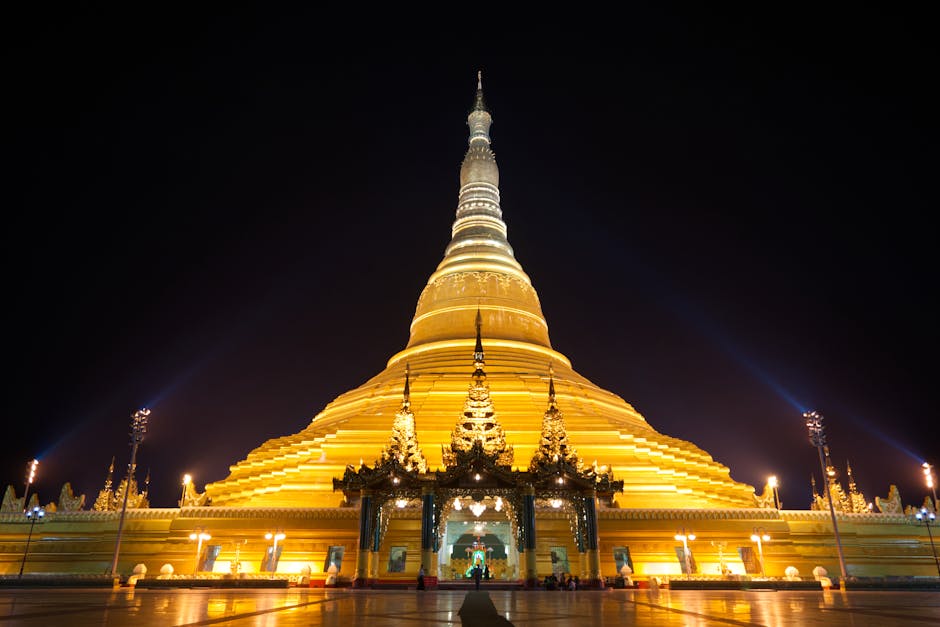
Naypyidaw, Myanmar’s Best Grandeur, Solitude & Surreal Urban Planning (2025)
While crowds flock to the bustling streets of Yangon, Naypyidaw delivers a uniquely serene and monumental capital experience without the traffic or tourist throngs. Here’s why savvy travelers choose differently: you can drive down a 20-lane highway with more deer than cars, stand alone before a 99-meter-tall pagoda, and explore a city built from scratch in the 2000s that feels like a meticulously curated, open-air museum of modern Burmese ambition.
Why Naypyidaw, Myanmar Stands Out

Detailed wooden map art showcasing countries in Asia with carved region names., Naypyidaw, Myanmar
- Historic Architecture: The Uppatasanti Pagoda, completed in 2009, is a near-identical replica of Yangon’s Shwedagon but offers a profoundly peaceful, crowd-free atmosphere for reflection.
- Cultural Scene: Witness the spectacular Myanmar Armed Forces Day parade on March 27th, a display of precision and pageantry that fills the city’s vast parade grounds.
- Local Specialties: You must try Mohinga, Myanmar’s beloved fish noodle soup; seek out local tea shops for the most authentic, fragrant bowls.
Pro Tip: Visit between November and February for the coolest, driest weather. To truly appreciate the city’s surreal scale and lack of congestion, take a drive around the parliamentary zone on a Sunday afternoon—you’ll likely have the majestic, empty boulevards almost entirely to yourself.
Map of Naypyidaw, Myanmar
Use these interactive maps to explore Naypyidaw, Myanmar and plan your route. Given the city’s vast, zoned layout, mapping your destinations is essential.
📍 View Naypyidaw, Myanmar on OpenStreetMap
🗺️ Open Naypyidaw, Myanmar in Google Maps
Planning Your Trip: Practical Essentials
Getting There and Around
- By Air: Naypyidaw International Airport (NYT) is served by domestic flights from Yangon and Mandalay on airlines like Myanmar National Airlines and Air KBZ. A taxi to the hotel zone costs around 15,000-20,000 MMK. Book flights at Skyscanner for best deals.
- By Train: Overnight trains from Yangon (approx. 9 hours) offer a scenic, if basic, journey. First-class sleeper tickets are the best bet. Reserve tickets at Trainline or the national railway website.
- By Car: The drive from Yangon takes about 4-5 hours on the Yangon-Mandalay Expressway. Renting a car with a driver is highly recommended for navigating the city’s spread-out zones. Compare car rentals at RentalCars.com.
- Local Transport: Public buses are limited and not tourist-friendly. Your only practical options are taxis (negotiate fares before entering, expect 10,000+ MMK per trip) or hiring a car with a driver for the day (approx. $50-70 USD).
Best Time to Visit
The cool, dry winter offers the most comfortable conditions for exploring this largely outdoor city. The hot season can be oppressive, while the rainy season brings lush greenery but frequent downpours.
| Season | Weather | Highlights |
|---|---|---|
| Summer (Mar–May) | Extremely hot, 35-40°C (95-104°F), dry | Fewest visitors, clear skies for photos, but outdoor activities are challenging in the heat. |
| Winter (Nov–Feb) | Pleasant & cool, 20-30°C (68-86°F), dry | Ideal for sightseeing, military parade in March, perfect weather for all-day exploration. |
| Rainy (Jun–Oct) | Hot, humid, heavy afternoon rains | Landscapes are vividly green, fewer tourists, but some travel disruption possible. |
Budgeting for Naypyidaw, Myanmar

Silhouette of Bagan temples at sunset with golden skies and landscape., Naypyidaw, Myanmar
| Category | Budget | Mid-range | Luxury |
|---|---|---|---|
| Accommodation | 20,000-40,000 MMK ($10-20 USD) for a basic guesthouse | 60,000-120,000 MMK ($30-60 USD) for a 3-4 star hotel | 200,000+ MMK ($100+ USD) for the Kempinski or similar |
| Meals | 5,000 MMK ($2.50 USD) for street food/tea shop meals | 10,000-20,000 MMK ($5-10 USD) at a sit-down restaurant | 30,000+ MMK ($15+ USD) for hotel fine dining |
| Transport | Minimal; walking in zones is free but impractical | 10,000-15,000 MMK ($5-8 USD) per taxi trip | $50-70 USD/day for a private car & driver |
| Activities | Free (viewing monuments from outside, walking gardens) | Small donations at pagodas (1,000-2,000 MMK), museum fees | Private guided tours ($80-100 USD/day) |
| Daily Total | 30,000-60,000 MMK ($15-30 USD) | 100,000-180,000 MMK ($50-90 USD) | $200+ USD |
Top Attractions and Must-See Sights
| Attraction | Description | Hours | Entry Fee |
|---|---|---|---|
| Uppatasanti Pagoda | A stunning, peaceful replica of Shwedagon Pagoda, housing a Buddha tooth relic. | 24/7, best at sunrise or sunset | Free (small donation expected) |
| Naypyidaw Water Fountain Garden | A vast, colorful evening light and music fountain show showcasing over 1000 fountains. | Fountain shows: 7:00 PM & 8:00 PM daily | 5,000 MMK for show entry |
| Myanmar Gems Museum | Home to the world’s largest jade boulder (over 300 tons) and spectacular gem collections. | 9:30 AM – 4:30 PM, Closed Mon | 5,000 MMK |
| The Parliamentary Complex | A jaw-dropping, 31-building government zone; view the grand architecture from the perimeter. | Exterior viewing only | Free |
3-Day Itinerary: Naypyidaw, Myanmar’s Highlights & Hidden Gems
Day 1: Monuments & Modernity
- Morning (7-9 AM): Start at the **Uppatasanti Pagoda** in the cool morning light. Have the complex nearly to yourself. Observe locals making offerings and walk clockwise around the main stupa.
- Afternoon (12-3 PM): Visit the **Myanmar Gems Museum** to see the legendary jade boulder. For lunch, head to **Shwe Taung Tan** restaurant for a superb Burmese curry set menu (around 8,000 MMK).
- Evening (6-8 PM): Experience the **Naypyidaw Water Fountain Garden** show at 7:00 PM. Afterwards, enjoy dinner at **Nay Pyi Taw BBQ** for delicious local-style grilled meats.
Day 2: Scale, Safari & Souvenirs
- Morning (8 AM): Drive to the **National Herbal Park** (entry 3,000 MMK) – a beautifully landscaped 400-acre park showcasing Myanmar’s flora. It’s a refreshing green escape.
- Afternoon (1 PM): Explore the **Naypyidaw Safari Park** (10,000 MMK). It’s expansive; opt for the guided bus tour through the animal zones. Lunch at the park’s simple cafe.
- Evening (6 PM): Witness the surreal scale of the city with a drive past the **Parliamentary Complex** and down the 20-lane **Yaza Thingaha Road**. Dine at **The Gallery Restaurant** for a mix of Burmese and international dishes in a stylish setting.
Day 3: Culture, Crafts & Departure
- Morning (9 AM): Hire a taxi (approx. 15,000 MMK) to the **Thatta Thattaha Maha Bawdi Pagoda**, a unique temple with a huge seated Buddha overlooking a tranquil lake.
- Afternoon (12 PM): Visit the **Naypyidaw Zoological Garden** (5,000 MMK), one of Southeast Asia’s largest. For a final lunch, try **Feel Myanmar Food** for an authentic, no-frills buffet of traditional dishes.
- Evening (5 PM): For your final memory, return to **Uppatasanti Pagoda** at dusk to see it illuminated against the darkening sky—a truly magical sight. Enjoy a farewell drink at your hotel.
Cultural Insights & Etiquette
- Language: Burmese is the official language. Key phrases: “Mingalabar” (Hello), “Cheizu tin ba deh” (Thank you). English is limited; use simple words and a smile.
- Customs: Always remove shoes and socks before entering temple grounds. Dress modestly (covered shoulders and knees). Never touch anyone on the head, and point with your chin or whole hand, not a single finger.
- Tipping: Not traditionally expected but appreciated for good service. In hotels and nicer restaurants, 5-10% is a good guideline. Round up taxi fares.
- Dress Code: Modest, lightweight clothing is essential. Longyis (Burmese sarongs) are acceptable everywhere and sold locally. Pack a scarf for temple visits.
- Business Hours: Government offices 9:30 AM – 4:30 PM. Shops 9 AM – 6 PM. Many places close for lunch from 12-1 PM. Pagodas are open from early morning until 9 or 10 PM.
Where to Eat: Naypyidaw, Myanmar’s Best Bites
Dining in Naypyidaw is clustered in the hotel zone and specific commercial areas. You’ll find a mix of local tea shops serving hearty Burmese staples, Chinese-inspired restaurants, and international hotels offering buffets. The key is to seek out places popular with local government workers and expats for the best quality.
Must-Try Local Specialties
- Mohinga: The national dish of rice noodles in a savory, herbal fish broth, topped with crispy fritters. Best tried at a local tea shop for breakfast.
- Lahpet Thoke (Tea Leaf Salad): A unique, tangy, and crunchy salad of fermented tea leaves, nuts, beans, and tomatoes. A true Burmese flavor explosion.
- Shan Noodles: A dish from the Shan State featuring flat rice noodles in a slightly spicy, tomato-based broth with chicken or pork, often served with pickled vegetables.
Restaurant Recommendations by Budget
| Type | Restaurant | Specialty | Price Range |
|---|---|---|---|
| Budget | Local Tea Shops (scattered in commercial zones) | Mohinga, Burmese curries, sweet milky tea | 3,000-6,000 MMK |
| Mid-range | Shwe Taung Tan (Hotel Zone) | Extensive Burmese curry sets and fresh salads | 8,000-15,000 MMK |
| Fine dining | The Restaurant at Kempinski Hotel Nay Pyi Taw | International fine dining with impeccable service and ambiance | 30,000+ MMK |
Where to Stay
Accommodation is primarily concentrated in the dedicated Hotel Zone, a self-contained area with manicured lawns. This is your most convenient base. Options range from international chains to local hotels. For a more local feel, a few guesthouses exist outside the zone but require more transport planning. Compare prices and book at Booking.com or Airbnb for apartments (though Airbnb options are very limited here).
Best Neighborhoods for Accommodation
- Hotel Zone: The main area for tourists, featuring the Kempinski, Aureum Palace, and other hotels. It’s secure, clean, and has several restaurants, but it’s isolated from local life. Suits all travelers for convenience.
- Near the Junction Center: A growing commercial area with some newer hotels and easier access to local markets and eateries. Offers a slightly more integrated feel than the Hotel Zone.
- Near Parliament (Diplomatic Area): Very quiet, with a few high-end villas and serviced apartments used primarily by diplomats and long-term expats. Not convenient for short-term tourists without private transport.

Captivating view of hot air balloons floating over ancient temples in Bagan, Naypyidaw, Myanmar
FAQs: Your Naypyidaw, Myanmar Questions Answered
1. Is Naypyidaw, Myanmar safe at night?
Naypyidaw is generally very safe in terms of crime, thanks to significant security presence. However, the main concern at night is not personal safety but practicality—the city is extremely dark and spread out. Walking between places is not feasible. Always use a taxi, even for short distances, and agree on the fare before setting off.
2. What currency is used and are credit cards accepted?
The local currency is the Myanmar Kyat (MMK). Carry ample cash in smaller denominations, as credit cards are only accepted at major international hotels (Kempinski, Aureum Palace) and a handful of upscale restaurants. ATMs are available in the Hotel Zone and shopping centers but can be unreliable. USD cash (in pristine, unmarked bills) is a useful backup for changing at banks or hotels.
3. How do I get from the airport to the city center?
Naypyidaw International Airport is about 16 km from the Hotel Zone. Your only reliable options are pre-arranged hotel pickup or a taxi. The taxi fare should be 15,000-20,000 MMK (approx. $8-10 USD) to the Hotel Zone. There is no public bus service. Book airport transfers at GetYourGuide for convenience, though local taxi upon arrival is straightforward.
4. Do I need to speak the local language?
While not required, learning a few basic Burmese phrases will be greatly appreciated. English is spoken in hotels and by some staff at major attractions, but taxi drivers and tea shop staff will likely have very limited English. Have your destination written in Burmese script (ask your hotel concierge) or use a map app to show locations.
5. What’s the appropriate dress code?
Modesty is key, especially at religious sites. For both men and women, clothing should cover shoulders and knees. Light, breathable fabrics are best for the
Explore More Destinations
- Jozani, Tanzania on a Budget: an Ancient Forest for $35/Day (2026)
- Nsumbu, Zambia on a Budget: Wild Africa for $40/Day (2026)
- Semporna, Malaysia on a Budget: Paradise for $35/Day (2026)
- Khuzestan, Iran on a Budget: Ancient Empires for $30/Day (2026)
- Ngerulmud, Palau on a Budget: Island Majesty for $45/Day (2026)
Ready to Visit Naypyidaw?
Start planning your trip today. Compare hotels, find the best tours, and get insider tips.
Your adventure in Naypyidaw starts here →
Related Guides
Explore more destinations similar to Naypyidaw:

