
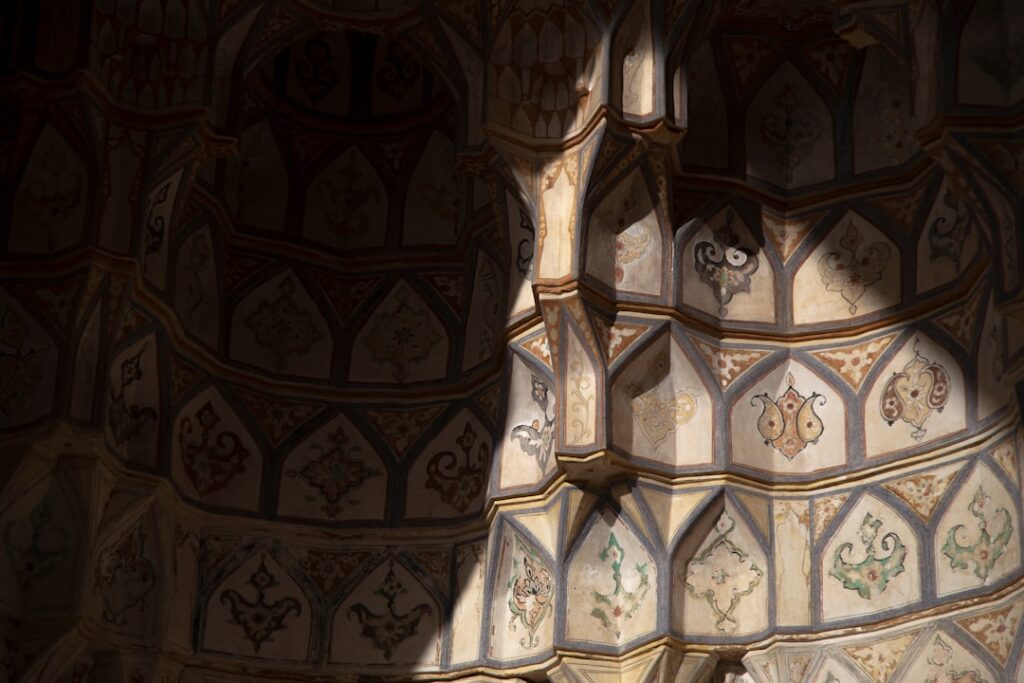
Kashan, Iran’s Essential Rosewater, Caravanserais & Timeless Courtyards (2025)
Just after dawn in Kashan, the air carries a sweet, floral perfume as the world’s finest rosewater begins its daily distillation in the Qamsar fields. This scent, captured for centuries, is your first clue that this is no ordinary desert city. While travelers rush from Tehran to the more famous Isfahan, savvy explorers pause here, discovering a living museum of Persian domestic architecture and a trade-route history that shaped empires, all for a fraction of the cost and crowds of its neighbors.
Why Kashan, Iran Stands Out

Man in white t-shirt sitting on sand during daytime, Kashan, Iran
- Historic Architecture: The 19th-century Tabatabaei House, with its intricate stucco, mirrored halls, and ingenious badgirs (windcatchers), is a masterpiece of Qajar-era design and Persian engineering.
- Cultural Scene: The annual Rose and Rosewater Festival in May transforms the nearby villages into a fragrant, pink-hued celebration of Kashan’s most famous export.
- Local Specialties: You must try Gheymeh, a savory stew of lamb, split peas, and dried lime, slow-cooked to perfection and served over saffron rice.
Pro Tip: Visit in late April or early May. You’ll catch the breathtaking rose harvest and perfect 75°F (24°C) weather, beating the intense summer heat and the larger tourist groups that arrive later in the season.
Map of Kashan, Iran
Use these interactive maps to explore Kashan, Iran and plan your route:
📍 View Kashan, Iran on OpenStreetMap
🗺️ Open Kashan, Iran in Google Maps
Planning Your Trip: Practical Essentials
Getting There and Around
- By Air: The nearest major airport is Imam Khomeini International (IKA) in Tehran, 240km away. From there, take a pre-booked taxi (approx. $40, 3 hours) or a bus. Book flights at Skyscanner for best deals.
- By Train: Kashan is on the main Tehran-Isfahan rail line. A comfortable train from Tehran takes about 2.5 hours and costs around $5-10. Reserve tickets at Trainline or the national railway website.
- By Car: Driving from Tehran on Highway 7 is straightforward. Parking is available near major attractions. Renting a car offers flexibility for day trips to Abyaneh or Qamsar. Compare car rentals at RentalCars.com.
- Local Transport: The city center is very walkable. For farther sites, use inexpensive taxis (negotiate fares first, ~$2-3 per short trip) or local buses. There’s no formal transport pass system.
Best Time to Visit
Kashan’s climate is desert-continental, meaning hot summers and cool winters. The shoulder seasons offer the ideal balance of pleasant weather and vibrant local life.
| Season | Weather | Highlights |
|---|---|---|
| Summer (Jun–Aug) | Very hot and dry, 95–104°F (35–40°C) | Indoor exploration of historic houses in the cool mornings; very few tourists. |
| Winter (Dec–Feb) | Cold, 35–50°F (2–10°C), occasional rain | Atmospheric, quiet visits; lower prices; cozy traditional restaurants. |
| Shoulder (Apr–May/Sep–Oct) | Perfectly mild, 65–80°F (18–27°C) | Ideal for all sightseeing; rose harvest in May; bustling local markets. |
Budgeting for Kashan, Iran

Water droplets on brown stem in tilt shift lens, Kashan, Iran
| Category | Budget | Mid-range | Luxury |
|---|---|---|---|
| Accommodation | $15-25 (hostel/budget guesthouse) | $50-80 (traditional boutique hotel) | $120+ (luxury restored mansion) |
| Meals | $5-10 (street food, kebabs) | $10-20 (restaurant meal with drink) | $30+ (fine dining set menu) |
| Transport | $2-3 (local buses/taxis) | $10-15 (daily private taxi hire) | $40+ (private driver with guide) |
| Activities | $5-10 (1-2 attraction entries) | $15-25 (multiple sites, a tour) | $50+ (private guided experiences) |
| Daily Total | $30-45 | $80-130 | $200+ |
Top Attractions and Must-See Sights
| Attraction | Description | Hours | Entry Fee |
|---|---|---|---|
| Tabatabaei House | A stunning 19th-century merchant home showcasing exquisite stained glass, murals, and windcatchers. | 9 AM–6 PM | ~500,000 IRR ($1.20) |
| Fin Garden | A UNESCO-listed Persian paradise garden with cypress trees, flowing water channels, and historic bathhouse. | 9 AM–5 PM | ~500,000 IRR ($1.20) |
| Sultan Amir Ahmad Bathhouse | A beautifully restored traditional bath with a dazzling, honeycombed roof and colorful tilework. | 9 AM–8 PM | ~500,000 IRR ($1.20) |
| Agha Bozorg Mosque & Theological School | An architectural marvel from the 18th century, built over a sunken courtyard with perfect symmetry. | 8 AM–Sunset | Free |
3-Day Itinerary: Kashan, Iran’s Highlights & Hidden Gems
Day 1: Historic Houses & Bazaar Life
- Morning (8 AM): Start at the serene Fin Garden (opens at 9 AM) to explore the lush grounds and the site of the 1852 assassination of Amir Kabir, Iran’s famous reformist chancellor.
- Afternoon (1 PM): Head to the Kashan Bazaar for lunch at the traditional Abbasi Tea House (try the Dizi, a meat and bean stew). Then, lose yourself in the vaulted corridors, visiting the Timcheh-ye Amin od-Dowleh caravanserai.
- Evening (6 PM): Visit the Sultan Amir Ahmad Bathhouse just before sunset when the light through its roof creates a magical glow. For dinner, savor local Gheymeh at Manouchehri House Restaurant.
Day 2: Architectural Mastery & Desert Perfume
- Morning (9 AM): Tour the magnificent Tabatabaei House and the nearby Borujerdi House (entry ~$1.20 each). Notice how the badgirs funnel cool air—an ancient form of desert air conditioning.
- Afternoon (2 PM): Take a short taxi ride (~$5) to the village of Qamsar, the heart of rosewater production. Visit a distillation workshop and buy pure rosewater as a souvenir.
- Evening (7 PM): Return to Kashan for a visit to the peaceful Agha Bozorg Mosque. Enjoy dinner at Hammam-e Khan Traditional Restaurant, set in a converted bathhouse.
Day 3: Village Excursion & Spiritual Sites
- Morning (8 AM): Hire a private taxi for the day (~$40) for the 1-hour drive to Abyaneh, the iconic red mud-brick village nestled in the Karkas Mountains. Explore its unique architecture and meet locals in traditional dress.
- Afternoon (1 PM): Enjoy a simple lunch in Abyaneh before returning towards Kashan, stopping at the mysterious Tepe Sialk, the remains of a 7,000-year-old ziggurat, one of Iran’s oldest archaeological sites.
- Evening (6 PM): Back in Kashan, take a final stroll and enjoy a farewell feast of Chelow Kabab at Shahrzad Restaurant, a local favorite for grilled meats.
Cultural Insights & Etiquette
- Language: Persian (Farsi) is spoken. Learn “Salam” (Hello), “Merci” (Thank you), and “Khoda Hafez” (Goodbye). English is limited but hospitality is boundless.
- Customs: Always remove your shoes before entering a carpeted room or a home. Accept offers of tea—it’s a sign of welcome. Public displays of affection are frowned upon.
- Tipping: Not mandatory but appreciated. Round up taxi fares, leave 5-10% at sit-down restaurants if service was good.
- Dress Code: For women, a headscarf (covering hair) and a manteau (long coat/tunic) are required in public. Men should avoid shorts. Dress is more relaxed in private accommodations.
- Business Hours: Many shops close for a few hours in the afternoon (approx. 1-4 PM). Friday is the weekly holiday. Attractions are open on Fridays but may have shorter hours.
Where to Eat: Kashan, Iran’s Best Bites
Kashani cuisine is hearty and aromatic, reflecting its desert location. Meals are social affairs, often centered around rice (chelow) and stews (khoresht). Don’t rush—dining is an experience.
Must-Try Local Specialties
- Gheymeh: The quintessential Kashani stew of tender lamb, yellow split peas, tangy dried lime, and saffron, often topped with crispy fried potatoes. Find it at any traditional restaurant like Manouchehri House.
- Kashk-e Bademjan: A creamy, savory dip of smoked eggplant, whey (kashk), fried mint, and garlic, served with fresh bread. Perfect as a starter.
- Rosewater-scented Sweets: From delicate pastries like Sohan to saffron ice cream (bastani), the local rosewater and saffron infuse desserts with a unique fragrance.
Restaurant Recommendations by Budget
| Type | Restaurant | Specialty | Price Range |
|---|---|---|---|
| Budget | Bazaar Food Stalls (Kashan Bazaar) | Fresh bread, kebabs, Ash-e Reshteh (noodle soup) | $2-5 |
| Mid-range | Hammam-e Khan Traditional Restaurant | Atmospheric setting in a bathhouse, full Persian stews and kebabs | $8-15 |
| Fine dining | Manouchehri House Restaurant | Exquisite traditional cuisine served in a beautifully restored historic house | $20-35 |
Where to Stay
Staying in a restored traditional house is a quintessential Kashan experience. These often feature central courtyards with fountains and fruit trees. For modern hotels, options are more limited. Compare prices and book at Booking.com or Airbnb for apartments.
Best Neighborhoods for Accommodation
- Old City Center: The best area for travelers. You’re within walking distance of the historic houses, bazaar, and main mosques. Expect traditional accommodations and the most atmosphere.
- Near Fin Garden: A quieter, more suburban feel. Ideal if you have a car and want to be close to this major site, but you’ll need taxis to reach other attractions.
- Along Mohtasham Street: This main thoroughfare offers more modern, if less charming, hotel options and easier access to transportation hubs.

Gray and gold dome building interior, Kashan, Iran
FAQs: Your Kashan, Iran Questions Answered
1. Is Kashan, Iran safe at night?
Kashan is generally very safe for travelers. Violent crime is rare. As in any city, practice common sense: stick to well-lit areas, be aware of your belongings in crowded places like the bazaar, and consider using a taxi for longer distances after dark. Locals are hospitable and often willing to help.
2. What currency is used and are credit cards accepted?
The Iranian Rial (IRR) is the official currency. Due to international sanctions, foreign credit/debit cards and traveler’s checks do not work. You must bring all the cash you’ll need in Euros or US Dollars (clean, unmarked bills) and exchange it locally. Major hotels and some shops may quote in “Toman” (1 Toman = 10 Rials), so always clarify.
3. How do I get from the airport to the city center?
From Imam Khomeini Airport (IKA) in Tehran, your best options are a pre-booked private taxi (approx. $40, 3-hour drive) or a shuttle to Tehran’s main bus terminal, then a bus to Kashan (total ~$10, 4+ hours). There is no direct train from the airport. Book airport transfers at GetYourGuide for convenience.
4. Do I need to speak the local language?
No, but learning a few basic Farsi phrases will greatly enhance your experience and is appreciated by locals. In tourist areas, some hotel staff and shopkeepers speak basic English. Having your destination written in Farsi on your phone is very helpful for taxi drivers. A translation app can be a lifesaver.
5. What’s the appropriate dress code?
For women, a headscarf covering the hair and a long, loose-fitting coat or tunic (manteau) that covers the hips is mandatory in all public spaces. Trousers are fine. Men should wear long trousers and avoid sleeveless shirts. Inside your hotel or a traditional house, dress codes can be more relaxed, but always have your cover-up ready when stepping out.
Final Thoughts: Kashan, Iran Awaits
Kashan offers a profound and intimate encounter with Persian culture, far from the well-trodden tourist circuits. It’s a place where history is lived in the quiet courtyards of merchant homes, where the scent of roses tells a story of ancient trade, and where hospitality remains a sacred tradition. This city doesn’t just show you monuments; it invites you into a way of life. Your best bet is to slow down, sip the tea you’re offered, and let the layers of this desert oasis reveal themselves. Don’t leave without a small bottle of rosewater—its scent will forever bring you back to the timeless magic of Kashan’s courtyards.
{“@context”: “https://schema.org”, “@type”: “FAQPage”, “mainEntity”: [{“@type”: “Question”, “name”: “What is the best time to visit Kashan?”, “acceptedAnswer”: {“@type”: “Answer”, “text”: “The best time to visit Kashan depends on your preferences. Generally, the dry season offers the most pleasant weather for sightseeing and outdoor activities.”}}, {“@type”: “Question”, “name”: “How many days do I need in Kashan?”, “acceptedAnswer”: {“@type”: “Answer”, “text”: “Most travelers spend 3-5 days in Kashan to see the main attractions. A week allows for a more relaxed pace and day trips.”}}, {“@type”: “Question”, “name”: “Is Kashan expensive to visit?”, “acceptedAnswer”: {“@type”: “Answer”, “text”: “Kashan can be visited on various budgets. Accommodation ranges from hostels to luxury hotels, and local restaurants offer affordable dining.”}}]}
Related Guides
Explore more destinations similar to Kashan:

