
Mozambique Island, Mozambique: Amazing Swahili Stonework, Dhow Sails & UNESCO Heritage (2025)
Sunset in Mozambique Island reveals a skyline of coral-stone fortresses and whitewashed churches, the air carrying the scent of frangipani and grilled seafood. The only sounds are the gentle lapping of the Indian Ocean against the 3-kilometer-long bridge and the distant call to prayer. This isn’t just a postcard; it’s a living museum, a 1.5-kilometer-long UNESCO World Heritage site where 500 years of Portuguese, Arab, and Swahili history are etched into every cobblestone street.
Why Mozambique Island, Mozambique Stands Out

Snail crawling on gray surface, Mozambique Island, Mozambique
- Historic Architecture: The 16th-century Fort São Sebastião, the oldest complete fort in sub-Saharan Africa, stands guard with its iconic cistern vaulted by a single stone slab.
- Cultural Scene: The annual Festival of São Tiago in July transforms the island with vibrant processions, traditional Tufo dancing, and local music echoing through the Stone Town.
- Local Specialties: You must try Matapa, a rich, creamy stew of cassava leaves, ground peanuts, coconut milk, and prawns, served with steaming rice.
Pro Tip: Visit during the shoulder seasons of April-May or September-October. You’ll avoid the peak humidity and rain of the summer (Dec-Feb) and the stronger winds of the winter (Jun-Aug), securing better rates at pousadas and experiencing the island with fewer than a handful of other international travelers.
Map of Mozambique Island, Mozambique
Use these interactive maps to explore Mozambique Island, Mozambique and plan your route:
📍 View Mozambique Island, Mozambique on OpenStreetMap
🗺️ Open Mozambique Island, Mozambique in Google Maps
Planning Your Trip: Practical Essentials
Getting There and Around
- By Air: Fly into Nampula Airport (APL), served by LAM Mozambique Airlines and some regional carriers. From there, it’s a scenic 2-hour drive (about 200km) to the mainland town of Monapo, where you cross the bridge to the island. Book flights at Skyscanner for best deals.
- By Train: While there’s no direct train to the island, the Nacala Railway line connects Nampula to the coast. It’s more an adventure than efficient transport; most travelers opt for road transfers. For regional rail planning, check Trainline or the national railway website.
- By Car: Driving from Nampula is straightforward on the EN9 and EN240 roads. You can park safely in designated areas on the mainland before the bridge, as the island itself is largely pedestrianized. Compare car rentals at RentalCars.com.
- Local Transport: The island is best explored on foot. For trips to the mainland or nearby beaches like Chocas, use chapas (shared minibuses) for about 50 MZN or negotiate a taxi. There are no formal passes; transport is pay-as-you-go.
Best Time to Visit
The climate is tropical, with a hot, rainy season and a cooler, dry season. Savvy travelers target the dry months for optimal exploration, though the shoulder seasons offer a compelling mix of good weather and serenity.
| Season | Weather | Highlights |
|---|---|---|
| Dry Season (May–Oct) | 22°C – 28°C (72°F – 82°F), sunny, low humidity, occasional cool breezes | Ideal for walking tours, photography, and dhow sailing; peak tourist season but still uncrowded. |
| Wet Season (Nov–Apr) | 26°C – 32°C (79°F – 90°F), very humid, heavy afternoon thunderstorms likely | Lush, green landscapes, deeply discounted accommodation, authentic local atmosphere with few tourists. |
| Shoulder (Apr–May/Sep–Oct) | 24°C – 30°C (75°F – 86°F), transitioning weather, less predictable rain | The sweet spot: pleasant temperatures, lower prices than peak dry season, and excellent conditions for cultural immersion. |
Budgeting for Mozambique Island, Mozambique

Gray wooden boat, Mozambique Island, Mozambique
| Category | Budget | Mid-range | Luxury |
|---|---|---|---|
| Accommodation | 800 – 1,500 MZN/night (basic guesthouse) | 1,500 – 3,500 MZN/night (charming pousada with breakfast) | 4,000+ MZN/night (boutique heritage hotel) |
| Meals | 200 – 400 MZN (street food, local tasca) | 400 – 800 MZN (restaurant main course & drink) | 1,000+ MZN (multi-course fine dining) |
| Transport | 50 – 100 MZN (chapa rides) | 300 – 600 MZN (private taxi for half-day) | 1,500+ MZN (private car & driver for day) |
| Activities | Free (walking Stone Town, beaches) | 200 – 500 MZN (museum entry, guided tour) | 1,000+ MZN (private dhow sailing trip) |
| Daily Total | 1,200 – 2,500 MZN | 2,500 – 5,500 MZN | 7,000+ MZN |
Top Attractions and Must-See Sights
| Attraction | Description | Hours | Entry Fee |
|---|---|---|---|
| Fort São Sebastião | A monumental 16th-century fortress offering panoramic views and housing the Chapel of Nossa Senhora do Baluarte, the oldest European building in the Southern Hemisphere. | 9:00 AM – 4:30 PM Daily | 200 MZN |
| Museum of Sacred Art | Housed in the former Church of the Misericórdia, this museum displays exquisite Indo-Portuguese ivory statues, silverwork, and religious paintings from the 16th-18th centuries. | 10:00 AM – 4:00 PM (Closed Mon) | 100 MZN |
| Palace and Chapel of São Paulo | The former Governor’s Palace, a stunning example of Swahili-Portuguese architecture, now a museum filled with period furniture, Chinese porcelain, and historical artifacts. | 9:00 AM – 4:00 PM Daily | 150 MZN |
| Stone Town Walk | A self-guided exploration through a labyrinth of narrow streets past grand mansions with carved doors, hidden courtyards, and vibrant local life. | Anytime | Free |
3-Day Itinerary: Mozambique Island, Mozambique’s Highlights & Hidden Gems
Day 1: Stones & Stories
- Morning (7-9 AM): Start at the mainland end of the 3km bridge and walk across as the sun rises over the harbor, watching dhows set sail. Your best bet is to have breakfast at Café-Bar Áncora d’Ouro on the island side for strong coffee and fresh pao (bread).
- Afternoon (12-3 PM): Explore Fort São Sebastião (200 MZN). For lunch, head to Restaurante Relíquias for their legendary grilled kingfish with piripiri sauce and coconut rice (approx. 600 MZN).
- Evening (6-8 PM): Wander the Stone Town as the golden hour lights up the coral walls. Enjoy dinner at O Paladar, a family-run spot in a restored house, for a perfect Matapa (approx. 450 MZN).
Day 2: Culture & Coast
- Morning (8 AM): Visit the Palace and Chapel of São Paulo (150 MZN) followed by the Museum of Sacred Art (100 MZN). Look for the unique ivory statue of “Our Lady of the Rosary” from Goa.
- Afternoon (1 PM): Take a 20-minute taxi ride (approx. 300 MZN one-way) to the stunning mainland beach of Chocas Mar. Lunch on fresh crab at one of the simple beachfront barracas.
- Evening (6 PM): Return to the island. For a special evening, book a table at Ruby Backpacker’s rooftop for sunset drinks, followed by dinner at their restaurant known for seafood curries.
Day 3: Dhows & Departure
- Morning (9 AM): Negotiate with local sailors at the small dock near the fort for a 2-hour dhow sailing trip around the island (approx. 400 MZN per person). You’ll see the fortress from the sea and spot marine life.
- Afternoon (12 PM): Final stroll through the Makuti Town (the “reed town”) area to see the contrast with Stone Town. Have a farewell lunch at Café-Bar Âncora d’Ouro, trying their prego roll (steak sandwich).
- Evening (5 PM): If your flight allows, savor a final sundowner at the terrace of the Omuhipiti Hippocampos hotel for a breathtaking view over the bridge and mainland before departing.
Cultural Insights & Etiquette
- Language: Portuguese is official; Swahili (Kimwani dialect) and local languages are widely spoken. Learn “Bom dia” (Good morning), “Obrigado/a” (Thank you), and “Quanto custa?” (How much?).
- Customs: Greetings are important. A handshake is common. Always ask permission before photographing people. Respect is shown to elders.
- Tipping: Not mandatory but appreciated. In restaurants, 5-10% for good service is generous. For guides, 100-200 MZN for a half-day tour is appropriate.
- Dress Code: Modesty is key, especially outside beach areas. Cover shoulders and knees when visiting religious sites or walking in local neighborhoods.
- Business Hours: Shops generally open 8 AM – 5 PM with a long lunch break (12-2 PM). Government offices and museums keep shorter hours. Many places close on Sundays.
Where to Eat: Mozambique Island, Mozambique’s Best Bites
Dining here is a journey through centuries of trade. Expect Portuguese influences like olive oil and wine, Swahili coconut and cassava, Arab spices, and the bounty of the Indian Ocean. Most restaurants are small, family-owned affairs where the catch of the day dictates the menu.
Must-Try Local Specialties
- Matapa: The national dish. A creamy, savory stew of cassava leaves, ground peanuts, coconut milk, garlic, and prawns or shrimp. Find an authentic version at any local tasca like O Paladar.
- Frango à Zambeziana: Succulent chicken marinated in lime, pepper, garlic, and coconut milk, then grilled. Restaurante Relíquias does an exceptional one.
- Piri-Piri Prawns: Large prawns grilled or sautéed in a fiery piri-piri (African bird’s eye chili) sauce. Best enjoyed at beach barracas in Chocas with your feet in the sand.
Restaurant Recommendations by Budget
| Type | Restaurant | Specialty | Price Range |
|---|---|---|---|
| Budget | Tasca Local (near the market) | Hearty, home-cooked plates of beans, rice, and fish. | 150 – 300 MZN |
| Mid-range | Restaurante Relíquias (Stone Town) | Superb grilled seafood and Portuguese-Mozambican fusion in a historic setting. | 400 – 800 MZN |
| Fine dining | Ruby Backpacker Restaurant (Roof Terrace) | Creative multi-course tasting menus featuring local ingredients with a modern twist. | 800 – 1,500 MZN |
Where to Stay
Accommodation ranges from basic guesthouses in Makuti Town to stunningly restored colonial mansions in Stone Town. Staying on the island itself is essential for the atmosphere. Compare prices and book at Booking.com or Airbnb for apartments.
Best Neighborhoods for Accommodation
- Stone Town (Cidade de Pedra): The historic heart. You’ll stay in characterful pousadas with thick walls, courtyards, and immediate access to major sites. It’s atmospheric but can be quiet at night. Perfect for history buffs.
- Makuti Town: The “reed town” with more local life, simpler guesthouses, and lower prices. It’s vibrant and authentic, though accommodations are more basic. Ideal for budget travelers seeking immersion.
- Mainland (Monapo/Praia de Chocas): Offers modern hotels and beach resorts a short drive away. You sacrifice the magical island atmosphere for more contemporary amenities and direct beach access. Best for those prioritizing resort-style comfort.

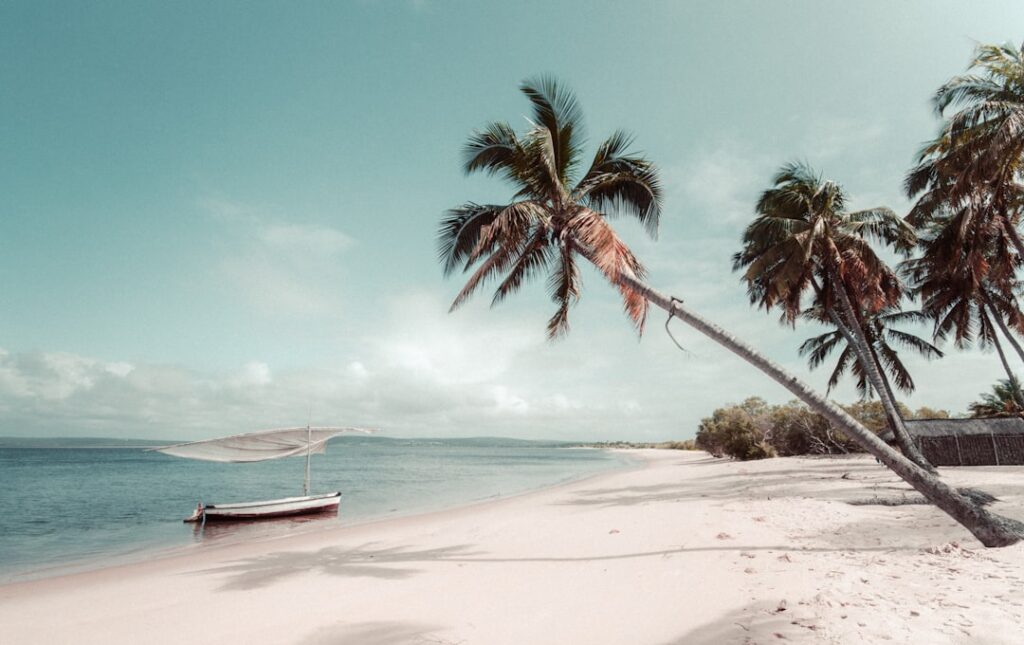
People walk on a sandy beach with a distant sailboat., Mozambique Island, Mozambique
FAQs: Your Mozambique Island, Mozambique Questions Answered
1. Is Mozambique Island, Mozambique safe at night?
The island is generally very safe. Violent crime is rare. However, as in any destination, practice common sense: stick to well-lit areas in Stone Town at night, avoid displaying expensive jewelry or electronics, and be aware of your surroundings. Most issues are limited to petty theft of opportunity.
2. What currency is used and are credit cards accepted?
The local currency is the Mozambican Metical (MZN). Carry ample cash, as credit cards are only accepted at a few upscale hotels and restaurants like Ruby Backpacker. ATMs are available on the mainland in Monapo but are unreliable on the island itself. Exchange money at banks in Nampula before arriving.
3. How do I get from the airport to the island?
From Nampula Airport (APL), your best bet is to pre-book a private transfer (approx. 2,500 – 3,500 MZN) for the 2-hour journey directly to your island accommodation. Shared taxis or chapas are cheaper (around 300 MZN per person) but less convenient and slower. Book airport transfers at GetYourGuide for convenience.
4. Do I need to speak the local language?
You can manage with English in tourist hotels and some restaurants, but Portuguese is essential for deeper interaction. In markets and with local guides, knowing basic Portuguese phrases will greatly enhance your experience and is seen as a sign of respect. Learning a few words goes a long way.
5. What’s the appropriate dress code?
Dress modestly to respect the conservative local culture. For general sightseeing, lightweight, breathable clothing that covers shoulders and knees
Related Guides
Explore more destinations similar to Mozambique Island:
- Šiauliai, Lithuania’s Best Crosses, Suns & Soviet Stories (2026)
- Mae Sariang, Thailand: Essential River Valleys, Hill Tribes & Untouched Nature (2025)
- Tovuz, Azerbaijan’s Best Vineyards, Ancient Fortresses & Thermal Springs (2025)
- Gorgona Island, Colombia’s Ultimate Rainforests, Ruins & Unspoiled Reefs (2026)
{“@context”: “https://schema.org”, “@type”: “FAQPage”, “mainEntity”: [{“@type”: “Question”, “name”: “What is the best time to visit Mozambique Island?”, “acceptedAnswer”: {“@type”: “Answer”, “text”: “The best time to visit Mozambique Island depends on your preferences. Generally, the dry season offers the most pleasant weather for sightseeing and outdoor activities.”}}, {“@type”: “Question”, “name”: “How many days do I need in Mozambique Island?”, “acceptedAnswer”: {“@type”: “Answer”, “text”: “Most travelers spend 3-5 days in Mozambique Island to see the main attractions. A week allows for a more relaxed pace and day trips.”}}, {“@type”: “Question”, “name”: “Is Mozambique Island expensive to visit?”, “acceptedAnswer”: {“@type”: “Answer”, “text”: “Mozambique Island can be visited on various budgets. Accommodation ranges from hostels to luxury hotels, and local restaurants offer affordable dining.”}}]}

