
Wamena, Indonesia’s Epic Highland Culture, Ancient Mummies & Tribal Markets (2025)
While crowds flock to Bali’s beaches, Wamena, the heart of Papua’s highlands, delivers a cultural immersion found nowhere else on Earth. Here, the Dani and Lani tribes maintain traditions that predate modern history, from the iconic *honai* huts to the legendary smoked mummies. For savvy travelers, it’s not a tropical escape but a journey into a living, breathing cultural landscape where time moves to the rhythm of the Baliem Valley.
Why Wamena, Indonesia Stands Out

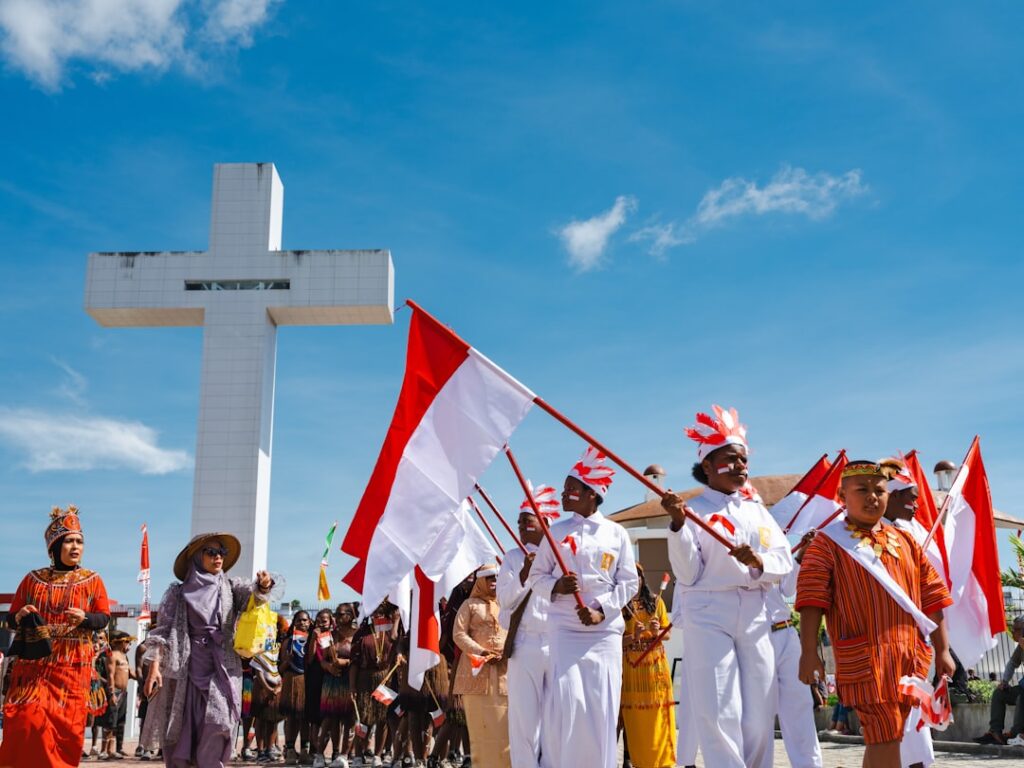
A group of people standing in front of a cross, Wamena, Indonesia
- Historic Architecture: The traditional Dani *honai*, a circular thatched hut with a fireplace at its center, is a marvel of ancient engineering designed for highland warmth and community living.
- Cultural Scene: The Baliem Valley Festival, held every August, is a spectacular gathering of dozens of highland tribes featuring mock wars, traditional dances, and pig feasts.
- Local Specialties: You must try *Papeda*, a staple sago porridge eaten with your hands, often served with yellow fish soup (*ikan kuah kuning*).
Pro Tip: The absolute best time to visit is during the dry season, from May to October, with August being prime for the festival. Morning flights into Wamena are far more reliable than afternoon ones due to the valley’s notorious fog that rolls in after 11 AM.
Map of Wamena, Indonesia
Use these interactive maps to explore Wamena, Indonesia and plan your route:
📍 View Wamena, Indonesia on OpenStreetMap
🗺️ Open Wamena, Indonesia in Google Maps
Planning Your Trip: Practical Essentials
Getting There and Around
- By Air: Wamena is accessible only by air via Wamena Airport (WMX). Daily flights connect from Jayapura (DJJ) on airlines like Wings Air and Trigana Air. Book flights at Skyscanner for best deals.
- By Train: No train service exists in Papua. All travel to the highlands originates from coastal cities like Jayapura by air.
- By Car: There are no public roads connecting Wamena to other major towns. Travel within the valley requires a 4×4 vehicle and a local driver, arranged through your hotel or a tour operator. Compare car rentals at RentalCars.com for options in Jayapura if starting there.
- Local Transport: Your main options are *ojeks* (motorcycle taxis) for short trips (IDR 20,000-50,000) or chartering a car with a driver for day trips (IDR 800,000-1,500,000/day). There is no formal public bus system.
Best Time to Visit
Weather dictates everything in Wamena. The highland climate is cool year-round, but the dramatic difference between dry and rainy seasons makes planning crucial.
| Season | Weather | Highlights |
|---|---|---|
| Dry Season (May–Oct) | Sunny days, cool nights (15-25°C), minimal rain. | Perfect for trekking, festival season (Aug), reliable flights, peak tourist time. |
| Rainy Season (Nov–Apr) | Heavy daily rain, muddy trails, frequent fog (17-22°C). | Lush green scenery, very few tourists, but trekking is difficult and flights are often canceled. |
| Shoulder (Apr–May/Oct–Nov) | Transitional, with sporadic showers and sun. | Good balance of decent weather and smaller crowds, ideal for cultural visits without the festival rush. |
Budgeting for Wamena, Indonesia

Man in white dress shirt kissing woman in white floral dress on beach durin…, Wamena, Indonesia
| Category | Budget | Mid-range | Luxury |
|---|---|---|---|
| Accommodation | IDR 300,000-500,000 (basic losmen) | IDR 800,000-1,500,000 (comfortable hotel) | IDR 2,000,000+ (best hotel in town) |
| Meals | IDR 50,000-100,000 (warung meals) | IDR 100,000-250,000 (hotel/restaurant) | IDR 300,000+ (multi-course) |
| Transport | IDR 50,000/day (ojek trips) | IDR 800,000/day (car & driver) | IDR 1,500,000+ (private 4×4 & guide) |
| Activities | Free (market visits) | IDR 300,000-500,000 (guided village tour) | IDR 1,000,000+ (multi-day trek) |
| Daily Total | IDR 400,000-650,000 | IDR 1,200,000-2,250,000 | IDR 3,800,000+ |
Top Attractions and Must-See Sights
| Attraction | Description | Hours | Entry Fee |
|---|---|---|---|
| Jiwika Mummy (Akima) | See the 350-year-old smoked mummy of a tribal chief, a profound and unique cultural artifact. | Daylight hours | IDR 100,000 + small village donation |
| Pasar Jibama (Wamena Market) | The bustling central market for produce, handicrafts, and observing daily highland life. | 6 AM – 3 PM | Free |
| Wesaput Village & Suspension Bridge | A traditional Dani village with *honai* huts and a thrilling walk across a cable bridge over the Baliem River. | Daylight hours | IDR 50,000 village donation |
| Sumpaima Village (Pig Feast) | Witness the traditional *Bakar Batu* (stone-baked pig) ceremony, a cornerstone of Dani culture (must be arranged in advance). | By arrangement | IDR 500,000-1,000,000 per group |
3-Day Itinerary: Wamena, Indonesia’s Highlights & Hidden Gems
Day 1: Cultural Immersion in Town
- Morning (7-9 AM): Start at **Pasar Jibama** as it comes to life. Watch women in traditional *noken* (net bags) sell sweet potatoes and exotic greens. Your best bet is to go early for the best photos and atmosphere.
- Afternoon (12-3 PM): Visit **Wesaput Village**. Cross the long suspension bridge for incredible valley views, then tour the *honai* huts. For lunch, head to **Rumah Makan Family** for their hearty *Ayam Bakar* (grilled chicken) and rice (IDR 75,000).
- Evening (6-8 PM): Enjoy a relaxed dinner at **Baliem Valley Resort**’s restaurant (open to non-guests). Try the grilled local fish. Afterwards, take a quiet stroll around town—it gets dark early and quiet in Wamena.
Day 2: History & Traditional Ceremony
- Morning (8 AM): Charter a car (IDR 800,000) for the 45-minute drive to **Jiwika**. Visit the ancient mummy (IDR 100,000). The respectful silence here is a powerful experience.
- Afternoon (1 PM): Head to nearby **Sumpaima Village** for a pre-arranged **Bakar Batu** ceremony. Watch as hot stones cook pork and vegetables in a pit. This is a full cultural immersion, not just a show.
- Evening (6 PM): Return to Wamena. For dinner, try **Warung Ikan Bakar Marlin** for fresh, simply grilled fish and *papeda* if you’re feeling adventurous (meal around IDR 100,000).
Day 3: Scenic Exploration & Handicrafts
- Morning (7 AM): Take an *ojek* (IDR 150,000 roundtrip) to **Sinatma** village for panoramic views of the terraced valleys. The morning light is spectacular.
- Afternoon (12 PM): Visit **Karya Mandiri Handicraft Center** to see and buy authentic Papuan crafts like *noken* bags and carved spears directly from artisans. Lunch at **Kafe Kita**, a local favorite for noodles and coffee.
- Evening (5 PM): Your final evening calls for reflection. Enjoy a coffee at a simple warung, watching the mist descend on the valley. Savvy travelers know the real luxury here is the profound cultural connection.
Cultural Insights & Etiquette
- Language: Bahasa Indonesia is the lingua franca. Learn basics: *Terima kasih* (Thank you), *Permisi* (Excuse me). In villages, few speak English.
- Customs: Always ask permission before taking photos of people, especially elders. A nod and a smile go a long way. When entering a village, a small gift of tobacco or betel nut is a traditional and appreciated gesture.
- Tipping: Not customary, but appreciated for good service. For a driver/guide, IDR 50,000-100,000 per day is generous.
- Dress Code: Modesty is key. Cover shoulders and knees, especially in villages. The climate is cool, so long pants and layers are practical and respectful.
- Business Hours: Shops open early (7 AM) and close by 6 PM. Many close for a midday break. Sunday is a quiet day.
Where to Eat: Wamena, Indonesia’s Best Bites
Dining in Wamena is functional but offers unique highland flavors. Don’t expect fine dining; instead, look for fresh, local ingredients. Most restaurants are simple *rumah makan* (eating houses). Meat, especially pork and chicken, features heavily, alongside river fish and the ubiquitous sweet potato.
Must-Try Local Specialties
- Papeda with Ikan Kuah Kuning: The slippery sago porridge is an acquired texture, but the flavorful yellow turmeric-based fish soup is delicious. Try it at **Rumah Makan Gurih**.
- Babi Bakar (Grilled Pork): Often prepared for ceremonies, you can find simpler versions at local warungs. The meat is marinated with local herbs.
- Ubi Jalar (Sweet Potato): The staple crop, baked in ashes or boiled. You’ll see it everywhere at the market—it’s the true taste of the highlands.
Restaurant Recommendations by Budget
| Type | Restaurant | Specialty | Price Range |
|---|---|---|---|
| Budget | Warung Ikan Bakar Marlin (Jl. Trikora) | Fresh grilled fish and basic Indonesian fare | IDR 50,000-100,000 |
| Mid-range | Rumah Makan Family (Jl. Yos Sudarso) | Reliable grilled chicken, soups, and stir-fries | IDR 80,000-150,000 |
| Fine dining | Baliem Valley Resort Restaurant (Jl. Safri Darwin) | The best Western and Indonesian menu in town, in a lovely setting | IDR 150,000-300,000 |
Where to Stay
Accommodation ranges from very basic guesthouses (*losmen*) to a couple of comfortable hotels. Location is less critical as Wamena is small, but staying near the town center (Jl. Trikora) gives easier access to food and transport. Compare prices and book at Booking.com or Airbnb for apartments (though Airbnb options are very limited).
Best Neighborhoods for Accommodation
- Town Center (Jl. Trikora): The most convenient area, close to markets, restaurants, and ojek stands. Can be a bit noisy. Best for independent travelers who want everything within walking distance.
- Near the Airport: Quieter, but you’ll need transport to get to town. Home to the upscale Baliem Valley Resort. Ideal for those on organized tours or seeking more tranquility.
- Outskirts/Village Stays: For the ultimate experience, some tours arrange homestays in traditional villages. This is very basic (shared facilities, sleeping on mats) but offers unparalleled cultural access.

A person in a yellow shirt, Wamena, Indonesia
FAQs: Your Wamena, Indonesia Questions Answered
1. Is Wamena, Indonesia safe at night?
Wamena is generally safe, but it’s a small, quiet town that shuts down early. After dark, it’s best to stay in your accommodation or move around by arranged transport. Avoid walking alone in poorly lit areas. The main safety concern is petty theft, so keep valuables secure. Political tensions in Papua mean the security situation can change; always check current government travel advisories before your trip.
2. What currency is used and are credit cards accepted?
The Indonesian Rupiah (IDR) is the only accepted currency. You must bring enough cash for your entire stay in Wamena. There are only a couple of ATMs in town, and they are unreliable and often out of cash. Credit cards are accepted only at the Baliem Valley Resort and maybe one other hotel—nowhere else. Exchange money in Jayapura or Bali before flying in.
3. How do I get from the airport to the city center?
Wamena Airport (WMX) is very close to town. The most common way is to take an *ojek* (motorcycle taxi) for about IDR 30,000-50,000 for a 10-minute ride. Some hotels offer pickup if arranged in advance. There are no official taxis. For convenience, especially with lots of luggage, you can pre-arrange a car transfer through your hotel. Book airport transfers at GetYourGuide for convenience, but options may be limited—direct arrangement is often easier.
4. Do I need to speak the local language?
You do not need to speak the local tribal languages. Basic Bahasa Indonesia is extremely helpful for getting around, bargaining at the market, and interacting with drivers. In hotels and with tour guides, you will find basic English. Learning a few key phrases (*terima kasih*, *berapa harganya?* = how much?) will greatly enhance your experience and is seen as a sign of respect.
5. What’s the appropriate dress code?
Dress modestly and for cool, changeable weather. In town, standard casual wear is fine. When visiting villages, you must cover your shoulders and knees as a sign of respect—long pants or a long skirt and a t-shirt or blouse
Related Guides
Explore more destinations similar to Wamena:

