
Socotra’s Dragon’s Blood Trees, Yemen: Epic Alien Landscapes, Ancient Trees & Untouched Beaches (2025)
What if you could walk through a landscape so bizarre it feels like another planet? Socotra, an island 240 miles off the coast of Yemen, proves such places exist on Earth. Home to the legendary Dragon’s Blood Tree, a species found nowhere else, this UNESCO World Heritage site hosts over 700 endemic species. With fewer than 5,000 international visitors annually, you’ll find a world of silent, umbrella-shaped giants and stark limestone plateaus where the only sound is the wind. This isn’t just remote travel; it’s a journey into a lost botanical kingdom.
Why Socotra’s Dragon’s Blood Trees, Yemen Stands Out

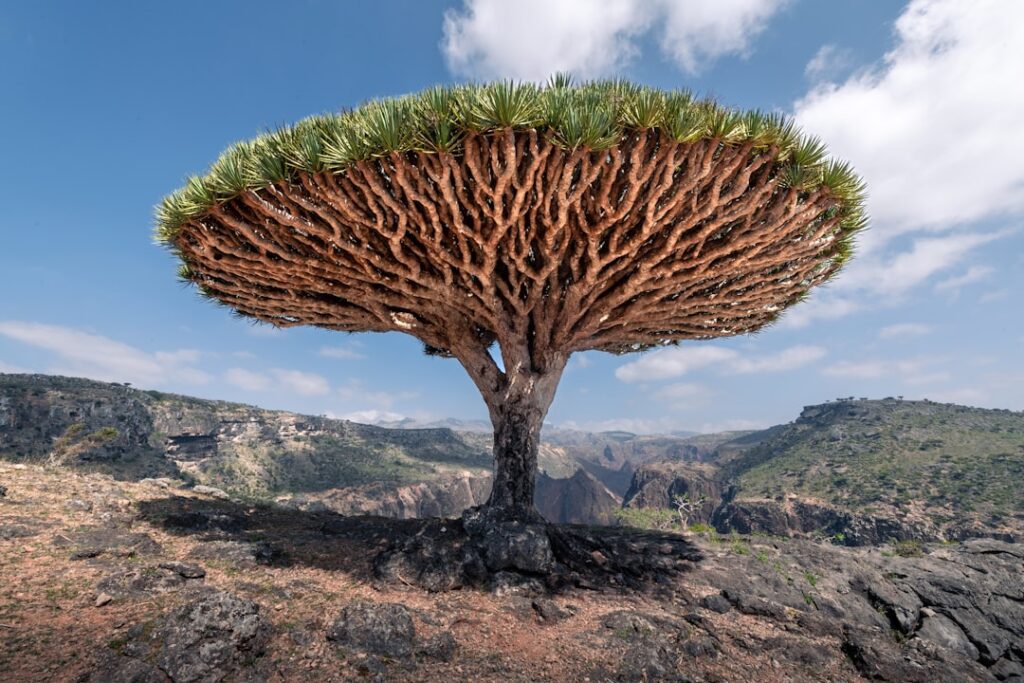
A very tall tree on top of a rocky hill, Socotra’s Dragon’s Blood Trees, Yemen
- Historic Architecture: The ancient Dragon’s Blood Trees themselves are living architecture, with some specimens estimated to be over 600 years old, their dense, upturned canopies creating natural cathedrals.
- Cultural Scene: The seasonal harvesting of the tree’s crimson resin, used for centuries as a dye, medicine, and varnish, is a unique cultural practice passed down through generations of Socotri people.
- Local Specialties: You must try fresh grilled fish, often red snapper or kingfish, served on the beach with local flatbread and a fiery chili sauce called *sahawiq*.
Pro Tip: The absolute best time to visit is between October and April, avoiding the monsoon winds (June-September). For photography, plan your trek to the Diksam Plateau for sunrise (around 5:30 AM) when the low light casts long, dramatic shadows through the forest of Dragon’s Blood Trees.
Map of Socotra’s Dragon’s Blood Trees, Yemen
Use these interactive maps to explore Socotra’s Dragon’s Blood Trees, Yemen and plan your route:
📍 View Socotra’s Dragon’s Blood Trees, Yemen on OpenStreetMap
🗺️ Open Socotra’s Dragon’s Blood Trees, Yemen in Google Maps
Planning Your Trip: Practical Essentials
Getting There and Around
- By Air: All visitors arrive via Socotra Airport (SCT). Flights typically connect through Cairo (EgyptAir) or Abu Dhabi (Air Arabia). Book flights at Skyscanner for best deals. A mandatory government guide will meet you and arrange all ground transport.
- By Train: No rail connections exist to this remote island.
- By Car: Independent car rental is not available or practical. All travel is via pre-arranged 4×4 vehicles with drivers as part of your mandatory tour package, which is the only way to visit.
- Local Transport: There is no public transport system. Your 4×4 and driver, included in your tour, will be your sole transport for the duration of your stay.
Best Time to Visit
The travel window is narrow, dictated by weather patterns. The ideal season offers warm, dry days perfect for hiking and beach time, while the monsoon season makes the island inaccessible.
| Season | Weather | Highlights |
|---|---|---|
| Summer (Jun–Aug) | Monsoon season. Strong winds, rough seas, most tours suspended. Flights are often canceled. | Not recommended for travel. The island is essentially closed to tourism. |
| Winter (Dec–Feb) | Pleasant, warm days (75-85°F/24-29°C) and cooler nights. Perfect hiking weather. | Excellent for trekking and photography. Calm seas for snorkeling. Peak season with the most reliable conditions. |
| Shoulder (Oct–Nov/Mar–Apr) | Transitional periods. Warm with a slight chance of brief showers. | Great value and fewer visitors. Nature is lush after any rains. Ideal for a balance of good weather and solitude. |
Budgeting for Socotra’s Dragon’s Blood Trees, Yemen

Cow standing beside a Socotra dragon’s blood tree in an arid, Socotra’s Dragon’s Blood Trees, Yemen
| Category | Budget | Mid-range | Luxury |
|---|---|---|---|
| Accommodation | $30-50/night (basic homestay or camping) | $80-120/night (standard eco-lodge) | $150+/night (best available lodge) |
| Meals | $10-15/day (simple local meals) | $20-30/day (lodge meals & some restaurant fare) | $40+/day (full-board at top lodges) |
| Transport | Included in mandatory tour package | Included in mandatory tour package | Included in mandatory tour package |
| Activities | Most hikes & sights included in tour | Guided hikes, snorkeling trips ($20-40 extra) | Private guides, boat charters ($100+) |
| Daily Total | $100-150/day (all-inclusive tour avg.) | $150-250/day (all-inclusive tour avg.) | $300+/day (all-inclusive tour avg.) |
Note: Visiting Socotra requires booking an all-inclusive tour package through a licensed operator. Daily rates are estimates based on total package cost divided by days. Packages include visa support, guide, 4×4 transport, accommodation, and most meals.
Top Attractions and Must-See Sights
| Attraction | Description | Hours | Entry Fee |
|---|---|---|---|
| Diksam Plateau | The premier location to witness vast forests of ancient Dragon’s Blood Trees against a rugged canyon backdrop. | Sunrise to Sunset | Included in tour |
| Firmihin Forest | A denser, more accessible forest of Dragon’s Blood Trees, perfect for walking among the giants. | Daylight hours | Included in tour |
| Detwah Lagoon | A stunning turquoise lagoon and long white-sand beach on the northwest coast, offering incredible sunset views. | Always accessible | Included in tour |
| Hoq Cave | A vast limestone cave system with ancient inscriptions and stunning formations, requiring a 2-hour hike. | Morning visits recommended | Included in tour |
3-Day Itinerary: Socotra’s Dragon’s Blood Trees, Yemen’s Highlights & Hidden Gems
Day 1: Arrival & The Dragon’s Blood Heartland
- Morning (7-9 AM): After an early flight arrival, meet your guide and drive inland. Your first stop is the **Diksam Plateau**. Arrive by 9 AM to see the trees in clear morning light. Look for the famous “ viewpoint over Wadi Diksam canyon.
- Afternoon (12-3 PM): Enjoy a picnic lunch prepared by your guide amidst the trees. Afterwards, take a 1-hour guided walk through the **Firmihin Forest**, where you can see the trees’ unique growth up close and learn about their ecology.
- Evening (6-8 PM): Drive to your coastal camp or lodge near **Qalansiyah**. Dinner features the day’s catch—grilled fish with rice and local herbs. Fall asleep to the sound of the Indian Ocean.
Day 2: Caves, Canyons & Coastal Bliss
- Morning (7 AM): Early start for the hike to **Hoq Cave** (approx. 2 hours each way). Bring a headlamp. Your guide will point out 2nd-century Sabaean inscriptions inside. The effort is rewarded with awe-inspiring stalactites.
- Afternoon (1 PM): Return for a late lunch of goat stew and flatbread. Then, drive to **Araher Beach** for relaxation. The towering sand dunes meeting the sea here are a surreal sight.
- Evening (5 PM): Head to **Detwah Lagoon** for what many call the island’s best sunset. The sky melts into shades of pink and orange over the curved spit of land. Enjoy a beachside barbecue for dinner.
Day 3: Desert Wonders & Departure
- Morning (8 AM): Drive to the **Homhil Protected Area**. Here, Dragon’s Blood Trees share the landscape with the bulbous, endemic Desert Rose (*Adenium obesum sokotranum*). Take a final walk to a natural freshwater pool with a view.
- Afternoon (12 PM): Enjoy a farewell lunch of spiced chicken and lentils. Visit a local village to see traditional stone houses and, if timing aligns, observe the careful harvesting of Dragon’s Blood resin from a tree.
- Evening (6 PM): Transfer to Socotra Airport for your evening departure flight, carrying memories of one of the world’s most unique ecosystems.
Cultural Insights & Etiquette
- Language: The native language is Socotri, but Arabic is widely understood. A simple “*Marhaba*” (Hello) and “*Shukran*” (Thank you) go a long way. Your guide will translate.
- Customs: Socotri culture is conservative and tribal. Always ask permission before photographing people, especially women. Public displays of affection are frowned upon.
- Tipping: Tipping your guide and driver is customary and appreciated at the end of your trip. A collective tip of $10-15 per day from your group is standard for good service.
- Dress Code: Dress modestly. For both men and women, clothing should cover shoulders and knees. Lightweight, loose-fitting pants and long-sleeved shirts are ideal for sun protection and cultural respect.
- Business Hours: The concept of fixed hours is fluid. Shops in Hadibo, the main town, may open in the morning and late afternoon, closing during the midday heat. Friday is the day of prayer and rest.
Where to Eat: Socotra’s Dragon’s Blood Trees, Yemen’s Best Bites
Dining on Socotra is a simple, fresh, and communal affair. Most meals are prepared by your tour team as part of your package. You’ll eat based on what’s available—fresh fish, goat, chicken, rice, lentils, and local vegetables. The flavors are hearty and aromatic, using spices like cumin, turmeric, and cardamom.
Must-Try Local Specialties
- Fresh Grilled Fish: Often cooked whole over charcoal on the beach. The best places to try it are any beachside barbecue your guide sets up, particularly at Detwah Lagoon or Aomak Beach.
- Mandi: A fragrant rice and meat dish (usually goat or chicken) slow-cooked in a underground tandoor. Your camping crew might prepare this for a special dinner.
- Socotri Honey: Famous for its unique flavor from endemic plants. It’s a prized gift. You can buy small jars from local vendors in Hadibo or sometimes from beekeepers in the mountains.
Restaurant Recommendations by Budget
| Type | Restaurant | Specialty | Price Range |
|---|---|---|---|
| Budget | Local eateries in Hadibo market | Fresh bread, falafel, and simple rice dishes | $3-5 per meal |
| Mid-range | Your tour camp/lodge kitchen | Daily prepared meals like grilled fish, stews, and salads | Included in tour |
| Fine dining | N/A | There are no formal fine-dining establishments. The “luxury” experience is a beautifully prepared fresh meal at a scenic campsite. | N/A |
Where to Stay
Accommodation ranges from basic camping to simple eco-lodges. Luxury, in the conventional sense, is not available. The real luxury is the location. Most tours use a combination of beach camping and fixed lodges. Compare prices and book at Booking.com (for some lodges) or Airbnb for apartments (very limited in Hadibo).
Best Neighborhoods for Accommodation
- Hadibo: The main town. Pros: access to shops, the port, and a sense of local life. Cons: less scenic, not close to nature sights. Suits those who prefer a fixed roof every night.
- Coastal Campsites (Detwah, Aomak): The most popular option. Pros: stunning beachfront locations, incredible stars, the sound of waves. Cons: basic facilities (shared toilet tents, no Wi-Fi). Suits adventurous travelers.
- Mountain/Eco Lodges (Diksam area): Simple stone or wooden bungalows. Pros: cool mountain air, proximity to the Dragon’s Blood forests for sunrise. Cons: more remote, basic amenities. Suits hikers and photographers.

Explore the iconic Dragon Tree in Icod de los Vinos, Socotra’s Dragon’s Blood Trees, Yemen
FAQs: Your Socotra’s Dragon’s Blood Trees, Yemen Questions Answered
1. Is Socotra’s Dragon’s Blood Trees, Yemen safe at night?
Yes, the island itself is very safe with a low crime rate. Your safety at night will primarily depend on following your guide’s advice, especially when camping. The main considerations are environmental: securing your tent against wind, using a headlamp to navigate camp, and being aware of your surroundings in the natural landscape.
2. What currency is used and are credit cards accepted?
The Yemeni Rial (YER) is the official currency, but US Dollars in cash are widely and often preferentially accepted for tourism services. Credit cards are virtually useless on Socotra. You must bring all the cash you will need for your entire trip, including tips and any souvenirs. Ensure bills are new, clean, and undamaged.
3. How do I get from the airport to the city center?
Your pre-arranged tour guide and driver will meet you at Socotra Airport (SCT) with a 4×4 vehicle. This transfer is included in your tour package. There are no taxis or public transport options for tourists. Independent travel from the airport is not permitted. Book airport transfers at GetYourGuide for convenience (as part of a full tour package).
4. Do I need to speak the local language?
No. All visitors are required to have a government-assigned guide who speaks English (or another requested language). Your guide will handle all communication. Learning a few Arabic greetings is a polite gesture, but not necessary for getting by.
5. What’s the appropriate dress code?
Modest, loose-fitting clothing is essential. For hiking, lightweight long trousers and long-sleeved shirts protect from the sun and scrub. For beaches, you can swim in conservative swimwear, but cover up immediately when leaving the water. A wide-brimmed hat, sunglasses, and a shemagh (scarf) are highly recommended for sun and wind protection.
Final Thoughts: Socotra’s Dragon’s Blood Trees, Yemen
Explore More Destinations
- Jozani, Tanzania on a Budget: an Ancient Forest for $35/Day (2026)
- Nsumbu, Zambia on a Budget: Wild Africa for $40/Day (2026)
- Semporna, Malaysia on a Budget: Paradise for $35/Day (2026)
- Khuzestan, Iran on a Budget: Ancient Empires for $30/Day (2026)
- Ngerulmud, Palau on a Budget: Island Majesty for $45/Day (2026)
Ready to Visit Socotra’s Dragon’s Blood Trees?
Start planning your trip today. Compare hotels, find the best tours, and get insider tips.
Your adventure in Socotra’s Dragon’s Blood Trees starts here →
Related Guides
Explore more destinations similar to Socotra’s Dragon’s Blood Trees:

