
El Djem, Tunisia (Roman Ruins): Stunning Amphitheater Grandeur, Mosaic Masterpieces & Saharan Sunsets (2025)
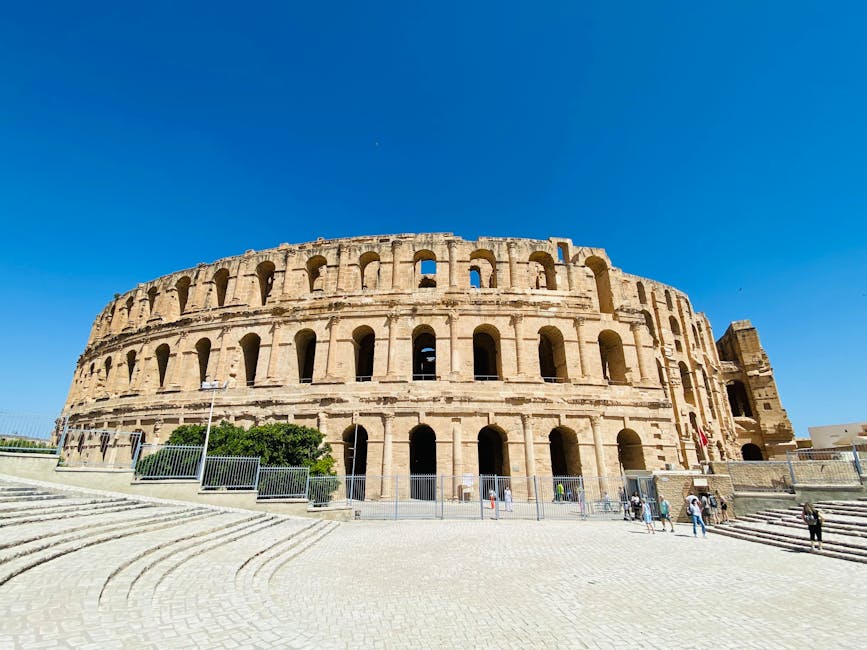
While crowds flock to Rome’s Colosseum, El Djem delivers a more intimate encounter with Roman engineering at half the price and a tenth of the visitors. Here, you can stand alone in the arena where gladiators once battled before 35,000 spectators in the third-largest Roman amphitheater ever built. The silence feels sacred, broken only by desert winds whispering through ancient archways that have witnessed nearly 1,800 years of North African history.
Why El Djem, Tunisia (Roman Ruins) Stands Out

Famous remains of old historic stones with ruined columns located on street…, El Djem, Tunisia (Roman Ruins)
- Historic Architecture: The Amphitheatre of El Djem (238 AD) showcases Roman engineering genius with three tiers of arches reaching 36 meters high, built entirely from local golden stone.
- Cultural Scene: The International Symphony Festival each July transforms the ancient amphitheater into a breathtaking concert venue under the stars.
- Local Specialties: Don’t leave without trying brik à l’oeuf – a crispy pastry filled with egg and tuna that locals consider the perfect street food.
Pro Tip: Arrive at the amphitheater exactly at 7:30 AM when gates open to experience the morning light illuminating the stone corridors completely alone – by 10 AM, tour buses begin arriving from coastal resorts.
Map of El Djem, Tunisia (Roman Ruins)
Use these interactive maps to explore El Djem, Tunisia (Roman Ruins) and plan your route:
📍 View El Djem, Tunisia (Roman Ruins) on OpenStreetMap
🗺️ Open El Djem, Tunisia (Roman Ruins) in Google Maps
Planning Your Trip: Practical Essentials
Getting There and Around
- By Air: Monastir Habib Bourguiba Airport (MIR) is 65km away with seasonal European flights, while Tunis-Carthage International Airport (TUN) offers more options 200km north. Book flights at Skyscanner for best deals.
- By Train: Regular trains connect from Tunis (3 hours) and Sousse (1 hour) to El Djem station, just 1km from the amphitheater. Reserve tickets at Trainline or the national railway website.
- By Car: The A1 motorway makes driving from Tunis straightforward with ample parking near the ruins. Compare car rentals at RentalCars.com.
- Local Transport: Louages (shared taxis) connect to nearby towns, while the compact archaeological site is easily walkable – no public transport needed within El Djem itself.
Best Time to Visit
Spring and autumn deliver perfect conditions for exploring the ruins without extreme heat, while summer offers vibrant cultural events despite higher temperatures.
| Season | Weather | Highlights |
|---|---|---|
| Summer (Jun–Aug) | 30-38°C, dry and sunny | International Symphony Festival, longer days, but crowded midday hours |
| Winter (Dec–Feb) | 15-20°C, occasional rain | Peaceful exploration, photography-friendly soft light, minimal queues |
| Shoulder (Apr–May/Sep–Oct) | 22-28°C, ideal conditions | Perfect hiking weather, wildflowers in spring, harvest festivals in autumn |
Budgeting for El Djem, Tunisia (Roman Ruins)

Captivating view of a solitary ancient Roman column under a bright blue sky…, El Djem, Tunisia (Roman Ruins)
| Category | Budget | Mid-range | Luxury |
|---|---|---|---|
| Accommodation | $20-40 per night (guesthouses) | $50-80 (boutique hotels) | $120+ (heritage properties) |
| Meals | $5-10 (street food, local cafes) | $15-25 (restaurant meals) | $40+ (fine dining with wine) |
| Transport | $2-5 (local buses/trains) | $20-40 (taxi day trips) | $80+ (private driver) |
| Activities | $10 (amphitheater entry) | $25 (guided tours) | $60+ (private archaeological tours) |
| Daily Total | $40-60 | $100-150 | $250+ |
Top Attractions and Must-See Sights
| Attraction | Description | Hours | Entry Fee |
|---|---|---|---|
| Amphitheatre of El Djem | Third-largest Roman amphitheater with intact underground chambers where gladiators and animals awaited battle | 7:30 AM-7:00 PM (summer), 8:30 AM-5:30 PM (winter) | 12 TND ($4) |
| El Djem Archaeological Museum | World-class collection of Roman mosaics from nearby villas, including the spectacular “Bacchus and Ariadne” | 9:00 AM-5:00 PM (closed Mondays) | 8 TND ($2.50) |
| Roman Villa of the Laberii | Partially reconstructed luxury villa showcasing elaborate mosaic floors depicting daily Roman life in Africa | 9:00 AM-4:30 PM | 7 TND ($2.20) |
| Underground Passages Tour | Guided exploration of the amphitheater’s subterranean network where wild animals were kept before games | 10:00 AM & 3:00 PM daily | 20 TND ($6.50) including guide |
3-Day Itinerary: El Djem, Tunisia (Roman Ruins)’s Highlights & Hidden Gems
Day 1: Ancient Grandeur & Modern Flavors
- Morning: 7:30 AM entry at the amphitheater to photograph empty corridors in golden light. Climb to the top tier for panoramic views over modern El Djem.
- Afternoon: Lunch at Restaurant Coupole (12 TND) for authentic couscous with lamb, then explore the Archaeological Museum’s mosaic collection until 3:00 PM.
- Evening: 6:00 PM underground passages tour followed by dinner at Dar El Karma for their famous mechouia salad and grilled merguez.
Day 2: Roman Luxury & Local Life
- Morning: 9:00 AM visit to Roman Villa of the Laberii (7 TND) to see remarkably preserved mosaic floors depicting mythological scenes.
- Afternoon: Explore the weekly market near Rue Habib Bourguiba for spices and ceramics, then lunch at Café Maure for mint tea and brik pastries.
- Evening: Sunset photography session from the amphitheater’s eastern arches, then traditional dinner at Restaurant du Musée.
Day 3: Beyond the Ruins
- Morning: Louage taxi to Sousse (8 TND, 1 hour) to visit the Medina and Ribat fortress, arriving by 9:00 AM to avoid crowds.
- Afternoon: Seafood lunch at Port El Kantaoui followed by browsing the souks for olive wood crafts and essential oils.
- Evening: Return to El Djem for final amphitheater visit during golden hour, then farewell dinner at your hotel’s rooftop terrace.
Cultural Insights & Etiquette
- Language: Arabic and French are official languages – learn “salam alaikum” (hello), “shukran” (thank you), and “bsahtek” (enjoy your meal)
- Customs: Always use your right hand for eating and handing items; remove shoes when entering homes or mosques
- Tipping: 5-10% in restaurants is appreciated; round up taxi fares; small coins for museum attendants
- Dress Code: Modest clothing recommended – cover shoulders and knees, especially when visiting religious sites
- Business Hours: Shops close 12:00-3:00 PM for siesta; Friday is the main prayer day with limited morning operations
Where to Eat: El Djem, Tunisia (Roman Ruins)’s Best Bites
Tunisian cuisine reflects centuries of Mediterranean trade, blending Arab, Berber, and French influences with abundant olive oil, harissa paste, and fresh seafood from the coast.
Must-Try Local Specialties
- Brik à l’oeuf: Crispy triangular pastry with runny egg, tuna, and parsley – find the best at street stalls near the museum
- Couscous with lamb: Friday special in most restaurants, slow-cooked with seven vegetables and rich broth
- Mechouia salad: Grilled pepper and tomato salad with tuna and hard-boiled eggs, perfect with fresh bread
Restaurant Recommendations by Budget
| Type | Restaurant | Specialty | Price Range |
|---|---|---|---|
| Budget | Café des Nattes (near amphitheater) | Fresh brik and mint tea | 5-10 TND |
| Mid-range | Restaurant Coupole (downtown) | Traditional couscous Fridays | 15-25 TND |
| Fine dining | Dar El Karma (hotel restaurant) | Multi-course Tunisian tasting menu | 40+ TND |
Where to Stay
Most visitors stay in El Djem itself for amphitheater access, though Sousse offers more options 60km away. Compare prices and book at Booking.com or Airbnb for apartments.
Best Neighborhoods for Accommodation
- Amphitheater District: Walking distance to ruins, limited restaurants but unbeatable views, perfect for photography enthusiasts
- City Center: More dining options and markets, 10-15 minute walk to site, better for travelers wanting local immersion
- Rural Guesthouses: Olive farm stays outside town offering tranquility and authentic experiences, requiring transportation

Explore the ancient Roman amphitheater ruins with dramatic skies, El Djem, Tunisia (Roman Ruins)
FAQs: Your El Djem, Tunisia (Roman Ruins) Questions Answered
1. Is El Djem, Tunisia (Roman Ruins) safe at night?
El Djem is generally safe, but the amphitheater area becomes poorly lit after dark. Stick to main streets in the town center at night and avoid isolated areas. Most restaurants and hotels have reliable security.
2. What currency is used and are credit cards accepted?
Tunisian Dinar (TND) is the local currency (approximately 3 TND = $1 USD). Credit cards work at hotels and upscale restaurants, but carry cash for markets, taxis, and smaller establishments.
3. How do I get from the airport to the city center?
From Monastir Airport, take a taxi (45 minutes, 60 TND) or pre-book a transfer. From Tunis Airport, the train via Sousse takes 3 hours but costs only 15 TND. Book airport transfers at GetYourGuide for convenience.
4. Do I need to speak the local language?
French is widely spoken in tourist areas, while English is common at major sites. Learning basic Arabic greetings will earn you warm responses from locals. Most museum signs are in French and Arabic.
5. What’s the appropriate dress code?
Lightweight, modest clothing works best – linen pants, maxi skirts, and shirts covering shoulders. Bring a hat and sunglasses for sun protection at the exposed archaeological sites.
Final Thoughts: El Djem, Tunisia (Roman Ruins) Awaits
El Djem offers that rare travel experience where ancient history feels immediate and personal. Unlike more famous Roman sites, here you can still find moments of solitude in monumental spaces that once echoed with 35,000 voices. The combination of world-class archaeology, affordable travel costs, and genuine Tunisian hospitality creates an unforgettable journey. Savvy travelers know to plan their visit around the golden hours of early morning and late afternoon, when the stone glows and the crowds thin. Don’t miss climbing to the amphitheater’s highest tier just before sunset – the view across modern El Djem to the surrounding olive groves perfectly frames two thousand years of continuous civilization in a single glance.
Explore More Destinations
- Jozani, Tanzania on a Budget: an Ancient Forest for $35/Day (2026)
- Nsumbu, Zambia on a Budget: Wild Africa for $40/Day (2026)
- Semporna, Malaysia on a Budget: Paradise for $35/Day (2026)
- Khuzestan, Iran on a Budget: Ancient Empires for $30/Day (2026)
- Ngerulmud, Palau on a Budget: Island Majesty for $45/Day (2026)
Ready to Visit El Djem?
Start planning your trip today. Compare hotels, find the best tours, and get insider tips.
Your adventure in El Djem starts here →
Related Guides
Explore more destinations similar to El Djem:
- Plovit Divjak, Croatia: Best Waterfalls, Medieval Mystique & Mountain Serenity (2025)
- Khartoum, Sudan’s Essential Confluences, Culture & Ancient Kingdoms (2026)
- Langkawi, Malaysia: Essential Duty-Free Beaches, Rainforests & Legendary Isles (2026)
- Loga, Niger’s Hidden Culture, Architecture & Authentic Sahelian Life (2025)

