
Dien Bien Phu, Vietnam’s Stunning Battlefields, Mountains & Ethnic Culture (2025)
In 1954, 56 days of continuous artillery fire echoed through this valley as Vietnamese forces surrounded and defeated French colonial troops in one of history’s most decisive military campaigns. Today, the thunder has been replaced by the gentle hum of motorbikes navigating mountain passes, but the legacy remains etched into every hillside. Dien Bien Phu stands as both hallowed ground and living community, where French bunkers crumble beside vibrant Thai minority markets and the scent of grilled river fish mingles with the mountain air. This is where modern Vietnam was forged, yet most travelers bypass it for more famous destinations.
Why Dien Bien Phu, Vietnam Stands Out
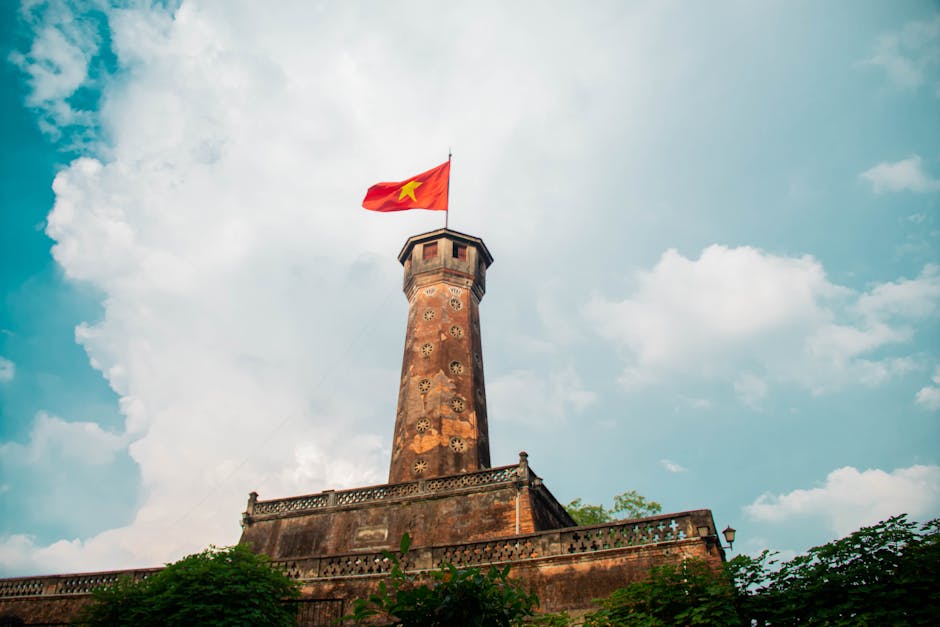
The iconic Hanoi Flag Tower with a waving Vietnamese flag against a blue sky., Dien Bien Phu, Vietnam
- Historic Architecture: The A1 Hill bunker system (1954) where you can walk through preserved French command posts and tunnel networks from the decisive battle.
- Cultural Scene: The March victory celebrations featuring traditional Thai dancing and bamboo pipe music performed by ethnic minorities in elaborate handmade costumes.
- Local Specialties: Com Lam (bamboo-tube rice) stuffed with sesame seeds and grilled over open fires, a staple of local hill tribes for generations.
Pro Tip: Visit between late October and early December when the rice terraces turn golden and the weather is dry and cool (15-25°C), avoiding both the rainy season mud and the March anniversary crowds that triple accommodation prices.
Map of Dien Bien Phu, Vietnam
Use these interactive maps to explore Dien Bien Phu, Vietnam and plan your route:
📍 View Dien Bien Phu, Vietnam on OpenStreetMap
🗺️ Open Dien Bien Phu, Vietnam in Google Maps
Planning Your Trip: Practical Essentials
Getting There and Around
- By Air: Dien Bien Phu Airport (DIN) receives 4 daily flights from Hanoi on Vietnam Airlines and Vietjet Air (70-minute flight, $40-80 one-way). Taxis to city center cost 150,000 VND ($6). Book flights at Skyscanner for best deals.
- By Train: No direct rail service – the nearest station is in Lao Cai (6 hours away). Most travelers take overnight buses from Hanoi instead. Reserve tickets at Trainline or the national railway website.
- By Car: The 470km mountain road from Hanoi takes 10-12 hours via Son La. Rent 4WD vehicles for $35-60/day – essential for rainy season. Compare car rentals at RentalCars.com.
- Local Transport: Motorbike taxis (xe om) charge 15,000-30,000 VND per ride within city. Walkable central area, but hire private car with driver ($40/day) for battlefield sites spread across the valley.
Best Time to Visit
The valley experiences distinct seasons that dramatically affect both accessibility and experience. Savvy travelers time their visit for optimal battlefield viewing and cultural festivals while avoiding the challenging rainy months.
| Season | Weather | Highlights |
|---|---|---|
| Summer (Jun–Aug) | 22-32°C, heavy rainfall, high humidity | Lush green landscapes but difficult trekking, fewer tourists, lower prices |
| Winter (Dec–Feb) | 10-22°C, dry and foggy mornings | Perfect hiking conditions, clear battlefield views, ethnic New Year celebrations |
| Shoulder (Apr–May/Sep–Oct) | 18-28°C, minimal rain, comfortable | Golden rice harvest views, ideal photography light, best overall experience |
Budgeting for Dien Bien Phu, Vietnam

Scenic view of Long Bien Bridge spanning lush green riverbanks in Hanoi, Dien Bien Phu, Vietnam
| Category | Budget | Mid-range | Luxury |
|---|---|---|---|
| Accommodation | $12-20/night (guesthouses) | $25-45/night (3-star hotels) | $60-100/night (resorts) |
| Meals | $5-8/day (street food, markets) | $12-20/day (restaurants) | $30-50/day (fine dining) |
| Transport | $3-5/day (motorbike taxis) | $15-25/day (car rental) | $40-60/day (private driver) |
| Activities | $5-10 (museums, temples) | $15-25 (guided tours) | $40-70 (private guides) |
| Daily Total | $25-43 | $57-115 | $130-280 |
Top Attractions and Must-See Sights
| Attraction | Description | Hours | Entry Fee |
|---|---|---|---|
| Dien Bien Phu Victory Museum | Comprehensive collection with French artillery, detailed battle maps, and personal artifacts from both sides | 7:30-11:00 & 13:30-17:00 | 30,000 VND ($1.20) |
| A1 Hill Battlefield | Preserved French bunkers and the massive crater from the 950kg explosive that decided the battle | 24 hours (daylight recommended) | Free |
| De Castries Bunker | Reconstructed French command headquarters where General de Castries surrendered after 56 days under siege | 7:00-18:00 | 15,000 VND ($0.60) |
| Muong Thanh Bridge | Historic steel bridge spanning the Nam Rom River that became a strategic focal point during the battle | 24 hours | Free |
3-Day Itinerary: Dien Bien Phu, Vietnam’s Highlights & Hidden Gems
Day 1: Battlefield Immersion
- Morning: Start at 7:30 AM at Dien Bien Phu Victory Museum to understand the battle context before visiting sites. Arrive early to avoid school groups that fill the museum by 9 AM.
- Afternoon: Explore A1 Hill and the French cemetery, then lunch at Quán Ăn Ngon (35-40 Alley 7, Tan Thanh) for their grilled pork with vermicelli (65,000 VND).
- Evening: Sunset walk across Muong Thanh Bridge followed by dinner at Dien Bien Phu Restaurant (2 Him Lam Ward) for their seven-course Thai minority tasting menu (180,000 VND).
Day 2: Cultural Exploration
- Morning: Hire a motorbike (100,000 VND/day) at 6:30 AM to visit Pa Khoang Lake 20km from city – misty morning views are spectacular and free.
- Afternoon: Visit the Central Market for ethnic textiles and lunch at market food stalls trying Thang Co (horse meat soup, 45,000 VND).
- Evening: Attend traditional Thai dance performance at Cultural House (7 PM, 50,000 VND) then night market street food crawl.
Day 3: Mountain Villages
- Morning: Private car to Sin Ho district (2 hours, 800,000 VND round trip) to visit Flower H’mong villages and their weekly market (Sunday only).
- Afternoon: Lunch in Sin Ho at local eatery serving bamboo-tube rice, then visit traditional stilt houses to see weaving demonstrations.
- Evening: Final dinner at Lan Anh Restaurant (5 Street 7/5) for their signature grilled stream fish with lemon leaves (75,000 VND).
Cultural Insights & Etiquette
- Language: Learn “Xin chào” (hello), “Cảm ơn” (thank you), and “Bao nhiêu tiền?” (how much?) – even basic Vietnamese phrases earn warm responses from locals.
- Customs: Remove shoes before entering homes and temples, avoid touching anyone’s head, and use both hands when giving/receiving items, especially from elders.
- Tipping: Not expected but appreciated – round up taxi fares, leave 5-10% at restaurants for exceptional service, small notes for hotel staff.
- Dress Code: Conservative attire for temples and minority villages – cover shoulders and knees. Casual elsewhere but neat appearance shows respect.
- Business Hours: Government sites 7:30-11:00 & 13:30-16:30 (closed Sunday), shops 8:00-21:00, restaurants 6:30-22:00. Major closures during Tet (late Jan/early Feb).
Where to Eat: Dien Bien Phu, Vietnam’s Best Bites
The culinary scene here reflects the ethnic diversity of northwest Vietnam, with Thai, H’mong, and Dao influences creating unique flavors you won’t find in mainstream Vietnamese cuisine. Meals often feature mountain herbs, bamboo, and river fish prepared using traditional techniques passed through generations.
Must-Try Local Specialties
- Com Lam: Sticky rice cooked in bamboo tubes with sesame or beans, giving it a distinctive smoky flavor – best at early morning market stalls.
- Thit Trau Gac Bep: Buffalo meat smoked over the kitchen hearth for weeks, served thinly sliced with wild betel leaves.
- Ca Suoi Nuong: Mountain stream fish grilled in banana leaves with lemongrass and mountain pepper, a Thai minority specialty.
Restaurant Recommendations by Budget
| Type | Restaurant | Specialty | Price Range |
|---|---|---|---|
| Budget | Quán Ăn 36 (24 Street 3/2) | Pork noodle soup and spring rolls | 40,000-80,000 VND |
| Mid-range | Nhà Hàng Dien Bien (12 Tran Dang Ninh) | Thai minority hotpot and grilled dishes | 120,000-250,000 VND |
| Fine dining | Muong Thanh Hotel Restaurant (25 Him Lam) | French-Vietnamese fusion with battlefield views | 300,000-600,000 VND |
Where to Stay
Accommodation ranges from basic guesthouses to comfortable hotels, with the best locations centered around the city center for walkable access to main sites. Book well in advance for March and April when victory anniversary events fill rooms months ahead. Compare prices and book at Booking.com or Airbnb for apartments.
Best Neighborhoods for Accommodation
- City Center: Walking distance to museums and restaurants, but can be noisy – ideal for first-time visitors with limited time.
- Him Lam Ward: Quieter area with newer hotels and mountain views, though requires transport to reach main attractions.
- Near Muong Thanh Bridge: Scenic riverside location with easy access to both historic sites and local markets.

A woman in a traditional Ao Dai crosses a bustling street in Gia Lai, Vietnam., Dien Bien Phu, Vietnam
FAQs: Your Dien Bien Phu, Vietnam Questions Answered
1. Is Dien Bien Phu, Vietnam safe at night?
Generally very safe with low crime rates, though the city becomes quiet after 9 PM. Stick to well-lit main streets, avoid isolated areas, and standard precautions with valuables apply. Motorbike taxis remain available until midnight for safe transport.
2. What currency is used and are credit cards accepted?
Vietnamese Dong (VND) is the official currency. ATMs dispense maximum 3,000,000 VND ($120) per transaction. Credit cards accepted only at larger hotels and upscale restaurants – carry cash for markets, taxis, and local eateries where USD isn’t widely accepted.
3. How do I get from the airport to the city center?
The airport is just 3km from downtown. Official airport taxis cost 150,000 VND ($6), while ride-hailing apps like Grab charge about 100,000 VND ($4). No public buses serve the airport. Book airport transfers at GetYourGuide for convenience.
4. Do I need to speak the local language?
Basic English is spoken at hotels and main tourist sites, but limited elsewhere. Learn essential Vietnamese phrases and use translation apps for markets and rural areas. Locals appreciate any attempt at their language and will help patiently.
5. What’s the appropriate dress code?
Lightweight but conservative clothing works best – cover shoulders and knees for temple visits and minority villages. Sturdy walking shoes essential for battlefield sites. Rain jacket necessary May-September, light jacket November-February for cool evenings.
Final Thoughts: Dien Bien Phu, Vietnam Awaits
Dien Bien Phu offers something rare in modern travel: a destination where history feels immediate and authentic culture thrives alongside monumental significance. Beyond the textbook battle sites, you’ll discover vibrant ethnic markets, stunning mountain scenery, and a pace of life that invites genuine connection. Travelers who make the journey here often describe it as their most meaningful Vietnam experience – not for luxury comforts, but for the powerful sense of walking through living history while engaging with cultures that have maintained traditions for centuries. Your best approach? Come with curiosity, respect for the past, and flexibility to embrace the unexpected moments that make this valley truly unforgettable. Don’t leave without waking early at least once to watch the morning mist lift from the battlefield hills – that quiet moment alone justifies the journey.
{“@context”: “https://schema.org”, “@type”: “FAQPage”, “mainEntity”: [{“@type”: “Question”, “name”: “What is the best time to visit Dien Bien Phu?”, “acceptedAnswer”: {“@type”: “Answer”, “text”: “The best time to visit Dien Bien Phu depends on your preferences. Generally, the dry season offers the most pleasant weather for sightseeing and outdoor activities.”}}, {“@type”: “Question”, “name”: “How many days do I need in Dien Bien Phu?”, “acceptedAnswer”: {“@type”: “Answer”, “text”: “Most travelers spend 3-5 days in Dien Bien Phu to see the main attractions. A week allows for a more relaxed pace and day trips.”}}, {“@type”: “Question”, “name”: “Is Dien Bien Phu expensive to visit?”, “acceptedAnswer”: {“@type”: “Answer”, “text”: “Dien Bien Phu can be visited on various budgets. Accommodation ranges from hostels to luxury hotels, and local restaurants offer affordable dining.”}}]}
Related Guides
Explore more destinations similar to Dien Bien Phu:
- Corn Islands, Nicaragua: Ultimate Caribbean Beaches, Creole Culture & Uncrowded Diving (2025)
- Ségbana, Benin: Ultimate River Crossings, Royal History & Authentic Alibori Culture (2026)
- Koh Phayam, Thailand’s Essential Beaches, Bungalows & Back-to-Nature Bliss (2025)
- Krasnaya Polyana, Russia: Best Alpine Thrills, Olympic Legacy & Caucasian Wilderness (2025)

