
Uyuni Salt Flats, Bolivia’s Incredible Mirrors, Minerals & Martian Landscapes (2025)
When dawn breaks across the 10,582 square kilometers of Salar de Uyuni, the world’s largest salt flat transforms into a perfect mirror reflecting the Andean sky. Your footsteps crunch on hexagonal salt patterns stretching to horizons where earth and sky become indistinguishable. This prehistoric lake bed, dried up 40,000 years ago, now holds half the world’s lithium reserves beneath its crystalline surface. While 60,000 annual visitors come for the famous rainy season reflections, seasoned travelers know the dry season reveals an entirely different universe of geometric perfection.
Why Uyuni Salt Flats, Bolivia Stands Out

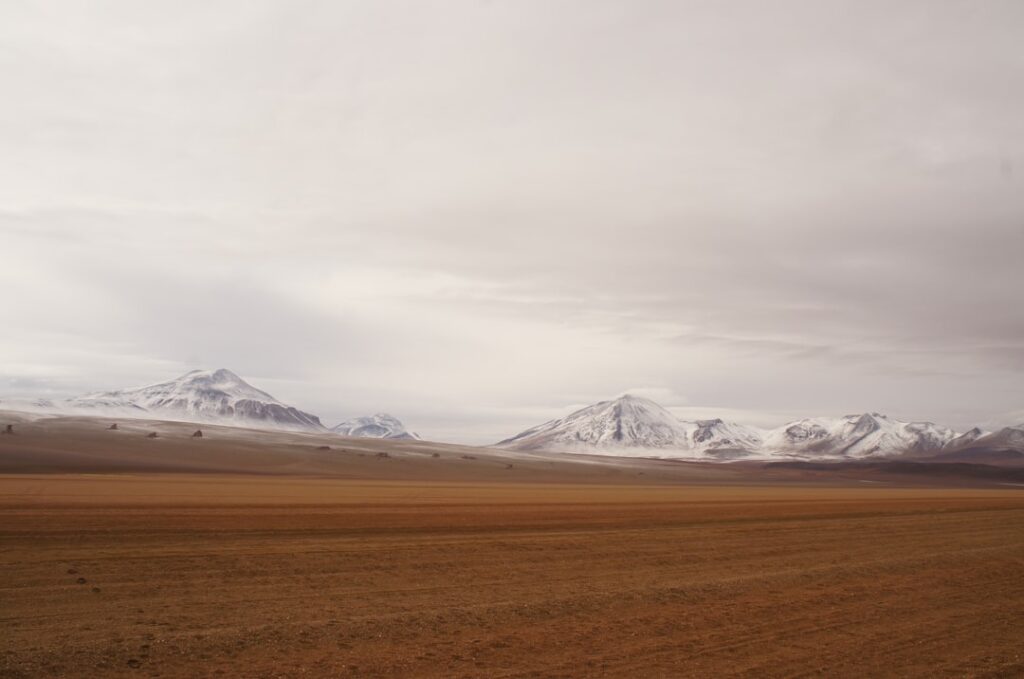
Body of water under cloudy sky, Uyuni Salt Flats, Bolivia
- Historic Architecture: The Train Cemetery’s rusting 19th-century locomotives abandoned during the 1940s mining collapse create an industrial archaeology site unlike any other.
- Cultural Scene: The annual Uyuni Salt Festival each November features traditional Quechua salt harvesting ceremonies and llama blessings that few tourists witness.
- Local Specialties: Salt-encrusted llama steak cooked on hot salt blocks at restaurants built entirely from salt blocks delivers an authentic high-altitude culinary experience.
Pro Tip: Visit during January or February’s rainy season for the famous mirror effect, but come at sunrise (5:30-7:00 AM) before tour groups arrive at 9:00 AM. The light is softer, reflections clearer, and you’ll have the entire salt flat virtually to yourself for photography.
Map of Uyuni Salt Flats, Bolivia
Use these interactive maps to explore Uyuni Salt Flats, Bolivia and plan your route:
📍 View Uyuni Salt Flats, Bolivia on OpenStreetMap
🗺️ Open Uyuni Salt Flats, Bolivia in Google Maps
Planning Your Trip: Practical Essentials
Getting There and Around
- By Air: Joya Andina Airport (UYU) connects via Boliviana de Avição from La Paz (1 hour flights, $150-250 roundtrip). Book flights at Skyscanner for best deals.
- By Train: The Expreso del Sur overnight train from Oruro (7 hours, $15-25) offers spectacular mountain views. Reserve tickets at Trainline or the national railway website.
- By Car: Ruta 5 from Potosí (3-4 hours) provides the most scenic drive. Compare car rentals at RentalCars.com.
- Local Transport: 4×4 tours ($100-150 for 3 days) are essential for salt flat exploration – book through reputable agencies like Red Planet Expedition.
Best Time to Visit
The salt flats transform dramatically between seasons, offering completely different experiences. Dry season (April-November) reveals crystalline salt patterns perfect for perspective photography, while rainy season (December-March) creates the famous mirror effect but limits access to certain areas.
| Season | Weather | Highlights |
|---|---|---|
| Dry Season (Apr–Nov) | 5°C to 20°C, sunny days, freezing nights | Perfect for perspective photography, full access to islands, fewer crowds from June-August |
| Rainy Season (Dec–Mar) | 10°C to 18°C, afternoon showers, high humidity | Famous mirror reflections, stunning sunsets, limited access to Incahuasi Island |
| Shoulder (Apr–May/Sep–Oct) | 8°C to 22°C, mixed conditions | Best value tours, combination of some reflections and accessible islands, ideal for photography workshops |
Budgeting for Uyuni Salt Flats, Bolivia

A body of water with clouds above it, Uyuni Salt Flats, Bolivia
| Category | Budget | Mid-range | Luxury |
|---|---|---|---|
| Accommodation | $15-25/night (hostels) | $50-80/night (salt hotels) | $150-300/night (Luna Salada) |
| Meals | $5-10 (market meals) | $15-25 (restaurants) | $40-60 (fine dining) |
| Transport | $100 (group tour) | $150 (private tour) | $400 (luxury tour) |
| Activities | Free (Train Cemetery) | $10-20 (museum entries) | $75 (stargazing tours) |
| Daily Total | $40-60 | $80-120 | $200-350 |
Top Attractions and Must-See Sights
| Attraction | Description | Hours | Entry Fee |
|---|---|---|---|
| Incahuasi Island | Ancient coral island with giant cacti and 360° salt flat views from its summit | 8:00 AM-5:00 PM | 30 BOB ($4.50) |
| Train Cemetery | Collection of early 20th-century steam locomotives abandoned in the 1940s mining collapse | 24 hours | Free |
| Colchani Salt Processing | Traditional salt processing village where locals demonstrate centuries-old harvesting techniques | 9:00 AM-4:00 PM | 10 BOB ($1.50) |
| Eyes of the Salt Flat | Natural salt water springs bubbling up through the crust creating mesmerizing circular patterns | Daylight hours | Included in tours |
3-Day Itinerary: Uyuni Salt Flats, Bolivia’s Highlights & Hidden Gems
Day 1: Salt Flat Immersion & Perspective Photography
- Morning: 7:00 AM departure for sunrise photography at salt flats ($150 tour). The low angle light creates incredible depth in the salt patterns.
- Afternoon: Perspective photography session and lunch at Palacio de Sal restaurant (salt-encrusted trout, $18). Don’t miss their signature salt block cocktails.
- Evening: Stargazing tour ($25) – at 3,656m elevation with zero light pollution, the Milky Way appears breathtakingly clear.
Day 2: Islands & Indigenous Culture
- Morning: 6:30 AM visit to Incahuasi Island ($4.50 entry) before crowds arrive. Climb to the summit for panoramic views across the entire salt flat.
- Afternoon: Colchani salt village tour ($10) watching traditional salt processing, then souvenir shopping at women’s cooperative market.
- Evening: Dinner at Tikaña Restaurant (llama steak with quinoa, $22) followed by traditional Andean music performance.
Day 3: Beyond the Salt – Lagoons & Geysers
- Morning: 4:30 AM departure for Sol de Mañana geysers ($60 tour extension). At 5,000m elevation, these steaming fumaroles create an otherworldly landscape.
- Afternoon: Red Lagoon wildlife watching (flamingo colonies) and lunch at desert oasis restaurant (three-course meal, $15).
- Evening: Return to Uyuni for farewell dinner at Minuteman Revolutionary Pizza ($12-18), a legendary expat-owned spot with incredible high-altitude pizza.
Cultural Insights & Etiquette
- Language: Spanish and Quechua dominate; learn “Allillanchu” (hello in Quechua) and “Gracias” – even basic efforts earn warm responses
- Customs: Always ask permission before photographing locals; many indigenous people believe cameras can capture part of their soul
- Tipping: Tip tour guides 10-15% and restaurant staff 5-10%; small bills in Bolivianos are preferred over US dollars
- Dress Code: Layers are essential – thermal base, fleece, and windproof jacket; bright colors photograph beautifully against the white salt
- Business Hours: Most shops open 9:00 AM-6:00 PM with 2-4 PM siesta; museums close Mondays; tour agencies operate 7:00 AM-8:00 PM
Where to Eat: Uyuni Salt Flats, Bolivia’s Best Bites
Uyuni’s cuisine reflects its high-altitude environment with hearty stews, llama meat, and quinoa dominating menus. The town itself offers surprising culinary diversity, from traditional picanterías to innovative fusion restaurants that have emerged to serve the international tourist market.
Must-Try Local Specialties
- Salteña: Baked empanadas filled with meat, potatoes, peas, and olives – best at Salteñeria Doña Eugenia near the bus station ($1.50)
- Llama a la Plancha: Grilled llama steak served with chuño (freeze-dried potatoes) and llajwa (spicy sauce) at La Llamita ($12)
- Quinoa Soup: Creamy quinoa vegetable soup perfect for cold nights at Restaurant 16 de Julio ($6)
Restaurant Recommendations by Budget
| Type | Restaurant | Specialty | Price Range |
|---|---|---|---|
| Budget | Mercado Central food stalls | Fresh fruit juices and completo breakfasts | $3-7 |
| Mid-range | Tikaña (Av. Ferroviaria) | Traditional Bolivian tasting menus | $15-25 |
| Fine dining | Luna Salada Hotel Restaurant | Gourmet salt-block cooking with wine pairings | $40-60 |
Where to Stay
Accommodation ranges from basic hostels in Uyuni town to extraordinary salt hotels built entirely from salt blocks on the flats themselves. Most visitors spend their first and last nights in town for tour connections, with one night in a salt hotel for the unique experience. Compare prices and book at Booking.com or Airbnb for apartments.
Best Neighborhoods for Accommodation
- Central Uyuni: Walking distance to tour agencies and restaurants, but can be noisy at night – ideal for first-time visitors on tight schedules
- Salt Hotels (Colchani area): Unforgettable experience sleeping in salt-built rooms, but limited dining options and 30-minute drive to town
- Residential Areas: Quieter streets with family-run guesthouses offering authentic Bolivian hospitality, best for travelers seeking local immersion

A close up of a white surface with small dots, Uyuni Salt Flats, Bolivia
FAQs: Your Uyuni Salt Flats, Bolivia Questions Answered
1. Is Uyuni Salt Flats, Bolivia safe at night?
Uyuni town is generally safe, but take normal precautions after dark – stick to well-lit main streets and avoid walking alone in remote areas. On the salt flats themselves, the main risk is getting lost after sunset, so always travel with experienced guides.
2. What currency is used and are credit cards accepted?
Bolivianos (BOB) are the local currency, though US dollars are accepted at most tour agencies and higher-end hotels. Credit cards work at major hotels and some restaurants, but always carry cash for markets, smaller establishments, and tips. ATMs in Uyuni town occasionally run out of money, so withdraw cash in La Paz or Sucre beforehand.
3. How do I get from the airport to the city center?
Joy Andina Airport is 3km from Uyuni center – taxis cost 20 BOB ($3) for the 10-minute ride. Most hotels offer free pickup with advance booking. Book airport transfers at GetYourGuide for convenience.
4. Do I need to speak the local language?
Basic Spanish is extremely helpful, though tour guides speak English. Learn key phrases: “Buenos días” (good morning), “Cuánto cuesta?” (how much?), and “Dónde está…?” (where is…?). Locals appreciate any attempt at Spanish, which often leads to warmer interactions and better service.
5. What’s the appropriate dress code?
Layered clothing is essential due to extreme temperature swings. During daytime, you’ll need sun protection (hat, sunglasses, SPF 50+), while nights require thermal layers, warm hats, and gloves. Sturdy waterproof shoes are crucial, especially during rainy season when the salt flat has standing water.
Final Thoughts: Uyuni Salt Flats, Bolivia Awaits
The Salar de Uyuni offers one of South America’s most profound travel experiences, where the boundary between reality and reflection dissolves into pure wonder. Beyond the iconic photographs lies a landscape that challenges perception and rewards curiosity with moments of sublime beauty. Travelers who venture here discover not just a destination, but a different way of seeing our planet. For your most memorable experience, book a private sunrise tour that includes breakfast on the salt flats – watching the first light paint the hexagonal patterns while enjoying coffee and fresh bread creates a moment you’ll carry forever. The salt flats don’t just show you Bolivia’s beauty; they reflect something essential about the scale and magic of our world.
Related Guides
Explore more destinations similar to Uyuni Salt Flats:
- Abancay, Peru: Ultimate Gateway to the Apurímac, Andean Culture & Untamed Nature (2026)
- Diyarbakır, Turkey: Ultimate Basalt Walls, Ancient Faith & Mesopotamian Flavors (2025)
- Lentekhi, Georgia: Hidden Alpine Vistas, Ancient Towers & Authentic Svan Culture (2026)
- Lake Ladoga, Russia’s Ultimate Vastness, War History & Island Monasteries (2026)
{“@context”: “https://schema.org”, “@type”: “FAQPage”, “mainEntity”: [{“@type”: “Question”, “name”: “What is the best time to visit Uyuni Salt Flats?”, “acceptedAnswer”: {“@type”: “Answer”, “text”: “The best time to visit Uyuni Salt Flats depends on your preferences. Generally, the dry season offers the most pleasant weather for sightseeing and outdoor activities.”}}, {“@type”: “Question”, “name”: “How many days do I need in Uyuni Salt Flats?”, “acceptedAnswer”: {“@type”: “Answer”, “text”: “Most travelers spend 3-5 days in Uyuni Salt Flats to see the main attractions. A week allows for a more relaxed pace and day trips.”}}, {“@type”: “Question”, “name”: “Is Uyuni Salt Flats expensive to visit?”, “acceptedAnswer”: {“@type”: “Answer”, “text”: “Uyuni Salt Flats can be visited on various budgets. Accommodation ranges from hostels to luxury hotels, and local restaurants offer affordable dining.”}}]}

