
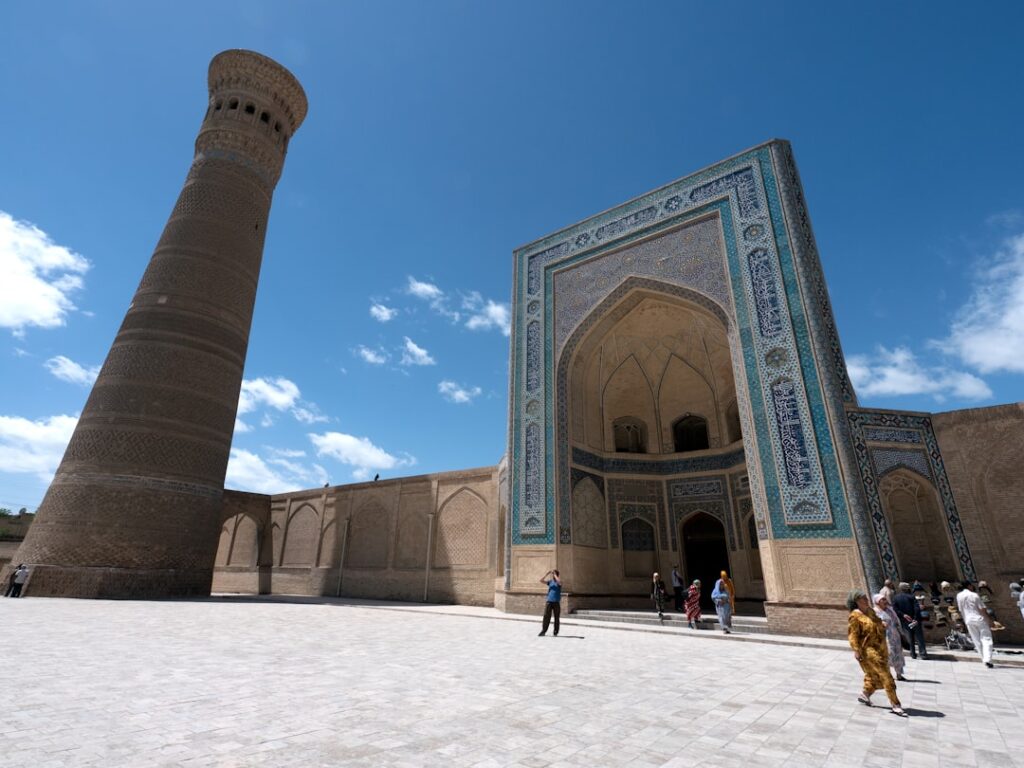
Termez, Uzbekistan: Amazing Silk Road Ruins, Buddhist Relics & Afghan Border Mystique (2025)
At sunrise, the ancient Zurmala Tower casts a 16-meter shadow across soil that’s witnessed 2,500 years of Buddhist monks, Silk Road traders, and Alexander the Great’s armies. The scent of baking non bread mingles with desert dust as you stand at Uzbekistan’s southernmost point, just 2 kilometers from the Afghan border crossing at Hairatan. While Samarkand draws millions, Termez offers something rarer: the chance to explore 12 archaeological sites where you’ll often be the only visitor among ruins that predate Islam itself.
Why Termez, Uzbekistan Stands Out

White and blue dome building, Termez, Uzbekistan
- Historic Architecture: The 11th-century Sultan Saodat Ensemble showcases 17 mausoleums representing Termez’s golden age as a medieval Islamic center.
- Cultural Scene: The annual Surkhan River Festival in May celebrates local traditions with buzkashi horse games and handmade suzani embroidery demonstrations.
- Local Specialties: Surkhan Darya’s famous shivit oshi (green dill noodles) offers a unique regional flavor found nowhere else in Uzbekistan.
Pro Tip: Visit archaeological sites like Fayaz Tepe and Kara Tepe between 6-8 AM to avoid the intense afternoon heat and have these ancient Buddhist complexes completely to yourself before tour groups arrive from Samarkand.
Map of Termez, Uzbekistan
Use these interactive maps to explore Termez, Uzbekistan and plan your route:
📍 View Termez, Uzbekistan on OpenStreetMap
🗺️ Open Termez, Uzbekistan in Google Maps
Planning Your Trip: Practical Essentials
Getting There and Around
- By Air: Termez International Airport (TMJ) connects to Tashkent via Uzbekistan Airways (2 flights weekly, $80-120). Taxis to city center cost 20,000 UZS ($1.60). Book flights at Skyscanner for best deals.
- By Train: The Sharq Express overnight train from Tashkent (13 hours, $25-45) offers comfortable sleeper cabins with stunning desert sunrise views. Reserve tickets at Trainline or the national railway website.
- By Car: The M39 highway from Samarkand (4-5 hours) passes through the dramatic Amu Darya river landscape. Compare car rentals at RentalCars.com.
- Local Transport: Shared taxis (5,000 UZS per ride) and marshrutka minibuses (2,000 UZS) connect major sites, but hiring a private driver ($30-40/day) proves more efficient for remote archaeological zones.
Best Time to Visit
Termez experiences extreme continental climate, making spring and autumn ideal for exploring outdoor archaeological sites comfortably.
| Season | Weather | Highlights |
|---|---|---|
| Summer (Jun–Aug) | 35-45°C (95-113°F), very dry | Early morning site visits only, indoor museums ideal, fewest crowds |
| Winter (Dec–Feb) | 5-15°C (41-59°F), occasional rain | Comfortable daytime exploring, lower hotel rates, local festivals |
| Shoulder (Apr–May/Sep–Oct) | 20-30°C (68-86°F), perfect conditions | Ideal for all-day archaeological exploration, best photography light |
Budgeting for Termez, Uzbekistan

A historic building features a decorative blue archway., Termez, Uzbekistan
| Category | Budget | Mid-range | Luxury |
|---|---|---|---|
| Accommodation | $15-25 (guesthouses) | $40-60 (3-star hotels) | $80-120 (boutique options) |
| Meals | $5-8 (chaikhana meals) | $10-15 (restaurants) | $20-30 (hotel dining) |
| Transport | $5 (public transport) | $15 (taxis) | $40 (private driver) |
| Activities | $10 (site entries) | $25 (guided tours) | $50 (special access) |
| Daily Total | $35-48 | $90-115 | $190-240 |
Top Attractions and Must-See Sights
| Attraction | Description | Hours | Entry Fee |
|---|---|---|---|
| Fayaz Tepe Buddhist Monastery | 2nd-century AD complex with stunning Buddha frescoes and monastery layout | 9 AM-6 PM | 25,000 UZS |
| Kara Tepe Archaeological Site | Rock-cut Buddhist monastery complex from Kushan Empire period | 8 AM-5 PM | 20,000 UZS |
| Sultan Saodat Ensemble | 11th-century mausoleum complex of Termez Sayyids dynasty | 9 AM-7 PM | 15,000 UZS |
| Termez Archaeological Museum | 20,000 artifacts including Buddhist statues from local excavations | 10 AM-5 PM (closed Mon) | 30,000 UZS |
3-Day Itinerary: Termez, Uzbekistan’s Highlights & Hidden Gems
Day 1: Ancient Buddhist Heritage
- Morning: 7 AM arrival at Fayaz Tepe (25,000 UZS) to explore the 2nd-century monastery in cool morning light when intricate Buddha frescoes glow golden.
- Afternoon: 12 PM visit to Kara Tepe’s rock-cut chambers followed by lunch at Chaykhana Al-Hakim At-Termizi for authentic shivit oshi (15,000 UZS).
- Evening: 6 PM stroll through Jarkurgan Minaret’s 12th-century baked-brick tower followed by dinner at Restaurant Sarbon for plov and live traditional music.
Day 2: Islamic Architecture & Border Mystique
- Morning: 8 AM exploration of Sultan Saodat Ensemble (15,000 UZS) – notice the 17 mausoleums’ varying architectural styles spanning 300 years.
- Afternoon: 1 PM visit to Hakim At-Termizi Mausoleum then lunch at Afsona Restaurant specializing in grilled lamb kebabs from local Surkhan valley herds.
- Evening: 5:30 PM drive to Afghan border viewpoint at Hairatan to watch sunset over the Amu Darya river dividing Central Asia from South Asia.
Day 3: Archaeological Treasures & Local Life
- Morning: 8:30 AM taxi (10,000 UZS) to Kampyr Tepe’s Hellenistic fortress with panoramic views of Alexander the Great’s ancient border outpost.
- Afternoon: 1 PM Termez Archaeological Museum immersion followed by lunch at Chaykhana Darvoza for their signature manti dumplings.
- Evening: 6 PM final exploration of Old Termez ruins before farewell dinner at Hotel Asson’s rooftop restaurant overlooking the Surkhan River.
Cultural Insights & Etiquette
- Language: Uzbek predominates; learn “rahmat” (thank you), “salom” (hello), and “qanday” (how much) – Russian phrases also work well with older generations
- Customs: Always remove shoes before entering homes and mosques; accept tea and bread offerings graciously as refusal may cause offense
- Tipping: 5-10% in restaurants appreciated but not expected; round up taxi fares; small bills (5,000-10,000 UZS) for museum guides
- Dress Code: Conservative clothing for religious sites (covered shoulders/knees); light cotton ideal for archaeological site exploration in heat
- Business Hours: Shops 9 AM-6 PM with 1-2 PM lunch breaks; museums often closed Mondays; Friday prayers affect mosque visiting hours
Where to Eat: Termez, Uzbekistan’s Best Bites
Termez’s cuisine reflects its border location with Afghan and Tajik influences, featuring more grilled meats and fresh herbs than northern Uzbek cities. Family-run chaikhanas (tea houses) serve as social hubs where you’ll experience genuine local hospitality.
Must-Try Local Specialties
- Shivit Oshi: Vibrant green dill noodles served at celebrations – find the most authentic version at Chaykhana Al-Hakim At-Termizi near the mausoleum
- Surkhan Kabob: Marinated lamb skewers grilled over desert shrubs – Afsona Restaurant masters this local barbecue specialty
- Termez Non: Distinctive flatbread stamped with geometric patterns – buy fresh daily from central bazaar bakeries before 10 AM
Restaurant Recommendations by Budget
| Type | Restaurant | Specialty | Price Range |
|---|---|---|---|
| Budget | Chaykhana Darvoza (near bazaar) | Fresh manti & lagman soup | $3-6 per person |
| Mid-range | Restaurant Sarbon (city center) | Traditional plov & live music | $8-15 per person |
| Fine dining | Hotel Asson Restaurant (riverside) | International-Uzbek fusion | $20-30 per person |
Where to Stay
Termez offers limited but good-value accommodation, primarily clustered in the city center for convenience to sites and restaurants. Book well ahead during festival seasons. Compare prices and book at Booking.com or Airbnb for apartments.
Best Neighborhoods for Accommodation
- City Center: Walking distance to museums and restaurants, but can be noisy – ideal for first-time visitors wanting convenience
- Surkhan Riverfront: Quieter locations with views, though further from sites – perfect for travelers with private transport
- Near Archaeological Museum: Residential area with guesthouses offering authentic local experiences – best for culture immersion seekers

A mosque tower with green tiles and blue sky., Termez, Uzbekistan
FAQs: Your Termez, Uzbekistan Questions Answered
1. Is Termez, Uzbekistan safe at night?
Termez maintains good safety standards, though the border area requires extra caution. Stick to well-lit central areas after dark, avoid photographing military installations, and use registered taxis for evening transport. Locals are generally welcoming to respectful visitors.
2. What currency is used and are credit cards accepted?
Uzbekistani som (UZS) is the currency – carry cash as most establishments don’t accept cards. ATMs dispense local currency in city center. Exchange dollars/euros at banks (passport required) for better rates than hotels.
3. How do I get from the airport to the city center?
Official airport taxis cost 20,000-25,000 UZS ($1.60-2) for the 15-minute ride. No public buses serve the airport. Book airport transfers at GetYourGuide for convenience.
4. Do I need to speak the local language?
Basic Russian phrases prove more useful than Uzbek with older generations, while younger locals may understand some English. Learn numbers for bargaining and “restoran” (restaurant) and “musey” (museum) for navigation.
5. What’s the appropriate dress code?
Light, loose cotton clothing works best for the heat. Cover shoulders and knees at religious sites – women should carry a headscarf for mausoleum visits. Sturdy walking shoes essential for archaeological site exploration.
Final Thoughts: Termez, Uzbekistan Awaits
Termez offers what few destinations can: the genuine thrill of archaeological discovery without crowds. Here you’ll walk through 2,500 years of history where Buddhist monasteries predate Islamic monuments, and the Amu Darya still divides civilizations as it did in Alexander’s time. Savvy travelers know to hire a local guide for the Buddhist sites – their stories bring the ancient stones to life in ways guidebooks cannot. Come for the history, but you’ll leave remembering the warmth of Surkhan Darya hospitality and the haunting beauty of desert ruins at golden hour.
{“@context”: “https://schema.org”, “@type”: “FAQPage”, “mainEntity”: [{“@type”: “Question”, “name”: “What is the best time to visit Termez?”, “acceptedAnswer”: {“@type”: “Answer”, “text”: “The best time to visit Termez depends on your preferences. Generally, the dry season offers the most pleasant weather for sightseeing and outdoor activities.”}}, {“@type”: “Question”, “name”: “How many days do I need in Termez?”, “acceptedAnswer”: {“@type”: “Answer”, “text”: “Most travelers spend 3-5 days in Termez to see the main attractions. A week allows for a more relaxed pace and day trips.”}}, {“@type”: “Question”, “name”: “Is Termez expensive to visit?”, “acceptedAnswer”: {“@type”: “Answer”, “text”: “Termez can be visited on various budgets. Accommodation ranges from hostels to luxury hotels, and local restaurants offer affordable dining.”}}]}
Related Guides
Explore more destinations similar to Termez:

