
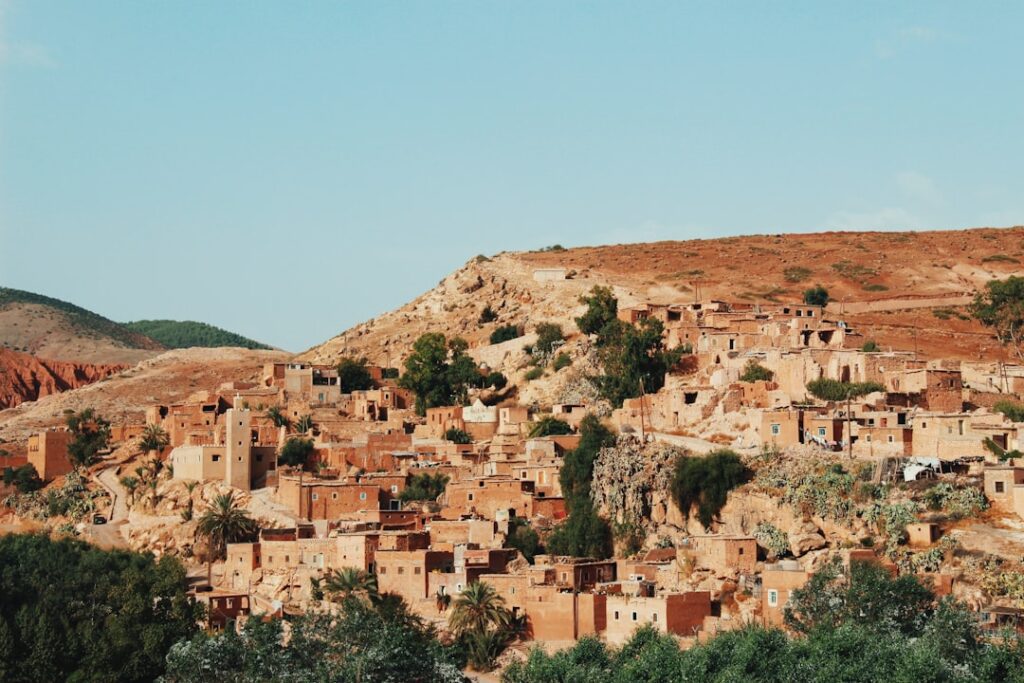
Safi, Morocco’s Amazing Pottery, Portuguese Fortresses & Atlantic Sunsets (2025)
While 98% of Morocco’s tourists head to Marrakech or Fes, Safi remains the country’s best-kept coastal secret. This Atlantic port city produces 65% of Morocco’s famous pottery yet sees only a fraction of the visitors. At sunset, the ancient Portuguese fortress glows crimson while fishermen haul in the day’s catch below. You’ll experience authentic Moroccan life here – where artisans still work in medieval workshops and the scent of cedar wood from pottery kilns fills the ancient medina.
Why Safi, Morocco Stands Out

A close up of a tree with berries on it, Safi, Morocco
- Historic Architecture: Kechla Citadel (1508) showcases Portuguese military architecture with panoramic Atlantic views from its ramparts
- Cultural Scene: The National Ceramics Festival each June transforms the city into a vibrant celebration of pottery and traditional arts
- Local Specialties: Sardines straight from Safi’s waters, grilled with cumin and lemon at the portside stalls
Pro Tip: Visit between April and June when temperatures average 22°C (72°F) and you’ll catch the pottery festival while avoiding both summer crowds and winter rains. Arrive at the Colline des Potiers (Potters’ Hill) by 8 AM to watch artisans light their traditional kilns.
Map of Safi, Morocco
Use these interactive maps to explore Safi, Morocco and plan your route:
📍 View Safi, Morocco on OpenStreetMap
🗺️ Open Safi, Morocco in Google Maps
Planning Your Trip: Practical Essentials
Getting There and Around
- By Air: Marrakech Menara Airport (RAK) is the closest international hub, 150km away. Royal Air Maroc and European carriers serve it daily. CTM buses run every 2 hours to Safi (3-hour journey, 80 MAD/$8). Book flights at Skyscanner for best deals.
- By Train: Safi has no direct train station – the nearest is in Marrakech. ONCF trains connect Marrakech to major cities. Reserve tickets at Trainline or the national railway website.
- By Car: Highway A7 connects Safi to Marrakech (2 hours) and Casablanca (3 hours). Parking is scarce in the medina – use guarded lots (20 MAD/$2 per day). Compare car rentals at RentalCars.com.
- Local Transport: Petit taxis (red) operate within city limits (7-15 MAD/$0.70-1.50 per ride). Grand taxis (shared) connect to nearby towns. City buses cost 4 MAD ($0.40) but routes are limited. Check official city transport websites for passes and schedules.
Best Time to Visit
Safi’s Atlantic location means milder temperatures than inland cities, though summer can be humid. Spring and autumn offer ideal conditions for exploring both city and coast.
| Season | Weather | Highlights |
|---|---|---|
| Summer (Jun–Aug) | 22-28°C (72-82°F), humid with morning fog | National Ceramics Festival, beach swimming, lively port activity |
| Winter (Dec–Feb) | 12-18°C (54-64°F), rainy periods common | Storm watching from fortress, cozy cafe culture, lowest hotel rates |
| Shoulder (Apr–May/Sep–Oct) | 18-24°C (64-75°F), sunny with light breezes | Perfect photography light, comfortable exploration, local harvest festivals |
Budgeting for Safi, Morocco

Sea waves, Safi, Morocco
| Category | Budget | Mid-range | Luxury |
|---|---|---|---|
| Accommodation | 200-350 MAD ($20-35) for riad dorm or budget hotel | 500-800 MAD ($50-80) for traditional riad with breakfast | 1000-1500 MAD ($100-150) for sea-view suite with hammam |
| Meals | 30-50 MAD ($3-5) for street food and market meals | 80-150 MAD ($8-15) for restaurant dining with multiple courses | 200-300 MAD ($20-30) for fine seafood with wine |
| Transport | 20-40 MAD ($2-4) daily for buses and walking | 50-100 MAD ($5-10) for taxis between attractions | 300+ MAD ($30+) for private driver |
| Activities | Free medina exploration, beach access | 20-50 MAD ($2-5) for museum entries, pottery workshops | 150-200 MAD ($15-20) for private guided tours |
| Daily Total | 250-440 MAD ($25-44) | 650-1100 MAD ($65-110) | 1650-2070 MAD ($165-207) |
Top Attractions and Must-See Sights
| Attraction | Description | Hours | Entry Fee |
|---|---|---|---|
| Kechla Citadel | 16th-century Portuguese fortress with underground passages and stunning ocean views | 9 AM-6 PM daily | 20 MAD ($2) |
| Colline des Potiers | Working pottery quarter where artisans use medieval techniques in underground workshops | 8 AM-5 PM (closed Sun) | Free (tips appreciated) |
| National Ceramics Museum | Housed in a 16th-century mosque, displays 2,000 years of Moroccan pottery traditions | 9 AM-4:30 PM (closed Tue) | 10 MAD ($1) |
| Safi Fishing Port | Morocco’s second-largest fishing port where you can watch the colorful auction at dawn | 24/7 (auction 5-7 AM) | Free |
3-Day Itinerary: Safi, Morocco’s Highlights & Hidden Gems
Day 1: Historic Medina & Pottery Discovery
- Morning: Start at 7 AM at the fishing port to watch the lively auction, then breakfast at Café L’Atlantique (fresh orange juice and msemen pancakes for 25 MAD/$2.50).
- Afternoon: Explore the Colline des Potiers from 10 AM, watch artisans throw pots using foot-powered wheels, then lunch at Restaurant Sindibad for grilled fish (60 MAD/$6).
- Evening: Climb Kechla Citadel for sunset (6 PM in summer), then dinner at Dar L’oussaa in the medina for chicken tagine with preserved lemons (85 MAD/$8.50).
Day 2: Coastal Exploration & Ceramic Masterpieces
- Morning: Visit the National Ceramics Museum at 9 AM (10 MAD/$1) to see the magnificent collection of green-glazed pottery unique to Safi.
- Afternoon: Take a petit taxi to Sidi Bouzid beach (15 MAD/$1.50) for a seafood lunch at Chez Driss (mixed grill for 70 MAD/$7) and beach walking.
- Evening: Join locals for the evening passeggiata along Avenue Moulay Youssef, then dinner at Restaurant Al Madina for pastilla (65 MAD/$6.50).
Day 3: Market Immersion & Craft Workshops
- Morning: Explore the souk from 8 AM before crowds arrive, bargaining for pottery at 30-50% of initial asking price. Watch copper smiths in the metalworkers’ quarter.
- Afternoon: Take a pottery painting workshop at Atelier Tamegroute (100 MAD/$10 including materials) and create your own Safi-style green pottery.
- Evening: Final seafood feast at the port’s grills – choose your fish from the ice displays and pay 40-60 MAD ($4-6) for grilling with bread and salads.
Cultural Insights & Etiquette
- Language: Arabic and Moroccan Darija are primary; French widely spoken. Learn “Salam alaykum” (hello), “Shukran” (thank you), “B’saha” (enjoy your meal)
- Customs: Remove shoes when entering homes; use right hand for eating and handing items; avoid public displays of affection
- Tipping: Round up taxi fares; 10% in restaurants; 10-20 MAD ($1-2) for guides; small coins to bathroom attendants
- Dress Code: Conservative but not strict – cover shoulders and knees in medina; beachwear only at beaches
- Business Hours: Shops 9 AM-12 PM & 3-7 PM (closed Friday afternoons for prayer); government offices 8:30 AM-4:30 PM
Where to Eat: Safi, Morocco’s Best Bites
Safi’s culinary scene revolves around its incredible seafood and traditional Moroccan home cooking. Unlike tourist centers, most restaurants here cater to locals, ensuring authentic flavors and reasonable prices. Don’t miss the street food around the port area at lunchtime.
Must-Try Local Specialties
- Grilled Sardines: Safi’s signature dish – fresh from morning catch, grilled with cumin and served with khobz bread at portside stalls for 15 MAD ($1.50)
- Fish Chermoula: Local fish marinated in garlic, cilantro, and preserved lemons, then baked or grilled – best at Restaurant Le Poisson Bleu
- R’ghaif: Flaky, layered Moroccan pancakes drizzled with honey – breakfast specialty at street stalls near the medina entrance
Restaurant Recommendations by Budget
| Type | Restaurant | Specialty | Price Range |
|---|---|---|---|
| Budget | Portside Grills (fishing harbor) | Choose-your-own fish grilled with bread and salad | 30-60 MAD ($3-6) |
| Mid-range | Restaurant La Côte (Avenue Moulay Youssef) | Seafood tagines and mixed grills with ocean views | 80-120 MAD ($8-12) |
| Fine dining | Dar L’oussaa (medina) | Multi-course Moroccan feast in traditional riad setting | 150-200 MAD ($15-20) |
Where to Stay
Accommodation in Safi ranges from basic hotels near the port to charming riads in the medina. For authentic experience, choose a traditional house in the old city; for convenience, modern hotels near the beach. Compare prices and book at Booking.com or Airbnb for apartments.
Best Neighborhoods for Accommodation
- Medina: Historic heart with traditional riads and easy access to souks – perfect for culture lovers but can be noisy
- Sidi Bouzid: Coastal area with beachfront hotels and seafood restaurants – ideal for relaxation but further from main sights
- City Center: Modern area with business hotels and good transport links – convenient but less character

A moroccan landmark with arches and a clock tower., Safi, Morocco
FAQs: Your Safi, Morocco Questions Answered
1. Is Safi, Morocco safe at night?
Safi is generally safe, but take normal precautions. The medina becomes quiet after 9 PM – stick to main streets and avoid poorly lit alleys. Taxis are safe and affordable for evening transport. Petty theft can occur in crowded markets, so keep valuables secure.
2. What currency is used and are credit cards accepted?
Moroccan Dirham (MAD) is the currency. Credit cards work in larger hotels and restaurants, but cash is essential in markets, for taxis, and at smaller establishments. ATMs are widely available – withdraw money during business hours as they’re sometimes empty evenings and weekends.
3. How do I get from the airport to the city center?
From Marrakech Airport, take the CTM bus directly to Safi (3 hours, 80 MAD/$8, 6 departures daily). Grand taxis offer shared rides (100 MAD/$10 per person) or private transfer (400 MAD/$40). Book airport transfers at GetYourGuide for convenience.
4. Do I need to speak the local language?
French is more useful than English in Safi. Most hotel staff speak French and basic English. Learning a few Arabic phrases (hello, thank you, how much) will be appreciated. Restaurant menus often have French translations.
5. What’s the appropriate dress code?
Dress modestly, especially in the medina – cover shoulders and knees. Lightweight natural fabrics work best in the coastal humidity. Beachwear is acceptable only at the beach. Comfortable walking shoes are essential for exploring the cobbled medina streets.
Final Thoughts: Safi, Morocco Awaits
Safi offers what many Moroccan destinations have lost – authentic daily life unchanged by mass tourism. Here you’ll witness master potters using techniques dating to the 16th century, taste seafood minutes from the ocean, and explore historic sites without jostling through crowds. The city’s working-class honesty and artistic soul create an experience that feels genuinely Moroccan rather than performance for tourists. Savvy travelers know to visit now, before the world discovers this Atlantic treasure. Don’t leave without a piece of Safi’s famous green-glazed pottery – each piece carries the fingerprint of an artisan continuing a thousand-year tradition.
Related Guides
Explore more destinations similar to Safi:
- Sisimiut, Greenland: Essential Arctic Trails, Colorful Houses & Midnight Sun Hikes (2025)
- Tanna’s Volcano, Vanuatu’s Best Fire, Culture & Ancient Rainforest (2026)
- Sambava, Madagascar’s Best Vanilla, Rainforests & Untouched Coastlines (2026)
- Kupang, Indonesia’s Ultimate Gateway Islands, Savory Sate & Timorese Culture (2025)
{“@context”: “https://schema.org”, “@type”: “FAQPage”, “mainEntity”: [{“@type”: “Question”, “name”: “What is the best time to visit Safi?”, “acceptedAnswer”: {“@type”: “Answer”, “text”: “The best time to visit Safi depends on your preferences. Generally, the dry season offers the most pleasant weather for sightseeing and outdoor activities.”}}, {“@type”: “Question”, “name”: “How many days do I need in Safi?”, “acceptedAnswer”: {“@type”: “Answer”, “text”: “Most travelers spend 3-5 days in Safi to see the main attractions. A week allows for a more relaxed pace and day trips.”}}, {“@type”: “Question”, “name”: “Is Safi expensive to visit?”, “acceptedAnswer”: {“@type”: “Answer”, “text”: “Safi can be visited on various budgets. Accommodation ranges from hostels to luxury hotels, and local restaurants offer affordable dining.”}}]}

