
Uyuni (Eduardo Avaroa Reserve), Bolivia: Essential Salt Flats, Geysers & High-Altitude Wildlife (2025)
Sunrise over the world’s largest salt flat reveals a mirror so perfect you’ll question where earth ends and sky begins. At 10,582 square kilometers, Salar de Uyuni becomes an otherworldly canvas where flamingos wade through mineral-rich lagoons and geysers erupt at 5,000 meters above sea level. This isn’t just Bolivia’s altiplano—it’s South America’s most surreal landscape, where travelers discover nature operating on an entirely different scale.
Why Uyuni (Eduardo Avaroa Reserve), Bolivia Stands Out

A herd of animals walking across a dry grass covered field, Uyuni (Eduardo Avaroa Reserve), Bolivia
- Historic Architecture: The Train Cemetery (early 1900s) showcases abandoned steam locomotives from Bolivia’s mining boom, creating an industrial ghost town against the salt flat backdrop.
- Cultural Scene: The Uyuni Salt Festival each November features traditional Quechua dances and salt-block carving competitions rarely seen by outsiders.
- Local Specialties: Llama steak with quinoa, a high-altitude protein combination that fuels locals and visitors alike against the harsh climate.
Pro Tip: Visit between December and April when the salt flat transforms into a perfect mirror after rains, but book tours 2-3 months early as this is peak season. For photography, arrive at sunrise (5:30-6:30 AM) when the light creates surreal perspectives and crowds are minimal.
Map of Uyuni (Eduardo Avaroa Reserve), Bolivia
Use these interactive maps to explore Uyuni (Eduardo Avaroa Reserve), Bolivia and plan your route:
📍 View Uyuni (Eduardo Avaroa Reserve), Bolivia on OpenStreetMap
🗺️ Open Uyuni (Eduardo Avaroa Reserve), Bolivia in Google Maps
Planning Your Trip: Practical Essentials
Getting There and Around
- By Air: Joya Andina Airport (UYU) connects via Boliviana de Avição from La Paz (1 hour flights, $80-120). From airport to Uyuni town, shared taxis cost $3-5. Book flights at Skyscanner for best deals.
- By Train: Expreso del Sur offers overnight service from Oruro (7 hours, $15-25 first class) with spectacular mountain views. Reserve tickets at Trainline or the national railway website.
- By Car: Route 5 from Potosí (4 hours) offers paved roads until the final salt flat approach. 4×4 rental essential ($50-80/day). Compare car rentals at RentalCars.com.
- Local Transport: Salt flat tours exclusively use 4×4 vehicles ($100-150/person for 3-day tours). No public transport crosses the reserve—only licensed tour operators permitted.
Best Time to Visit
The Uyuni experience transforms dramatically by season, with each offering unique photographic opportunities and challenges. Dry season provides access to the salt hotel and easier driving, while wet season creates the famous mirror effect but limits some routes.
| Season | Weather | Highlights |
|---|---|---|
| Dry Season (May–Oct) | Day: 15°C (59°F), Night: -10°C (14°F), Clear skies | Perfect for geometric salt patterns, star photography, full access to reserve, crowded tours |
| Wet Season (Dec–Mar) | Day: 18°C (64°F), Night: 5°C (41°F), Afternoon storms | Famous mirror effects on salt flat, vibrant lagoons, fewer tourists, some routes impassable |
| Shoulder (Apr/Nov) | Day: 16°C (61°F), Night: 0°C (32°F), Mixed conditions | Combination of dry salt and partial reflections, minimal crowds, lower prices |
Budgeting for Uyuni (Eduardo Avaroa Reserve), Bolivia

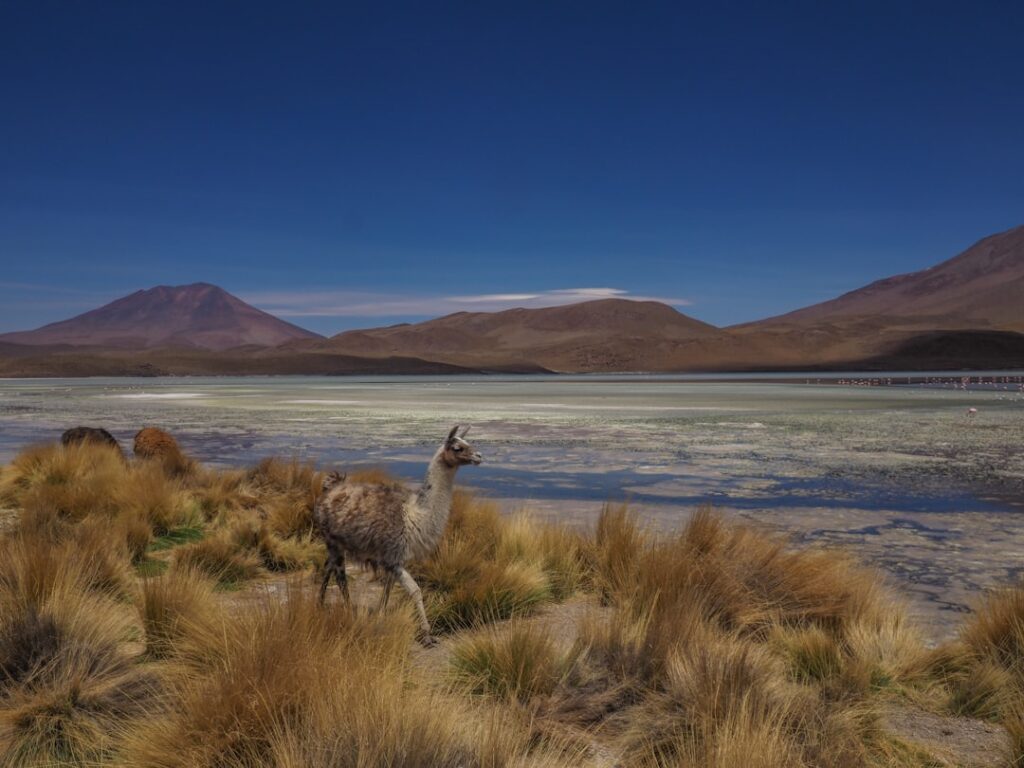
A large body of water with mountains in the background, Uyuni (Eduardo Avaroa Reserve), Bolivia
| Category | Budget | Mid-range | Luxury |
|---|---|---|---|
| Accommodation | $15-25/night (hostel salt room) | $50-80/night (heated salt hotel) | $150-300/night (Luna Salada Hotel) |
| Meals | $5-8 (market stalls, simple restaurants) | $12-20 (tourist restaurants with heating) | $30-50 (fine dining in salt hotels) |
| Transport | $100 (shared 3-day tour) | $150 (small group tour) | $400 (private 4×4 with guide) |
| Activities | Free (salt flat walking, train cemetery) | $10-20 (hot springs entry, museum fees) | $50 (private stargazing tour) |
| Daily Total | $45-60/day | $80-120/day | $200-350/day |
Top Attractions and Must-See Sights
| Attraction | Description | Hours | Entry Fee |
|---|---|---|---|
| Salar de Uyuni | The world’s largest salt flat creating optical illusions and perfect reflections during wet season | 24/7 access | Free (tour required) |
| Eduardo Avaroa Reserve | High-altitude wildlife sanctuary with colored lagoons, flamingos, and surreal rock formations | Sunrise to sunset | 150 BOB ($22) |
| Sol de Mañana Geysers | Bubbling mud pots and steam vents at 4,900 meters creating an apocalyptic landscape | 5-9 AM only | Included in reserve fee |
| Laguna Colorada | Red-colored lake from algae and minerals, home to thousands of James’s flamingos | 7 AM-6 PM | Included in reserve fee |
3-Day Itinerary: Uyuni (Eduardo Avaroa Reserve), Bolivia’s Highlights & Hidden Gems
Day 1: Salt Flat Wonders & Perspective Photography
- Morning: 7 AM departure from Uyuni town to Train Cemetery for industrial archaeology photos before crowds arrive. Local guides know the best-preserved locomotives.
- Afternoon: Salt flat crossing to Incahuasi Island ($5 entry) for giant cacti and panoramic views, then lunch at Salt Museum restaurant featuring quinoa soup and llama stew.
- Evening: Sunset perspective photography with props followed by dinner at Palacio de Sal hotel ($25-35) featuring salt-block grilled trout.
Day 2: Volcanoes, Lagoons & High-Altitude Wildlife
- Morning: 6 AM departure to Cañapa, Hedionda, and Chiarkota lagoons ($15 park fees) for flamingo watching—bring binoculars for best viewing.
- Afternoon: Siloli Desert rock formations including Árbol de Piedra, then lunch at remote desert lodge with traditional potato stew.
- Evening: Laguna Colorada sunset viewing when colors intensify, overnight at basic salt hostel with heated rooms ($40-60).
Day 3: Geysers, Hot Springs & Return Journey
- Morning: 5 AM departure to Sol de Mañana geysers for sunrise steam explosions, then Polques Hot Springs ($3 entry) for 38°C mineral baths.
- Afternoon: Dali Desert with surreal rock formations and final reserve viewing, lunch at border village with simple Bolivian fare.
- Evening: Return to Uyuni by 6 PM, farewell dinner at Minuteman Revolutionary Pizza ($15-25) for unexpected quality pizza at 3,600 meters.
Cultural Insights & Etiquette
- Language: Spanish and Quechua dominate; learn “jach’a k’achi” (big salt in Aymara) and “allin p’unchay” (good day)—locals appreciate the effort
- Customs: Always ask permission before photographing indigenous people; many believe cameras capture part of their soul
- Tipping: Tour drivers expect 50-100 BOB ($7-15) for 3-day trips; restaurant tipping 10% only in tourist establishments
- Dress Code: Layer extensively—temperatures swing 30°C between day and night; bright colors photograph beautifully against white salt
- Business Hours: Shops 9 AM-7 PM with 2-4 PM siesta; tour companies operate 7 AM-9 PM daily including holidays
Where to Eat: Uyuni (Eduardo Avaroa Reserve), Bolivia’s Best Bites
Uyuni’s cuisine reflects its harsh environment—hearty, protein-rich dishes designed for altitude and cold nights. You’ll find exceptional llama meat, quinoa in endless variations, and surprisingly good pizza thanks to tourist demand. Don’t miss the local licor de coca, a sweet liqueur that helps with altitude adjustment.
Must-Try Local Specialties
- Llama steak with chuño: Lean red meat served with freeze-dried potatoes; try at Restaurant 16 de Julio in Uyuni town
- Sajta de pollo: Spicy chicken stew with potatoes and onions; best at Tika Restaurant near the salt flat edge
- Salteñas: Baked empanadas with sweet-spicy meat filling; morning-only at market stalls in Uyuni center
Restaurant Recommendations by Budget
| Type | Restaurant | Specialty | Price Range |
|---|---|---|---|
| Budget | Market food stalls, Uyuni center | Fresh salteñas and api (corn drink) | $3-7 per meal |
| Mid-range | La Loco, Av Ferroviaria | Llama burgers with local craft beer | $12-20 per meal |
| Fine dining | Luna Salada Hotel, salt flat edge | Salt-crusted fish with wine pairings | $35-50 per meal |
Where to Stay
Accommodation ranges from basic salt-brick hostels to luxurious salt hotels, with most visitors opting for tour packages including overnight stays. The salt hotels offer once-in-a-lifetime experiences but book months ahead. Compare prices and book at Booking.com or Airbnb for apartments.
Best Neighborhoods for Accommodation
- Uyuni Town Center: Walking distance to tour agencies and restaurants, but basic amenities; ideal for budget travelers and last-minute bookings
- Salt Flat Edge: Luxury salt hotels with direct salt flat access and stunning views; perfect for photographers and romantic getaways
- Colchani Village: Authentic salt-processing community with family-run hostels; best for cultural immersion and artisan salt purchases

Grassy field with dry, flowing vegetation., Uyuni (Eduardo Avaroa Reserve), Bolivia
FAQs: Your Uyuni (Eduardo Avaroa Reserve), Bolivia Questions Answered
1. Is Uyuni (Eduardo Avaroa Reserve), Bolivia safe at night?
Uyuni town is generally safe, but the salt flat and reserve become extremely hazardous after dark due to navigation challenges and temperatures dropping to -20°C. Always travel with experienced guides and never venture onto the salt flat alone at night. Tour groups provide safety in numbers.
2. What currency is used and are credit cards accepted?
Bolivian Boliviano (BOB) is the currency, though US dollars are accepted by most tour companies. Credit cards work only at luxury hotels and some Uyuni restaurants—always carry cash for market purchases, entry fees, and tips. ATMs in Uyuni town frequently run out of money.
3. How do I get from the airport to the city center?
Shared taxis from Joya Andina Airport cost $3-5 for the 10-minute ride to Uyuni center. No public buses serve the airport. Most tour companies include airport transfers in premium packages. Book airport transfers at GetYourGuide for convenience.
4. Do I need to speak the local language?
Basic Spanish greatly enhances your experience, though tour guides speak English. Learn key phrases: “¿Cuánto cuesta?” (How much?), “¿Dónde está el baño?” (Where’s the bathroom?), and “Está bien” (It’s okay). Quechua phrases earn smiles but aren’t necessary.
5. What’s the appropriate dress code?
Layer like an onion—thermal base layers, fleece mid-layers, and windproof outer layers. Sunglasses are essential year-round (the salt reflects 90% of UV light). Sturdy waterproof boots handle salt, mud, and rocky terrain. Bright colors create stunning photo contrasts against white salt and colored lagoons.
Final Thoughts: Uyuni (Eduardo Avaroa Reserve), Bolivia Awaits
Uyuni delivers what few destinations can—complete sensory recalibration. From the deafening silence of the salt flat to the technicolor surprise of flamingo-filled lagoons, this landscape reminds travelers that nature’s imagination far exceeds our own. Savvy visitors know to spend at least three days to fully absorb the region’s diversity, from geometric salt patterns to bubbling geysers at dawn. Don’t just visit—immerse yourself in this high-altitude wonderland where the earth itself becomes art. Your most enduring memory will likely be that first sunrise when the world turns to glass and you find yourself walking between heavens.
Explore More Destinations
- Jozani, Tanzania on a Budget: an Ancient Forest for $35/Day (2026)
- Nsumbu, Zambia on a Budget: Wild Africa for $40/Day (2026)
- Semporna, Malaysia on a Budget: Paradise for $35/Day (2026)
- Khuzestan, Iran on a Budget: Ancient Empires for $30/Day (2026)
- Ngerulmud, Palau on a Budget: Island Majesty for $45/Day (2026)
Ready to Visit Uyuni (Eduardo Avaroa Reserve)?
Start planning your trip today. Compare hotels, find the best tours, and get insider tips.
Your adventure in Uyuni (Eduardo Avaroa Reserve) starts here →
Related Guides
Explore more destinations similar to Uyuni (Eduardo Avaroa Reserve):
- Udon Thani, Thailand: Ultimate Ancient Ruins, Countryside Charm & Authentic Isan Culture (2025)
- Tarfaya, Morocco: Essential Atlantic Solitude, Aviation History & Saharan Sunsets (2025)
- Dalaba, Guinea’s Best Mountain Air, Colonial Charm & Fouta Djallon Culture (2026)
- Laas Geel, Somaliland on a Budget: a World Wonder for Under $40/Day (2026)

