
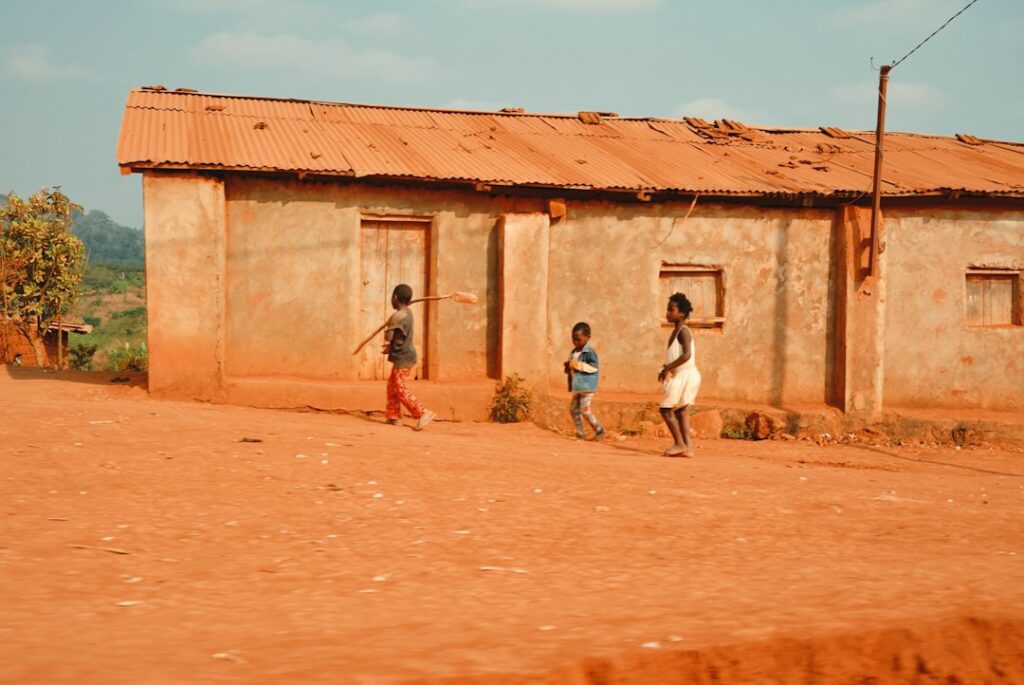
Tiébélé, Burkina Faso: Amazing Ancient Architecture, Living Culture & Authentic West Africa (2025)
Sunrise in Tiébélé reveals a landscape that seems painted rather than built – geometric patterns in black, white, and red ochre decorating earthen walls that have stood for over 500 years. The morning air carries the scent of woodsmoke and millet porridge as women begin their daily ritual of maintaining the intricate symbols that tell their Kassena people’s history. While neighboring Ghana draws millions of tourists annually, fewer than 2,000 international visitors discover Tiébélé’s UNESCO-recognized cour royale each year, making this one of West Africa’s most authentic cultural encounters.
Why Tiébélé, Burkina Faso Stands Out

An aerial view of a small town in africa, Tiébélé, Burkina Faso
- Historic Architecture: The 16th-century Cour Royale features elaborately decorated mud houses with symbolic patterns that have been maintained through generations.
- Cultural Scene: Annual Dama funeral ceremonies feature spectacular masked dances honoring ancestors and celebrating life’s continuity.
- Local Specialties: Tô (millet or sorghum porridge) served with baobab leaf or okra sauce represents the staple meal you’ll find in local households.
Pro Tip: Visit between November and February when temperatures are comfortable (25-30°C) and the harmattan winds haven’t yet arrived. Arrive at the Cour Royale by 7 AM to witness the morning maintenance rituals before any tour groups appear.
Map of Tiébélé, Burkina Faso
Use these interactive maps to explore Tiébélé, Burkina Faso and plan your route:
📍 View Tiébélé, Burkina Faso on OpenStreetMap
🗺️ Open Tiébélé, Burkina Faso in Google Maps
Planning Your Trip: Practical Essentials
Getting There and Around
- By Air: Fly into Ouagadougou Airport (OUA) with airlines like Air France, Turkish Airlines, or Ethiopian Airlines, then take a 3-hour drive south. Book flights at Skyscanner for best deals.
- By Train: No direct rail service to Tiébélé; the nearest major station is in Ouagadougou connecting to Abidjan. Reserve tickets at Trainline or the national railway website.
- By Car: Hire a 4×4 for the RN19 highway from Ouagadougou; the road becomes rougher near Tiébélé. Compare car rentals at RentalCars.com.
- Local Transport: Shared taxis and minibuses connect nearby towns; expect to pay 1,000-2,000 CFA for short journeys. Walking is the best way to explore the village itself.
Best Time to Visit
The dry season offers optimal conditions for exploring Tiébélé’s outdoor attractions and participating in cultural events without rainfall disruptions.
| Season | Weather | Highlights |
|---|---|---|
| Summer (Jun–Aug) | 25-35°C, humid with occasional rains | Lush landscapes, fewer tourists, but some roads may be difficult |
| Winter (Dec–Feb) | 20-30°C, dry and comfortable | Perfect photography conditions, cultural festivals, peak visiting season |
| Shoulder (Apr–May/Sep–Oct) | 25-35°C, transitioning between seasons | Good value, local harvest activities, changing landscape colors |
Budgeting for Tiébélé, Burkina Faso

Man in black jacket sitting on black motorcycle near brown building during …, Tiébélé, Burkina Faso
| Category | Budget | Mid-range | Luxury |
|---|---|---|---|
| Accommodation | 8,000-15,000 CFA per night | 20,000-35,000 CFA per night | 40,000+ CFA per night |
| Meals | 1,500-3,000 CFA per meal | 4,000-7,000 CFA per meal | 8,000+ CFA per meal |
| Transport | 1,000-2,000 CFA local trips | Private taxi 5,000-10,000 CFA/day | Private 4×4 25,000+ CFA/day |
| Activities | Free village walks, 2,000 CFA guided tours | 5,000-10,000 CFA cultural experiences | 15,000+ CFA private guides |
| Daily Total | 12,000-20,000 CFA | 30,000-50,000 CFA | 75,000+ CFA |
Top Attractions and Must-See Sights
| Attraction | Description | Hours | Entry Fee |
|---|---|---|---|
| Cour Royale (Royal Court) | UNESCO-recognized complex with 500-year-old decorated mud houses and symbolic architecture | Sunrise to sunset | 2,000 CFA with mandatory guide |
| Sacred Forest | Traditional worship site where rituals have been performed for centuries by Kassena people | Daylight hours | 1,500 CFA with local guide |
| Women’s Cooperative | Watch artisans create traditional pottery using ancient techniques passed through generations | 8 AM-4 PM weekdays | Free (purchases encouraged) |
| Granaries Compound | Distinctive conical storage structures demonstrating ingenious food preservation methods | Daylight hours | 1,000 CFA |
3-Day Itinerary: Tiébélé, Burkina Faso’s Highlights & Hidden Gems
Day 1: Architectural Wonders & Local Life
- Morning: 7-9 AM at Cour Royale to witness morning maintenance rituals and photograph the best light. Local guides cost 2,000 CFA and provide essential cultural context.
- Afternoon: 12-3 PM exploring the village granaries and sacred forest, followed by lunch at Chez Awa (try their tô with gombo sauce for 2,500 CFA).
- Evening: 6-8 PM sunset photography session at the royal court perimeter, then dinner at Auberge Tiébélé (grilled chicken with attiéké for 4,000 CFA).
Day 2: Crafts & Cultural Immersion
- Morning: 8 AM pottery demonstration at women’s cooperative (free, but budget 5,000 CFA for handmade souvenirs) – watch the coil-building technique unchanged for centuries.
- Afternoon: Traditional compound visits and learn about wall painting symbolism, then lunch at Family Restaurant (rice with peanut sauce, 2,000 CFA).
- Evening: Cultural performance with traditional music and dance (5,000 CFA) arranged through your accommodation.
Day 3: Surrounding Villages & Natural Beauty
- Morning: Shared taxi to nearby Pô (3,000 CFA round trip) to compare architectural styles and visit the weekly market if it’s market day.
- Afternoon: Picnic lunch with provisions from local vendors, then visit the baobab forest where ancient trees hold spiritual significance.
- Evening: Farewell dinner at your accommodation featuring a traditional Burkinabé feast with multiple courses (6,000-8,000 CFA).
Cultural Insights & Etiquette
- Language: French is official; learn basic Mooré phrases like “Ne y yibeogo” (good morning) and “Barka” (thank you)
- Customs: Always greet elders first; ask permission before photographing people; remove shoes before entering compounds
- Tipping: Not expected but appreciated; 500-1,000 CFA for guides, round up restaurant bills
- Dress Code: Modest clothing covering shoulders and knees; light natural fabrics for the heat
- Business Hours: Shops open 8 AM-5 PM with midday break; limited Sunday operations; major holidays include Independence Day (August 5)
Where to Eat: Tiébélé, Burkina Faso’s Best Bites
Tiébélé’s culinary scene revolves around traditional Kassena cuisine with communal eating traditions. You’ll find most dining occurs in family compounds or simple local eateries rather than formal restaurants.
Must-Try Local Specialties
- Tô with Sauce Gombo: Staple millet porridge with okra sauce; best experienced in family homes or Chez Awa
- Poulet Bicyclette: Free-range chicken grilled with local spices; available at Auberge Tiébélé
- Riz Gras: Flavorful rice cooked with vegetables and meat; find authentic versions at market stalls
Restaurant Recommendations by Budget
| Type | Restaurant | Specialty | Price Range |
|---|---|---|---|
| Budget | Family Restaurant near market | Local plates with generous portions | 1,500-3,000 CFA |
| Mid-range | Auberge Tiébélé | Grilled meats and traditional dishes | 3,500-6,000 CFA |
| Fine dining | La Case de Tiébélé | Multi-course traditional meals | 7,000-10,000 CFA |
Where to Stay
Accommodation in Tiébélé consists mainly of family-run auberges and guesthouses offering basic but authentic experiences. Most places include meals since restaurant options are limited. Compare prices and book at Booking.com or Airbnb for apartments.
Best Neighborhoods for Accommodation
- Near Cour Royale: Walking distance to main attraction, traditional architecture, limited amenities but maximum authenticity
- Village Center: Close to market and transport, more services available, slightly noisier atmosphere
- Outskirts: Quieter settings, more space, requires transportation to reach main sites

A street with palm trees and a clock tower in the background, Tiébélé, Burkina Faso
FAQs: Your Tiébélé, Burkina Faso Questions Answered
1. Is Tiébélé, Burkina Faso safe at night?
Tiébélé is generally safe, but travelers should avoid walking alone at night in unlit areas. The village has minimal crime, but basic precautions like securing valuables and using hotel safes are recommended. Most movement after dark should be by arranged transport.
2. What currency is used and are credit cards accepted?
The West African CFA franc (XOF) is the local currency. Credit cards are rarely accepted outside major hotels in Ouagadougou. Bring sufficient cash in CFA francs – ATMs are unavailable in Tiébélé, with the nearest in Pô or Ouagadougou.
3. How do I get from the airport to Tiébélé?
From Ouagadougou Airport, take a taxi to Gare Routière (3,000 CFA), then a shared minibus to Tiébélé (5,000 CFA, 3 hours). Private transfers cost 25,000-40,000 CFA. Book airport transfers at GetYourGuide for convenience.
4. Do I need to speak the local language?
French serves as the lingua franca, though English is limited. Learning basic French phrases greatly enhances your experience. Locals appreciate attempts at Mooré greetings. Hiring a guide who speaks both French and English is worth the investment for deeper cultural understanding.
5. What’s the appropriate dress code?
Modest, lightweight clothing covering shoulders and knees respects local customs. Natural fabrics like cotton work best in the heat. Women should avoid revealing attire. For photography, earth-toned clothing blends better with the environment than bright colors.
Final Thoughts: Tiébélé, Burkina Faso Awaits
Tiébélé offers one of West Africa’s most authentic cultural encounters, where ancient traditions continue to shape daily life in the 21st century. Beyond the spectacular architecture, you’ll discover a community maintaining centuries-old customs with pride and generosity. Travelers willing to venture beyond typical tourist circuits find themselves rewarded with genuine connections and unforgettable insights into Kassena culture. Your visit directly supports community preservation efforts, ensuring these remarkable traditions endure for future generations. Don’t miss the chance to witness the morning light illuminating geometric patterns that have told this community’s story for over 500 years – it’s a sight that stays with you long after you’ve returned home.
Related Guides
Explore more destinations similar to Tiébélé:
- Kathu, South Africa’s Ultimate Iron, Stars & Kalahari Adventures (2026)
- Matara, Sri Lanka’s Best Beaches, Forts & Southern Soul (2025)
- Barquisimeto, Venezuela: Hidden Music, Modernist Architecture & the Divine Divina Pastora (2026)
- Svaneti’s Mestia Community, Georgia: Essential Towers, Trails & Timeless Traditions (2026)
{“@context”: “https://schema.org”, “@type”: “FAQPage”, “mainEntity”: [{“@type”: “Question”, “name”: “What is the best time to visit Tiu00e9bu00e9lu00e9?”, “acceptedAnswer”: {“@type”: “Answer”, “text”: “The best time to visit Tiu00e9bu00e9lu00e9 depends on your preferences. Generally, the dry season offers the most pleasant weather for sightseeing and outdoor activities.”}}, {“@type”: “Question”, “name”: “How many days do I need in Tiu00e9bu00e9lu00e9?”, “acceptedAnswer”: {“@type”: “Answer”, “text”: “Most travelers spend 3-5 days in Tiu00e9bu00e9lu00e9 to see the main attractions. A week allows for a more relaxed pace and day trips.”}}, {“@type”: “Question”, “name”: “Is Tiu00e9bu00e9lu00e9 expensive to visit?”, “acceptedAnswer”: {“@type”: “Answer”, “text”: “Tiu00e9bu00e9lu00e9 can be visited on various budgets. Accommodation ranges from hostels to luxury hotels, and local restaurants offer affordable dining.”}}]}

